



Editor’s note: Landscape Confidential is an occasional column by Audrey Clark, a curatorial assistant at the Pringle Herbarium at the University of Vermont.
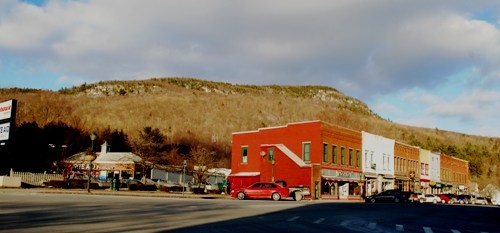
The southern peak of the Hogback Mountains crests like a wave above Bristol Village, with rocky outcrops the foam. Most of the mountain is home to typical northern hardwood forest — beech, birch, white pine, maple, oak — but those rocky ledges host a rarer tree, one that often makes it where others can’t.

Park in the village center, amble east one block to Mountain Street, turn right onto Mountain Terrace, and take the dirt road behind the gate at the end of the residential street. Follow the track east along the flank of the mountain, up and up. Take the left fork, then take the trail to the left of the water tower, up through the beech woods, the scattered white pines. After some huffing and puffing you’ll reach the first overlook and Bristol Village spreads beneath you, Lake Champlain glitters in the distance, and the Adirondacks anchor the far shore.
When you’ve drunk your fill, wander north through the woods along the top of the ledges, perhaps a quarter mile, taking care not to slip on the steep slope, until you see red trunks scattered among the brown and gray below you.
There are so many other kinds of trees mixed in it’s hard to see that the group of red pines clinging to the rocky ledges here are a stand. There are perhaps a dozen within sight, young and old.
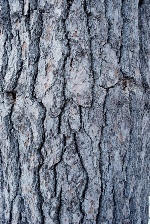
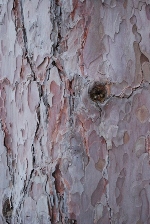
The trunks are pale rusty red and look to be made up of layered puzzle pieces. The needles come in bundles of two and are 4 to 7 inches long. When you peer up at the canopy, it looks bunchy. In contrast, the canopy of white pine, the most common pine in Vermont, looks feathery. White pine needles come in bundles of five and are much shorter — 2 to 4 inches long, usually. White pine bark is gray and, on older trees, furrowed.
What’s so special about red pine? If you see a red pine stand, you know that one of two things happened in that place: fire or planting. Red pine adults are tough; they do just fine in the rocky, shallow soils on ridges or the poor sandy soil on valley terraces. But young red pines are not so tough and can’t abide competition.
The ideal red pine life cycle looks like this: a fire sweeps across a mountaintop or along a sandy plain, killing the saplings and shrubs and some of the older trees, leaving sunny areas with bare, rocky or sandy soil. The adult red pines, whose bark resists burning and who can survive even when scarred by fire, drop their seeds. Unlike some other pine species, red pine cones do not need fire to open — in fact, fire kills the seeds. It’s important that red pine adults survive in the area to provide new seeds after a fire. The seeds grow up into seedlings, then saplings, basking in the sun and enjoying the lack of competitors who might otherwise eat up all the nutrients. It helps that few other plants can survive well on the poor soils upon which red pine thrives. When the red pines reach adulthood, when their bark is finally thickened and their needles are well above the forest floor, another fire sweeps through, and the cycle renews.
The other reason you find stands of red pine in Vermont is because they were planted. The rampant logging and agriculture of the late 1800s stripped Vermont of 85 percent of its forests. By the 1930s, a major effort was under way to reforest the state. Granted, most of that effort was undertaken by the forests themselves — they just grew back on their own after the market for Vermont agricultural products crashed and farms were abandoned en masse. But humans helped by planting red pines, among other species. The Civilian Conservation Corps planted thousands of red pines in Vermont to hold overworked soil in place. Thus, when you are wandering in the woods and you find a red pine stand that is not on a rocky outcrop or poor, sandy soil, you can be fairly certain it was planted.
Red pine is a decent lumber species, but the value today is low, according to Chittenden County forester Keith Thompson. You can get $200 per thousand board feet, much less than the $315 you get for white pine. It’s often used for telephone poles. Chipped, Thompson says, red pine “barely pays its way out of the woods.”
You might also find a lone red pine here or there. A loner may have capitalized on a tip-up — when a tree falls over, leaving a sunny clearing with a dish of exposed soil. Or they may be the last vestiges of a stand resurrected by a long-ago fire. In a few places in the state, old sand quarries now host aging red pine stands.
Brett Engstrom, a botanist whose 1988 master’s thesis studied stands of red pines in Bolton, said in an email to VTDigger that “fire is not a requirement for cones opening nor for seed germination. They can capitalize on most upland soil disturbances associated with a sunny environment.”
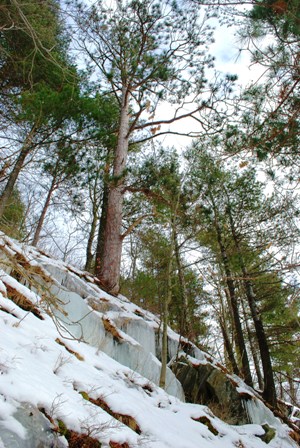
On the Hogback Mountains above Bristol, it’s clear that red pines cling close to the margins of habitat. While the white pines prosper on what soil there is on the steep slopes, many of the red pines clutch the rocks themselves while ice pours in a frozen cascade down the craggy face of the mountain wave.

