

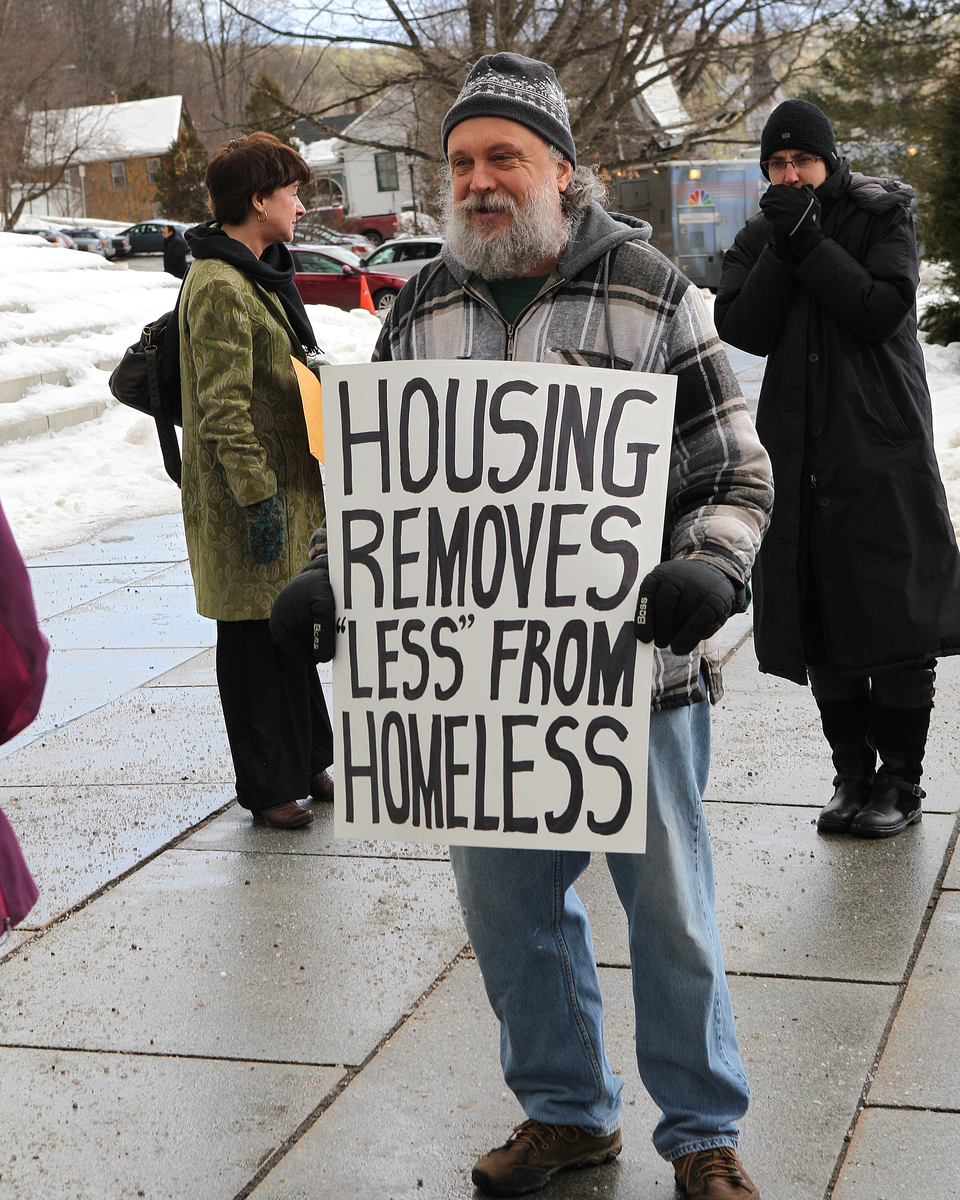
Faced with soaring costs and concerns that the program is being abused, the state wants to shut the door on the practice of housing homeless individuals in motels.
Motels are the department’s fallback option when people without financial resources need temporary housing and shelters are full. The change would be considerable — nearly half the hotel vouchers the Department for Children and Families gives out go to single individuals, according to DCF Commissioner Dave Yacavone.
In 2009, the department expanded its eligibility requirements to allow individuals to access hotels or motels through what’s called the Temporary Assistance program. Prior to that, only families and individuals in “catastrophic” situations like floods or fires could get hotel vouchers.
The total number of individuals and families in the Temporary Assistance program has soared from just over 1,000 in 2009 to nearly 2,000 in 2012. The cost of the program has skyrocketed in accordance, increasing 78 percent from $1.3 million in Fiscal Year 2010 to $2.4 million in FY 2012. It has continued to climb during FY 2013 and is expected to hit $3.5 million, an amount that is well over a doubling of the cost of the program since 2010.
Now, the department’s budget proposal for the next fiscal year calls for dismantling the hotel voucher program for individuals. Families in need of emergency housing could still access the program, however.
“We believe we should dial back that change,” Yacavone told the House Appropriations Committee on Feb. 6. The department expects to save $500,000 by not providing hotel vouchers to individuals in need.
“Vulnerable” people and people facing “catastrophes” would be exempt. The definitions of both terms still need to be ironed out, but the former would include people with disabilities and victims of domestic abuse, according to Yacavone.
The hotel policy hasn’t been a popular one. Department officials and affordable housing and shelter directors agree it’s done little to prevent homelessness, while contributing significantly to ballooning program costs. Yacavone said there is plenty of evidence that the system is being abused — rather than knocking on the doors of relatives or staying in a shelter, individuals are securing hotel rooms. But he said he couldn’t assess how widespread the abuse is and whether or not it is more common among single individuals as opposed to families.
Still, shelter directors have reservations about DCF’s plans. Rita Markley, executive director of the Burlington-based Committee on Temporary Shelter (COTS), a nonprofit that shelters and provides other assistance to the homeless, said it doesn’t make sense to disqualify individuals across the board.
“The idea of eliminating emergency assistance based solely on a demographic, rather than looking at how to tighten and control the use of the resource more carefully, troubles me,” she said.
Mark Redmond, the executive director of Spectrum Youth and Family Services, which runs a shelter program for Burlington youth, had similar concerns. “There’s got to be a way that we can really vet everyone, whether they are singles or families,” he said.
Markley questioned the wisdom of limiting the motel program before addressing the acute shortage of shelter space in the state. “I’m not saying that the motel programs are the answer, but the shelter capacity doesn’t exist in the state to absorb more homeless Vermonters. Given that the recession continues for the poorest Vermonters, we are concerned about anything that might compromise the remaining strands of the safety net.”
Yacavone said his department won’t turn people down until there are other options in place. DCF plans to provide more community housing grants to expand shelters and rental subsidies, though they haven’t decided how much additional money to put into this initiative. The department has determined that it will spend $400,000 to $450,000 in FY 2014 to help displaced people secure spots in affordable housing units in Burlington, Brattleboro and Rutland. The idea is, if the state arranges a contract with landlords ahead of time and promises to pay for missed rent checks or property damage, the landlord will be more inclined to take on people in the Temporary Assistance program as tenants.
Markley said she was “elated” to see DCF focusing on homelessness prevention, but the state would have to make investments on a more sweeping scale if it wants to address the affordable housing shortage. Doubling the state’s rental subsidy program and tripling the amount of affordable housing funding might make the difference, but $400,000 won’t do the trick, according to her estimates.
Even with a sizeable investment, Markley cautioned against limiting the state’s capacity to house people in emergency situations. “It takes time to tip the scales. Given the many challenges there are in the mental health and substance abuse systems and the number of low-income Vermonters still struggling, it’s hard to see there won’t be a period of time when we don’t need to fund both prevention and an emergency response.”
