

Editor’s note: This analysis is by Mark Davis, a staff writer at the Valley News, where it was first published Sunday, Sept. 23, 2012.

Some legal experts say that Vermont State Police soft-pedaled their investigation into an allegation of police brutality against an athletic trainer in Wilder, failing to ask pertinent questions and writing reports that portrayed Hartford police in a flattering light.
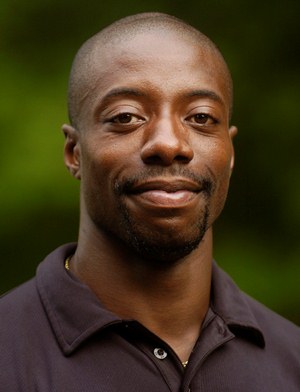
Vermont Attorney General Bill Sorrell cleared two Hartford officers of criminal wrongdoing after they pepper-sprayed, clubbed and handcuffed an unarmed Wilder man they found naked and disoriented inside his own home in May 2010. Sorrell said that an investigation conducted by state police and supervised by his office found that they did not use excessive force during an encounter with Wayne Burwell, a Dartmouth graduate and athletic trainer who had been rendered unresponsive by a medical condition when they responded to his home for a burglary report that turned out to be erroneous.
Sorrell and other state officials declined to release records of the investigation to the public, instead limiting their comments to a news release announcing their conclusions. However, the Valley News recently obtained a copy of the file from Burwell’s attorneys, and shared it with a current police chief, a former police lieutenant who has been an expert witness in dozens of trials across the country, two area defense attorneys, an attorney in the Vermont Prisoners’ Rights Office and a former state and federal prosecutor, and asked them to review it.
The experts’ opinions were not unanimous, and those who were critical of some aspects of the investigation conducted by Vermont State Police Sgt. Michael Henry said they were not offering opinions on whether there was enough evidence to justify bringing criminal charges against the Hartford officers.
However, the experts said they found significant flaws in the investigation, including the manner in which questions were asked and the way reports summarizing the investigation were written.
Among the experts’ concerns:
- Henry sometimes asked the officers leading questions, eliciting information that would tend to justify the use of force.
- He seldom challenged the officers’ accounts or asked whether they considered alternatives to using force on Burwell.
- Some of Henry’s reports were written in a way that accentuated information favorable to police. The experts noted that, in a summary report that was sent to the Attorney General’s Office, information favorable to the Hartford officers was put in boldface type, while information that appeared damaging was downplayed.
“It seems to me as if the way the investigation was approached was to cull facts that would justify the use of force, as opposed to investigating and relaying the facts in an objective form,” said St. Johnsbury defense attorney David Sleigh, generally recognized as one of the state’s top private attorneys.
Plainfield (N.H.) Police Chief Paul Roberts echoed that criticism. After reviewing the investigative file, Roberts said it seemed as if Henry were saying to the Hartford police, “ ‘Tell (your) story so I document it, move on and get out of here.’”
Not everyone was critical: Charles Key, a retired Baltimore police lieutenant who investigated police corruption and has subsequently served as an expert witness in police misconduct cases dozens of times across the country — testifying both for and against police officers —said that he found little to fault with Henry’s work.
“It is a good investigation,” Key said. “This looks like an honest effort to find out what happened.”
The Vermont Attorney General’s Office and the Vermont State Police declined to comment for this story, referring instead to a news release issued when the report exonerating the officers was released. Acting Hartford Police Chief Leonard Roberts also declined to comment.
The November 2010 release said that Sorrell concluded that the officers felt threatened by Burwell — who they say lurched toward them, and, after being pepper-sprayed, struggled with them — and therefore were justified in deploying force to bring him into custody.
“The context we were looking at was the possibility that they (police) were engaged in a simple assault, if they used force on someone without justification,” Assistant Attorney General Matt Levine told the Valley News in November 2010. “If they used force on someone with a justifiable fear for their own defense, or the defense of another, that wouldn’t be simple assault.”
Burwell’s attorney, Ed Van Dorn, said that there were significant shortcomings in the investigation, though those concerns are not a part of a federal civil rights lawsuit that Burwell, who is black, filed against Hartford police.
“It wasn’t very vigorous,” said Van Dorn, whose office is in Orford.“The investigator asked a lot of softball questions of the police officers involved. They asked a lot of leading questions about why they were using force for their safety.”
Little cross-examination
On June 3, 2010, five days after the incident, Hartford Police Chief Glenn Cutting asked Vermont State Police to conduct an investigation to determine whether officers Kristinnah Adams and Frederick Peyton violated any criminal laws in their handling of Burwell, who suffered bruises and a cut on his wrist that required two stitches and was taken to Dartmouth-Hitchcock Medical Center in an ambulance.
“Due to the fact that there was force used to bring (Burwell) into custody in his own home, I am requesting that the Vermont State Police conduct a criminal investigation into this matter,” Cutting, who has since retired, wrote to Vermont State Police Col. Thomas L’Esperance. “Furthermore, this case has caused considerable interest in the local media that an outside independent review is the best process to preserve the integrity of the Hartford Police Department and its officers.”
Henry was assigned to the case. Henry interviewed Adams, Peyton and a third officer who responded that day, Scott Moody. He also interviewed the cleaning woman who initially called 911, a retired New Jersey police officer who lived next door and had questioned officers at the scene about their actions, and, briefly, Burwell.
Those interviews were recorded, and transcripts were printed and made part of the file. Henry also drafted reports summarizing each interview, and a summary report condensing all of his findings.
Henry interviewed the officers separately inside the Hartford police station.
Before the interview began, Henry said that he reviewed with the officers the reports that they had each written about the incident. Then, Henry said, the officers provided sworn taped statements.
In those interviews, the officers generally tell the same story, according to the documents in the file: Summoned by a 911 call from a housekeeper who said she had found a man she did not recognize acting strangely inside a Wilder condominium, the officers entered the home with their guns drawn. They found smoke coming from an overturned lamp and smoke detectors ringing.
Upstairs, Adams and Peyton found an African-American man sitting naked on the toilet, who they said appeared to be under the influence of some kind of drug. (Burwell, unbeknownst to them, suffered from a diabetes-like condition that sometimes left him in an unresponsive state, according to court records. He later underwent a surgery to remove a benign tumor on his pancreas.) They did not yet know it was the home’s owner, Burwell.
“Show your f—ing hands up or I’ll shoot you motherf—–,” Peyton told Burwell upon first entering the bathroom, according to a police audio recording of the encounter. “Put your hands up now,” the officer shouted. “Show me your f—ing hands.”
In the subsequent moments, Peyton and Officer Kristinnah Adams screamed at Burwell 30 times to “put your hands up,” or “keep your hands up,” according to the recording.
Burwell, the officers told Henry, did not respond to those commands, and instead kept his hands low, under the toilet. Unable to see if he was reaching for a weapon, they told Henry, they pepper-sprayed Burwell, to the point where they began coughing and their own vision was affected, according to the file.
That seemed to jar Burwell, who fell to the side and then approached them, the officers told Henry. Peyton began hitting Burwell with a baton, and Burwell struggled with officers as they attempted to handcuff him — for a time, they could secure only one handcuff. Eventually, after he was subdued and they learned that he was the homeowner, not a burglar, they escorted him outside.
The officers’ statements were consistent with each other, and with written reports that they had submitted.
The Valley News sent the investigative file, more than 150 pages in total, to Sleigh, Key, Plainfield (N.H.) Police Chief Roberts, Vermont Prisoners’ Rights Office attorney Kelly Green, Lebanon attorney George Spaneas and former federal prosecutor and Lamoille County State’s Attorney Scott McGee, who is now a private attorney in Norwich, for them to review.

Several of them noted that Henry allowed Hartford police officers to give their account with few interruptions and almost no questions probing their decision to use force against a naked, unarmed man.
“There was very little questioning as to what the officer perceived to be the justification for using the pepper spray and why it was used a second time, or for the repeated striking of Mr. Burwell with an officer’s baton,” McGee said. “There was no questioning of what the officer was observing at each instant that led the officer to conclude that such a beating was justified and appropriate.”
For example, in his interview, Peyton gave Henry a lengthy version of events when he and Adams found Burwell in the bathroom, ending with him hitting Burwell repeatedly with a baton to subdue him. But Henry did not press him on why the officers felt it necessary to use force.
“What are you thinking at this point in time, I mean he falls on top of her and as you described she got one cuff on,” Henry said.
Peyton gave a lengthy recitation of his account of the incident, explaining that he hit Burwell with a baton several times, before Burwell eventually appeared exhausted.
Henry did not follow up. Instead, he moved forward, to the decision to bring Burwell downstairs.
Similarly, Adams and Moody were not pressed for details about their encounter in the bathroom with Burwell, and largely allowed the officers to provide their answers uninterrupted.
Several of the legal experts said that was troubling.
“He doesn’t cross-examine them. He asks them easy, open-ended questions,” said Spaneas, who has previously sued Vermont State Police for alleged excessive force after officers shot and killed a schizophrenic man who had a handgun in the woods of Corinth. “He doesn’t ask the police hard questions. ‘This guy is sitting down on the toilet: Why did you decide to mace him?’ ‘Are you authorized by use of force rules to use that force on someone who is sitting there, who isn’t threatening any other citizens around? ‘Were you authorized to use that force?’ They just don’t do it.”
Sleigh agreed.
“There weren’t a lot of questions about, ‘Did you consider alternatives, were you aware of the prior medical situation?’” Sleigh said. “How many burglars break into houses to use the plumbing? Asking questions with (an) edge, as to why did you jump to that conclusion and not look for other information, may have been revealing.”
‘Leading’ questions
On a few occasions during his interviews with the Hartford officers, experts said that Henry asked what they considered “leading” questions of the police officers.
For example, at the beginning of her interview, Adams said she had been told by a dispatcher that the place had been ransacked. Henry’s question then included a possible description of Adams’ mental state that experts say could — under state law and police protocols — be central to a question of whether police were justified in using force against a suspect.
“So, ah, at that point you’re heightened awareness right now?” Henry asked.
“Yeah,” Adams said.
“Do you draw your gun?” Henry asked soon after.
“Yes,” Adams said.
“Okay,” Henry said, without asking any questions to probe that decision.
Roberts, the Plainfield chief, said questions like Henry’s query about “heightened awareness” raised a flag for him. “If you’re doing an investigation, why would you put words into somebody’s mouth, especially an investigation of officers who may have been involved in wrongdoing?” Roberts said. “It seems like they (Vermont State Police) formed their opinion before they started.”
Roberts, the Plainfield chief, said questions like Henry’s query about “heightened awareness” raised a flag for him. “If you’re doing an investigation, why would you put words into somebody’s mouth, especially an investigation of officers who may have been involved in wrongdoing?” Roberts said. “It seems like they (Vermont State Police) formed their opinion before they started.”
Later, Henry seemed to prompt Adams to emphasize police efforts to help Burwell, once he was no longer a threat.
“Let me just back up a second. Ah, now, you’re upstairs and he’s naked,” Henry asked Adams.
“Yes,” Adams said.
“Do you do anything to kinda help him out?” Henry said.
Adams said they did, describing how police and firefighters spent several minutes washing Burwell’s eyes with water and caring for him after he had been brought under control.
“Ah, well, he’s on the ground so and covered in OC (pepper spray) but my first thought was get him outside and get him sprayed down with the hose as soon as possible,” Adams said.
“These leading questions … who is going to say no to that?” said Green, of the prisoners’ rights office.
Offering a different view was Key, the former Baltimore police lieutenant who is frequently called as an expert witness in police misconduct cases. While he said that he too, had observed some questions that were “leading,” he considered that to be a mild concern. Henry, he said, succeeded in getting a full account of that police did that night.
“The investigation was adequate — much more than adequate, in that they interviewed every witness,” Key said.
Subjective findings?
As in most investigations, the question and answer sessions with witnesses provided raw material: Henry then wrote reports summarizing his interviews with every witness.
Those reports were forwarded to the Vermont Attorney General’s Office. In previous interviews with the Valley News, Sorrell has said he and his deputies reviewed the materials and made the decision not to pursue criminal charges.
“I always make the ultimate decision, yes,” Sorrell has said. “We were satisfied with the investigations. I stand by the decisions.”
The experts who reviewed the investigative file said Henry’s reports should have provided a neutral accounting of the facts. While saying that Henry’s work appeared “vigorous” and “thorough,” Green, of the prisoners’ rights office, nonetheless said of the report, “It’s biased. It’s totally slanted.”
For example, Green noted that, in his summary report, Henry wrote at multiple points that Burwell “would not comply” with the commands. But the available police records suggest that Burwell was unresponsive and had little or no awareness of what was happening, due to his medical condition.
“Did he ignore his commands or was the man incapacitated in some way?” Green said. “That’s a subtle, but very effective, way of making Mr. Burwell look like he did something wrong. Typically, I don’t see so many qualitative judgments. Typically, state police affidavits are more objective than this. It should be, ‘Just the facts, ma’am.’ Why is it so subjective? I’d like Mr. Sorrell to get an objective report.”
Experts were also puzzled that Henry’s report placed in bold words key points that spoke to danger police felt they were in.
“At this point, the only thing going through Adams’ mind was ‘he’s going to get my gun,’” Henry wrote.
“There’s no evidence that he was going for the gun, but that’s in bold,” Green said. “That’s what you’re reading on the page.”
Henry also placed in bold type claims by Peyton that he thought Burwell was “under the influence of some type of drugs,” and that the officers eventually helped treat Burwell for the pepper-spray.
“The Attorney General is supposed to do an objective investigation,” Sleigh said. “Here, the trooper puts in bold findings or facts that are consistent with the view that the force was not excessive. He never puts in bold any facts that are incompatible with that theme. He celebrates those facts over others.”
“They’re not supposed to be persuasive,” Sleigh continued. “You don’t see (police reports) as rhetorical devices attempting to persuade. This was a rhetorical summary attempting to persuade whoever was reading it.”
Key, however, said that Henry was well within his duty, as the primary investigator, to summarize key findings in a report to his superiors.
“When you write, the people above them in the food chain, they don’t read it as carefully as they should,” Key said. “When you highlight it, it stands out. It’s a good investigation.”

The Burwell case is not the only time questions have been raised about a Vermont Attorney General’s Office investigation into alleged wrongdoing on the part of Hartford police.
In January, Sorrell announced there was not enough evidence to bring charges against another Hartford police officer who had been accused of using excessive force against a woman at the Shady Lawn Motel in September 2010.
However, investigators did not interview two eyewitnesses who had long publicly claimed that they had witnessed the officer intentionally slam the woman to the ground headfirst after she had walked away from him. And Sorrell made no mention of any of those previous statements in a five-page news release announcing his decision. The release largely mirrored the police’s version of events.
Open government advocates, including the Vermont chapter of American Civil Liberties Union, have long argued that these files of police investigations of other police should be released to the public.
“Once the investigation is concluded, you would think, to inspire confidence, that he would make these things available,” Sleigh said.
Dan Barrett, a staff attorney for the ACLU, said the Burwell file, which he also reviewed, illustrated the need for public scrutiny of police reviews of alleged police misconduct.
“If police investigated crime the way they performed this investigation,” Barrett said, “Vermonters would be up in arms.”
Mark Davis can be reached at mcdavis@vnews.com or 603-727-3304.
