


Editor’s note: This is the first in a five-part series profiling members of Gov. Peter Shumlin’s Green Mountain Care Board, a panel tasked with designing a universal health care plan for Vermont.
Anya Rader Wallack is approachable.
She has an unassuming air that makes her easy to talk to and easy to like.
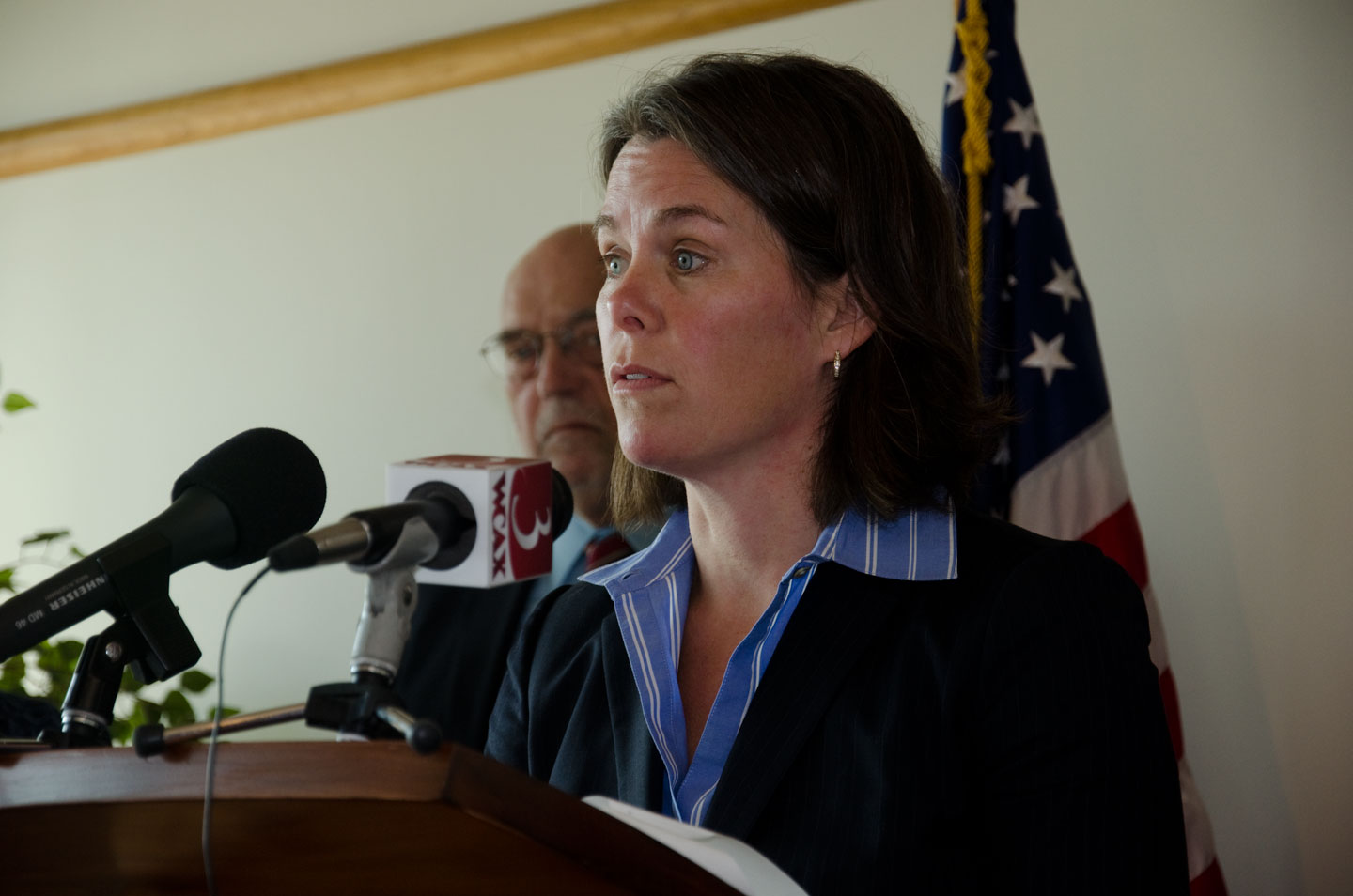
At first blush, you might not peg her as the person to lead the state of Vermont into uncharted territory. But she is. As the chair of the Green Mountain Care Board, Wallack will be a major player in an unprecedented health care reform effort aimed at universal coverage for all Vermonters.
Dig Deeper
Links
Wallack’s easy-going style belies a wealth of experience in health care reform efforts. The former consultant and reform expert has been working on health care issues since the late 1980s when she took a job as a staff assistant for the House Health and Welfare Committee in the Vermont Legislature. Wallack worked on reform efforts in the 1990s for First Lady Hillary Rodham Clinton and for Gov. Howard Dean. Both attempts to create universal health care systems failed.
Working on the health care overhaul effort for Dean left her exhausted, Wallack said.
“We made a noble effort and crashed and burned at the end of the legislative session [in 1994],” she said.
Wallack later became the executive director of the Vermont Program for Quality in Health Care, Inc., a nonprofit health care data analysis company. She obtained a Ph.D. in social policy from Brandeis University in 2007 and became the president of a successful health care policy consulting firm Arrowhead Health Analytics.
Wallack, 45, has a penchant for analyzing data and figuring out how it fits in with the real world.
As fellow board member Con Hogan puts it, “She’s a pro.”
Now she’s back in Vermont — and in charge of arguably the most ambitious health care reform proposal since the early 1990s. Wallack began this round as the special assistant spearheading Gov. Peter Shumlin’s single-payer health care initiative, and in October she was named the chair of the Green Mountain Care Board, a five-member panel that will create a universal health care system for Vermont.
This time, Wallack says the state has it right.
She helped to author Act 48, the law passed in the last legislative session that sets the stage for a single-payer style system. The law starts with the lofty goal of providing “as a public good, comprehensive, affordable, high-quality, publicly financed health care coverage for all Vermont residents in a seamless manner regardless of income, assets, health status or availability of other health coverage.” The specific words “single payer” are not in the act, but the stated legislative goals make it clear that the objective is to create a system that offers universal health care through a single payment system for all providers.
“The first step was putting forward a plan that was the right plan,” Wallack said.
Wallack understands the complexities of analyzing data and the politics of getting things done on the ground. Her 20-some years of work in health care policy led her here, and she said this time the pieces of the reform puzzle have fallen into place.
One of the main issues the board faces, Wallack said, is making reform work in sync with the federal Affordable Care Act, which puts new state mandates in place for insurance coverage. Many of those requirements were part of reforms Vermont initiated 20 years ago. Since then, insurers have not, for example, been allowed to “cherry-pick” or pool healthy patients in plans that exclude sick patients and cost less to insure.
Many Vermont policy makers harbored the perception that the 2010 Affordable Care Act was irrelevant to the state, she said.
“I was off on the side saying, ‘no, it works for us,’” Wallack said.
She wanted to build on federal requirements like the health care exchange which will give Vermonters the ability to compare the actuarial value of health benefit plans, enroll in plans and receive tax credits or public assistance. Wallack’s idea was to use the federal law as a stepping stone and funding mechanism for a single-payer system when the state obtains a waiver for Affordable Care Act in 2017.
Wallack said it took a lot of explaining to get everyone on board with the idea, but it eventually worked.
The last key step, she said, was ensuring she had the support of the governor. The final clincher, she said, “was having a leader who was totally unafraid.”
The affability and stomach to effect change
Wallack is originally from Vermont and kept a lot of connections here. She had been the first employee for the lobbying firm, Kimbell Sherman Ellis (now KSE Partners) before working for Dean, and she maintained ties there.
Bob Sherman, a partner at KSE, said what sets Wallack apart from other Ph.D.s is that “she can function at ground level.”
Unlike some academics, Sherman said, she has the ability to take complex issues and explain how they apply in the real world.
Sherman kept up with Wallack throughout her different jobs and educational endeavors, and he said she has maintained the equanimity that made her effective in the late 1980s.
“She didn’t lose the affability that made her a good lobbyist,” he said.
One of the struggles ahead, as Wallack leads the Green Mountain Care Board on the slow path to reform, is keeping the support of the Legislature and the people of Vermont.
She said one of the things she learned working with Dean when he was governor was how to boil down complex issues into key decision points. She has also learned from other health care reform efforts, like the one in Massachusetts, where the cost- containment plan she developed for the state sat on a shelf for two years.
Wallack said the Massachusetts health care reform effort was more complicated. The political will to take on the health care provider community was not there, and no one wanted to touch the cost-containment issue.
For now, the Green Mountain Care Board is holding educational meetings twice a week to get up to speed on health care data and evaluation systems. Wallack said one of the things the board and the state need to do is quell fears about regulation, and assure the public that changes in the health care system are not a bad thing.
“People think the private market has failed, but they don’t know where to turn,” Wallack said.
Wallack’s term as chair of the board is for seven years—enough time to see reform through. Her term will end around the time Vermont requests a waiver to implement its own universal system — if all goes according to plan.
Wallack said she thinks this time around, there’s a chance.
“We’re talking about change, and change is hard,” Wallack said. “But you’ve got a sure bet if we do nothing; you can sit here and watch the system crumble.”

