




Editor’s note: Anne Galloway contributed to this report.
Wanna go to Rochester? Be prepared for a circuitous backroad experience, because it’s not easy to get there from here right now.
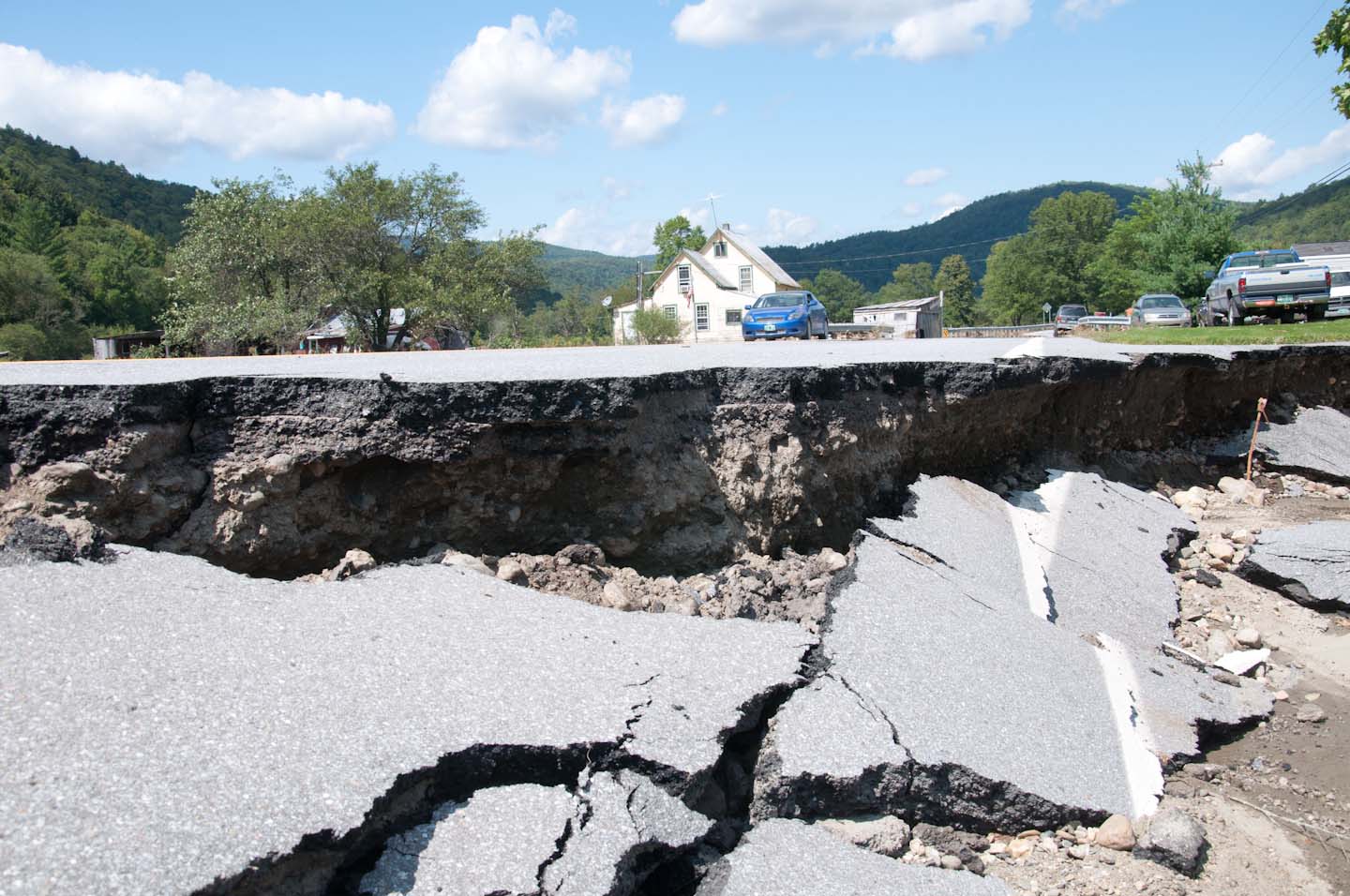
If you’re coming down from Warren, take Brook Road into the mountains, make a right on Plunkton Road, bump along the washed out and eroded mountain road for a few miles until it joins up with Route 100 again. Turn left and head south for about two miles until 100 dissolves into nothingness, again, and make a left on North Hollow Road, another mountain road that at points is barely passable by car (Scion sports car). A few miles up make a right on Maston Hill Road, and slowly work your way back down the washed-out, glorified trail of a road until it meets Route 100 in Lower Granville.
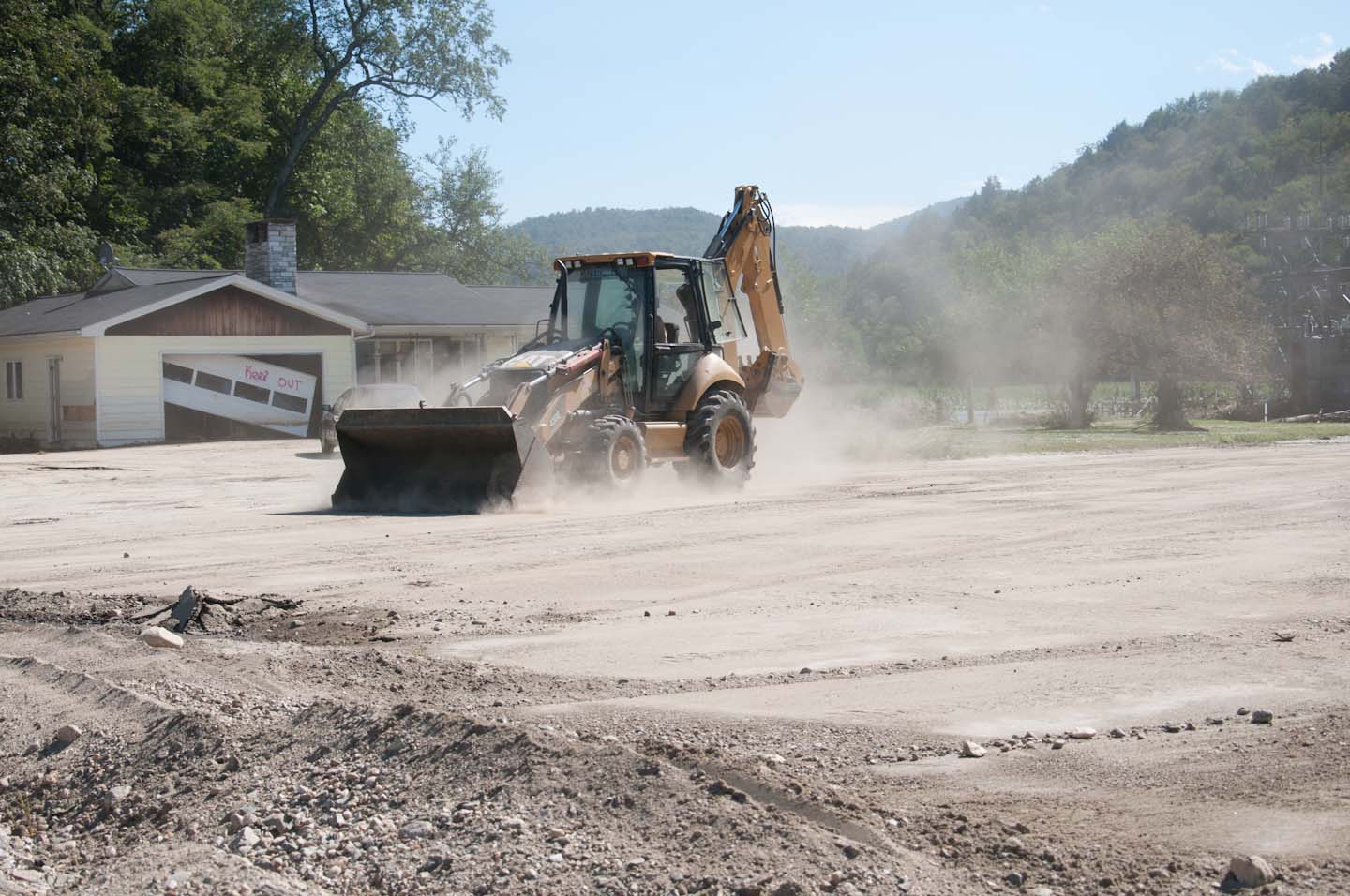
Tropical Storm Irene turned this mountain valley village of 1,100 residents into an island. The main roads were washed out, and the village was all but inaccessible.
On Tuesday, a few people from outside Rochester were able to get through, according to Larry Strauss, the selectboard chair.
“I can’t confirm what traffic is getting here, but today there have been vehicles getting through,” Strauss said. “They’re mostly four-wheel drive vehicles going over very rough roads.”
Rochester is not only geographically isolated by the flood damage; it’s also removed from the electronic age. The CVPS substation in Rochester was knocked out, so there is no power, and the selectboard chair said it could be weeks before it’s restored. The phones are dead and cell phones don’t work here in the best of times.
Rep. Sandy Haas, P-Rochester, went to a nearby mountaintop to get cell coverage and phone in a description of the damage to Rochester.
“We were sort of stuck here,” Haas said. “The only way out is the back roads.”
Tuesday morning, however, residents from Rochester and nearby Hancock found a way to reach the outside world – and an audience with WDEV. A handful of callers complained to Mark Johnson, a host on the Waterbury radio station, that they were being ignored by state officials. People who needed dialysis were in trouble, listeners said, and they were frustrated with Gov. Peter Shumlin’s response to the situation on the program.
An anonymous caller who said she just left Hancock said there was no electricity, Internet or cell service in her area.
“If there’s an emergency and somebody needs medical help, you’ve got to walk two miles to get to a place where there’s anyone you could talk to,” she said. “I think that’s stranded. I think that’s feeling isolated, and I think we don’t need to belittle that — and if somebody has an emergency. I know a guy who had a heart condition last night and there’s … no way to connect with anybody. I think the governor’s wrong about that, and he needs to know that.”
At a press conference at the Waterbury State Office Complex, Gov. Peter Shumlin chided the “national media” for using the word “stranded” to characterize communities like Hancock and Rochester, and he said that allegations that Vermonters with medical conditions couldn’t get treatment “is not true.”
“Stranded is an interesting word,” Shumlin said. “Obviously, we have communities that are isolated. We’re trying to get roads opened up as quickly as we know how. The only thing I’m objecting to is, we have Red Cross in those communities, we have support vehicles, we have the National Guard, there are folks in there actively helping, and anyone who needs medical attention is getting help. So this suggestion by the national media that we’re leaving people up in the hills with no help is a bit of an exaggeration.”
The governor urged Vermonters in isolated communities to be patient, and he insisted that helicopters will be made available to Vermonters who have no other way out. He said residents need to call 9-1-1 or 2-1-1 for help. “We have Red Cross choppers,” Shumlin said. “We can get anyone out anytime. … If you are in need of help, let us know.”
Listeners to WDEV bristled at the suggestion that they weren’t stranded, particularly since they don’t have cell coverage, and can’t make the SOS calls that Shumlin suggested.
Helicopters evacuated the dialysis patients in Rochester Tuesday morning, according to Haas.
A town in shock
The Vermont National Guard on Tuesday was also gearing up to drop supplies – medical supplies, water and food to residents in the 12 most isolated communities – and by the end of the day was making progress.
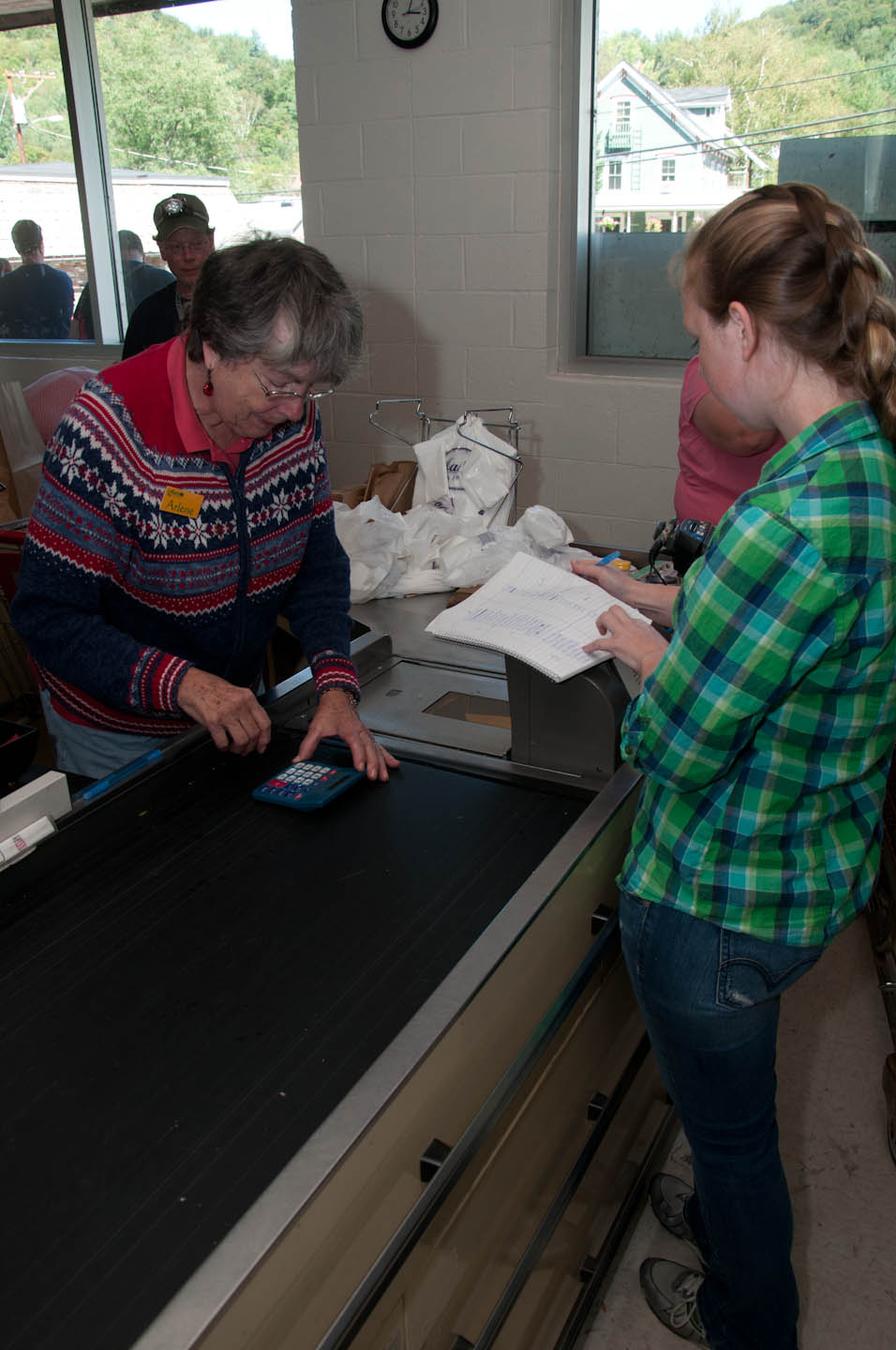
Meanwhile, a line of about 40 shoppers stood in front of Mac’s Market waiting to be allowed in. In small groups, shoppers walked the aisles guided by store employees and volunteers carrying flashlights. At the checkout, all cashiers worked with the escorts to tally shopper’s purchases by hand and accept cash only payments.
The town offices were bustling with state police, first responders and volunteers, all working to organize clean up and rebuilding projects.
By late Tuesday, workers had constructed a small foot bridge crossing the White River at the junction of Routes 73 and 100.
Diana Brown, who lives in “the Hollows,” above the town, said on Monday they used a system of ladders to get across washed out culverts to get into the village. She said she’d never seen flooding where every culvert had been washed out.
“We saw the water rising so high fast up in the mountains, we knew it was going to be catastrophic in the village.”
Steve Maynard, 55, directed traffic at the junction of Route 100 and 125 on Tuesday. During the storm, he said the water rose 2 inches to 3 inches a minute on Sunday as he stood in the road and actually watched the level rise. “We call that walking the line, when the water level comes right up to the yellow line in the road,” Maynard said.
Jon Graham and his family had evacuated their Robinson Drive home on Sunday and watched as the brook that runs behind their property got higher and higher.
“At one point, it was like someone with a giant shovel was just pulling the dirt out from under the foundation,” he said.
Later that day, as he watched the waters tear away the deck and foundation of the back of his house, Graham went in to retrieve his two cats. Graham said after he passed the cats out the front door to his wife, he turned around to grab one last item — a bag containing passports, birth certificates and other documents, and then the foundation gave way, sending Graham crashing back into the house amid books, furniture and brook water that was now filling the demolished house. Graham was able to “crawl up through the house to the front door where his friend and neighbor, Rochester resident Sean Keown, was waiting and ready to pull him out of the rubble.
Looking over the remains of the twisted and broken framing and clapboards of his house, Graham remarked on its age and the number of floods the house has survived.
“This house made it through three 100-year floods,” he said. “It was built in 1900 and survived the flood of 1927.”
