

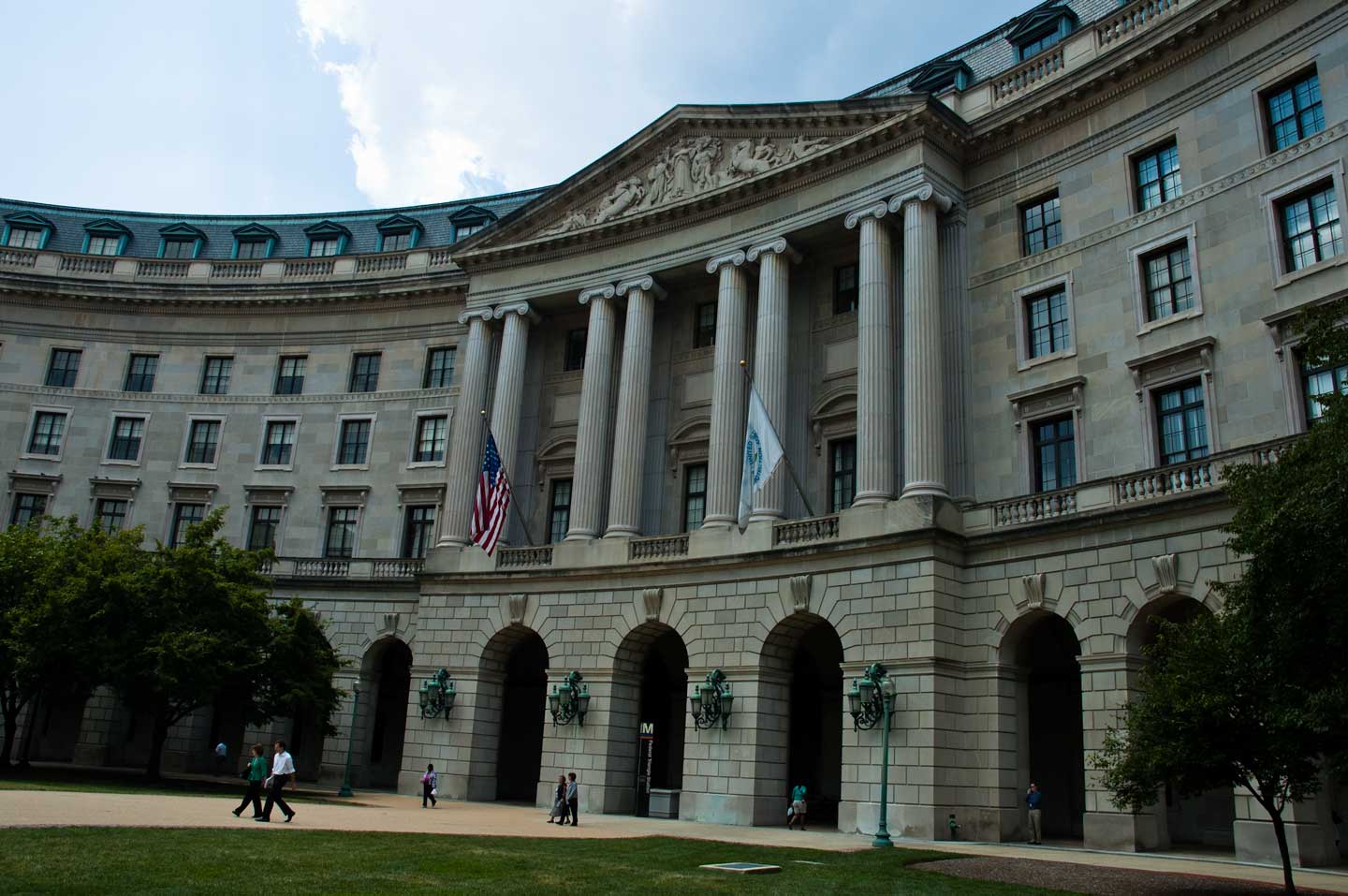
Despite expectations, contaminated groundwater has wormed its way around safeguards already in place at a U.S. Environmental Protection Agency superfund site in Bennington.
Additional remediation to control contamination is necessary at the Burgess Brothers landfill site, and the costs could exceed $4 million, said EPA officials. A public hearing about the situation was held at the Bennington Free Library on Silver Street Tuesday evening. About 15 people attended; no one offered any public comment during a formal comment period that followed an EPA presentation.
The site is identified as a three-acre parcel situated at the northeastern corner of a 60-acre property located on the Bennington/Woodford border along Route 9. Much of the property is bordered by the Green Mountain National Forest.
The site underwent extensive EPA remediation beginning in 1998. A cap was placed over the landfill and a soil vapor extraction system was put into place at the site. At the time, EPA officials believed that those measures would contain contamination, including battery wastes, lead sludge and lead-contaminated groundwater.
“What we do know is [contamination] moved beyond where we thought we could contain it,” Connelly said.
Tests show that groundwater contaminated with trichloroethene {TCE} and tetrachloroethene {PCE} has moved beyond the containment area. Both substances are considered carcinogens , said EPA Project Manager Terrence Connelly.
Connelly blamed a shift in the groundwater water flow as the cause of the increased contamination area. The spread remains confined within a 12-acre section of the property.
TCE and PCE have not been detected in the nearby Barney Brook, which empties into the Walloomsac Brook, he said, but some contamination has been found in a section of a small creek that empties into Barney Brook. There are no homes close to the site, and homes in the area are serviced by a municipal water system. Existing restrictions on the landfill property include a ban on drinking the water, Connelly said.
During the hearing, Connelly outlined a plan to construct two trenches, termed “barriers,” that would be about 200 feet long and about 25 feet deep. The proposal calls for barrier construction at the edge of the landfill cap and near an area where contaminated groundwater has migrated. The trenches will be filled with sand and iron shavings. The mix would break down contaminants and prevent further spread, Connelly said. The proposed barrier depth is significant, he explained.
“About 25 feet below, the soil is tightly packed,” he said. “Water doesn’t move through it. We don’t want water going around the trench or going under it.”
Additionally, natural attenuation and long-term site monitoring will continue to ensure that contamination is not spreading and that the barriers are effective. If barriers do not resolve the contamination spread, Connelly said “contingencies” can be put into place. He did not describe what those efforts would be.
During two telephone interviews prior to the hearing, Connelly said that those deemed responsible for the site and named in an existing consent decree include Clyde Burgess Jr., Burgess Brothers Construction Co. and Eveready Battery Co., Inc. . Eveready is now the Energizer company, and published newspaper reports state that Burgess Brothers Inc. was sold to Earth Waste Systems of Rutland, Vt. in June.
The EPA must negotiate a cost agreement with the potentially responsible parties, Connelly said. Documents provided at the hearing put the estimated costs at $3.9 million. During interviews prior to the hearing, Connelly noted that due to fluctuating construction and material costs, proposal estimates range from $3 million to $6 million.
According to a proposal timeline, project design would begin in 2013 and barrier construction would begin and end in 2014.
During conversations prior to the hearing, Connelly emphasized that the landfill dumping, which began during the 1950s and ceased during the 1970s, was not illegal at the time and none of the responsible entities engaged in any criminal activities with regard to dumping at the site.
Written comments about the proposal may be submitted to Terrence Connelly, EPA New England, ME/VT/CT Superfund Section 5 Post Office Square, Suite 100, Mail Code OSRR07-1, Boston, MA 02109-3912 or connelly.terry@epa.gov. The deadline for public comments is Aug. 29.
The landfill was listed as an EPA Priority Site in 1988.
