

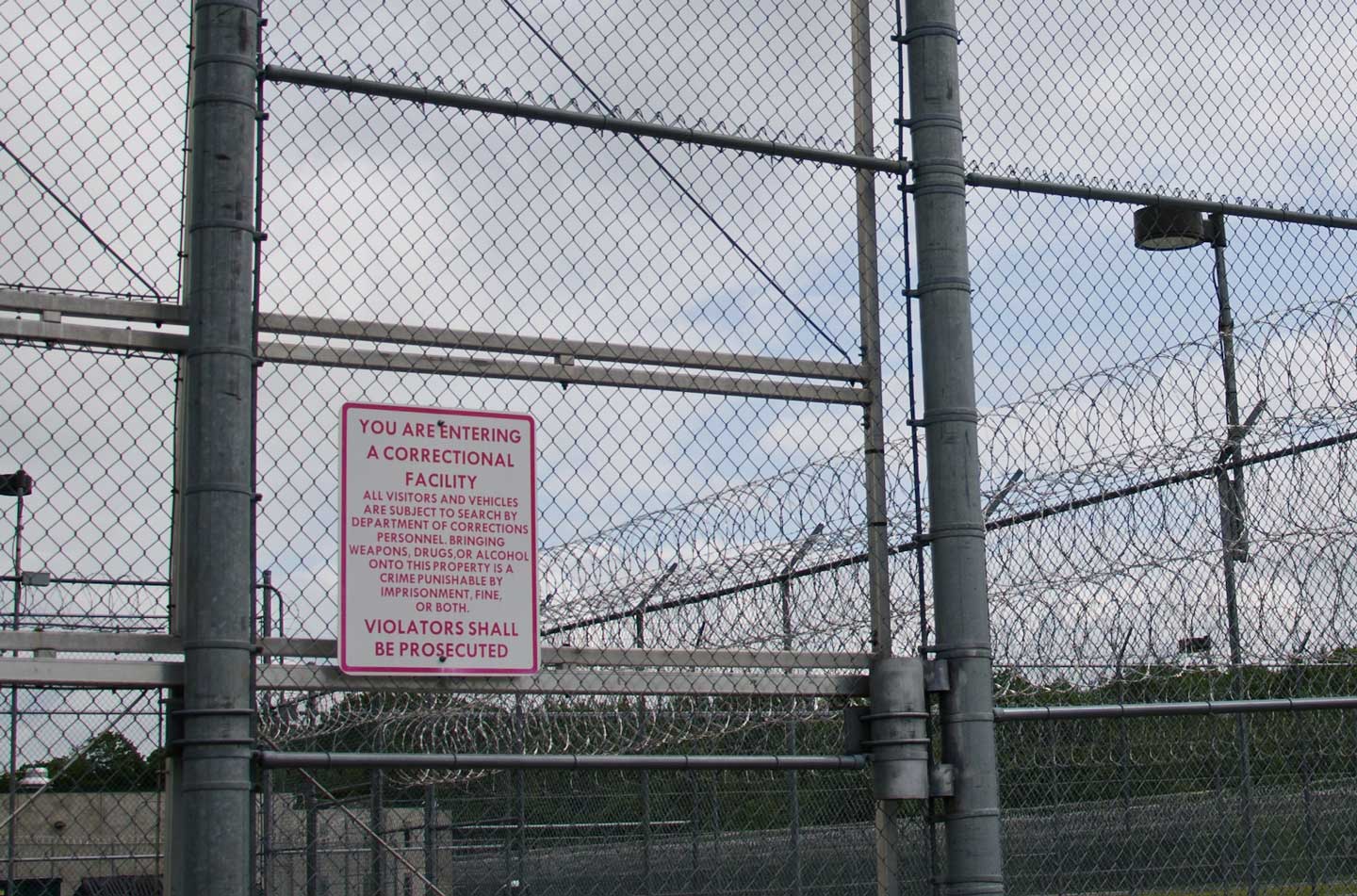
MONTPELIER — The state of Vermont is making progress in reducing growth in the number of inmates in the corrections system, says the Vermont commissioner of Corrections.
Commissioner Andrew Pallito also says the state is in negotiations for a new contract to house Vermont prisoners out-of-state and is working hard to reduce the number of women incarcerated in the state system.
“We really have an eye to bringing that population down further,” Pallito told a legislative panel on corrections oversight comprising members of both the Vermont House and Senate.
Pallito said 2,095 males are currently incarcerated, and that number has been as low as 2,050.
The number of women in jail is around 148, a 15 percent reduction from an average of around 170, and he said he was optimistic that incarceration number could be lowered further with efforts to address re-entry housing and employment for women prisoners.
“I think there’s an opportunity to really drive the (female) population down further,” he said. One need is to find “bring online some kind of re-entry unit down south,” he said to help female inmates move back into society, find housing and jobs.
Considering that state projections were that Vermont would be housing a total of well over 2,500 inmates, the current figure under 2,250 is a “sign of some success” in reducing the prison count, Pallito said.
The declining numbers is the result of the state’s effort to address the causes of recidivism that lead released prisoners to end up back in jail, Pallito said.
The panel, which has five members from each chamber in the Legislature, reviewed a wide range of issues Monday whose breadth and complexity reflect the many moving parts that corrections issues touch on, from public safety and the judiciary’s role in sentencing to corrections staffing and salaries, transitional prisoner housing, community concerns over parolees, and the high cost to the state to maintain six state prisons and two prison work camps, as well as providing inmates’ medical care.
To that daunting mix, Rep. William Lippert, D-Hinesburg, added the Legislature itself, where jurisdiction over corrections is spread among several House and Senate panels. “We really also influence that system,” he said, noting the goal for all is to reduce “excessive use of precious, very expensive use of resources in corrections facilities.”
Vermont’s $132 million corrections budget for this fiscal year is one of the largest chunks of money the state appropriates. Unlike many other programs which have a large federal contribution, Vermont picks up 98 percent of the tab, noted Sen. Richard Sears, D-Bennington, who was voted chairman of the panel, replacing Rep. Alice Emmons, D-Springfield, under an agreement that the committee chairmanship be alternated between the two bodies.
The last two years, the Legislature and administration, faced with a recession and tight budgets, took numerous steps to try and curb growth in corrections spending with a wide array of administrative, legal, budgetary and policy changes. Among them was the so-called Challenges for Change initiative seeking savings through government efficiency.
On Monday Sears, who has a long history in corrections issues as head of the Senate Judiciary Committee and has been a senator since 1993, noted it has been a “difficult year” for corrections but said he sees some progress.
“We move forward and sometimes we take a step backward, but mostly we move forwards,” he said.
Vermont now houses about a quarter of its prisoners out-of-state, 105 just across the border in Greenfield, Mass., and 472 in Kentucky, down considerably from the high of 700, Pallito told the panel. An additional four with mental health issues are in Arizona.
The state is negotiating for a new out-of-state contract and Pallito said the state has been approached about housing Vermont prisoners in a brand new facility in Keene, N.H., as well as by Corrections Corporation of America.
“We’re investigating all of these,” he said.
Complaints about health care and hardship for families of out-of-state prisoners, as well as concerns about money flowing out-of-state for prisoners housed beyond Vermont borders, has prompted corrections to try and reduce those inmate counts.
A related issue is prison staffing, where Pallito reported both some progress and some difficulties. He said three important superintendent vacancies have been filled, but the state has not been able for eight months to hire a medical director to oversee inmate health, despite a salary offered as high as $125,000.
Pallito said his department is exploring whether some innovative arrangement could be set up with the University of Vermont and Fletcher Allen Medical Center to fill that need.
In response to a question from the committee, Pallito said salaries are proving an obstacle in hiring Vermont prison superintendents because they are below those in other states where salaries are $90-$125,000 or more. The recent hires were at around $62,000 to $66,000, and the post can actually amount to a cut in pay if the employee is moving up from a shift supervisor eligible for overtime. Pallito said the department is working to adjust those salary scales.

