

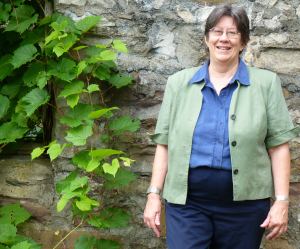
“Committed activist” is an expression that might have been invented for Martha Abbott, chair of the Progressive Party. Even if she had not lent her name to the party’s slate this year as candidate for governor—she will bow out after the primary—she is someone who, rather than holding the office, inhabits it. Yes, she’s been chief cook and bottle washer for eight years, performing the usual oversight functions—fulfilling the obligations of a major party dictated by state statute, building the organizational base and seeing to it that financial reports are properly filed—but she’s much more than that.
For one thing, she’s probably the repository of party history, having been with the Progressives through the 20 years they were a “coalition” based in Burlington (she was on the city council for two terms in the ’90s) and the 10 years they have had party status. She also frames issues for Progressives, has pushed for significant shifts in election tactics and has encouraged likely young Progressives to run—not necessarily on the Progressive line—and she has run herself.
If her last few runs—for State Auditor of Accounts—have been more about ensuring that the Progressives get the 5 percent in a statewide race needed to retain “major party” status and help protect the Progressive line on the ballot from pirating by intruders like Boots Wardinski — she has done well enough on her own merits to get nearly 10 percent of the vote in 2006 and 12 percent in 2008.
In sum, she “does the work that needs to be done” for the party in a manner described as “priceless” by Anthony Pollina, past and present candidate for state office. Pollina, who has known her since his 2000 run for governor, says she’s always been bigger than “party chair.” Tim Ashe, the Democrat-Progressive state senator, calls her the “linchpin” of the party, providing “continuity in Burlington and in other parts of the state.” For David Zuckerman, just ending seven terms representing Burlington in the House, she’s “the thread that connects the old blood with the new,” an allusion to the shifting cast of characters—what he calls “the three generations of Progressives”—in the 30 years the coalition cum party has been around.
She is arguably the engine of the Progressive Party today, not a role that other party chairs in Vermont can claim, which doesn’t mean she’s a “party boss,” given the independent nature of the Progressive beast.
Family and party
Abbott is the daughter of a “seventh-generation Vermonter,” Fay Bisbee Abbott, whose father, Madison Bisbee, had a farm in Newport and worked as a customs officer in Derby Line. Fay, widowed young, was remarried to “flatlander” George Abbott when he moved to Vermont after World War II. Were they Democrats or liberal in their politics? “No,” Martha Abbott says.
“They were Republicans, conservative in the way that Vermonters were what I call ‘genetically Republican.’ You know, their parents had been Republicans.”
Born in Burlington, Abbott spent a good deal of her childhood in Washington, D.C., where her father worked in real estate. She returned to Burlington in her teens. Though her father ran for state office a couple of times, once for lieutenant governor, her own political awakening didn’t take place until she was in college at the University of Vermont. It was the Kent State University shootings that “galvanized” her, she says, making her early interest in theater pale in comparison to political activism.
Outrage at the shootings and questions about the war led her to attend the first meeting of what became the Liberty Union Party at the house of former U.S. Congressman William Meyer in West Rupert. She first met Bernie Sanders that night in 1970. The nursery for many a first-generation Vermont Progressive, the Liberty-Union party was launched as a “pro-labor, non-violent socialist” party actively opposed to the Vietnam War.
In 1974, still a Liberty Union member, Abbott became the first woman to run for governor of Vermont. “I was 24 and I had the answer for everything!” she says wryly. Adding, “the older I’ve gotten, the 
The war ended, but not Abbott’s sense that something was not right with mainstream America. For one thing, her upbringing had sensitized her to the financial struggles of many Americans even in the boom times. In biographical notes on the Progressive Party Web site, she writes that her father, George Abbott, served in the Marines in World War II and, after being “under fire at Guadalcanal for 90 days straight,” came home to struggle with what now might be called PTSD. To that Abbott attributes the family’s difficulties in making ends meet (her mother worked as a medical secretary all her life) even though she grew up in the “affluent 1950s and ’60s.”
In a 2006 run for state auditor, Abbott expressed her lifelong concern with what she sees as disadvantages for “working people.” “As a tax preparer, I have seen the unfairness of our tax system. I have seen people who work 40 hours a week pay income taxes on 100 percent of their wages while investors only pay on 60 percent of their gains.” In that 2006 campaign, she expressed her commitment to what she sees as a fairer deal for working people in the change she proposed in state purchasing rules: “State purchasing should reward responsible contractors, favor Vermont businesses and prohibit offshore contracts. We should prohibit contracts with employers whose workers qualify for public assistance because they are paid so little in wages and benefits.” These are classic Progressive views, but they are informed in Abbott’s case by personal experience.
After UVM, she held a number of jobs, one of which was with a marketing research firm in Burlington, where she met Doug Racine. She then worked for H&R Block before opening her own business, Independent Tax Services. The offices—and her nine employees who prepare “about a thousand tax returns a year”—are in the Chace Mill in Winooski. She’s run the company for nearly 30 years. Her present office looks out on the old mill-wheel enclosure that produced power for half a century. (It’s said that even now if you were to kneel on one of the machine oil stains on the old wood floors, some of it would come off on your clothes.) Abbott wishes there was still a working millwheel producing hydroelectric power as there was through the 1930s (Green Mountain Power owned it and it generated 450 kilowatts of electricity), but takes comfort in the “Chace Mill” hydro project just downstream that dates from the 1990s.
Founding a Progressive Coalition
By the late 1970s, a business owner and turning 30, her pragmatic streak, noted by just about everyone interviewed, led her to find the Liberty Union party too “far out.” She and Bernie “both sort of became unenamoured with the idea of just kind of having this out-there platform and not really addressing the mainstream, and we really wanted to find a way to work politically that would speak more to where ordinary Vermonters were.” Liberty Unionists were also so “radical” and so motivated by “a desire to push the far-out ideas as opposed to [having] a desire to talk to the vast majority of Vermonters,”—the major problem for third parties, she says reflectively—that it was time to move on. One example she cites: “We were having arguments about whether…everybody should be paid a certain threshold amount no matter what they were doing. I mean, you know, it was not in touch with reality, with things that were really going to happen.”
Sanders, calling himself a “democratic socialist” but running on the Independent line, drew on a “Progressive coalition” in his run for mayor of Burlington in 1980. Abbott, who was living outside Burlington—she says rather vaguely “in Hinesburg or Starksboro”—was not involved in the mayoral race but she was active in the Progressive coalition. In 1999, still without Bernie as a formal member, the coalition became a formal party.
Given her concerns about “far-out” ideas and their lack of appeal to “the vast majority of Vermonters,” how does Abbott explain switching to another alternative to the two main parties? The logic, so far as she is concerned, is that both Democrats and Republicans “perpetuate corporate-oriented policies and don’t represent the ordinary working citizen.” To give up the idea of a “necessary force to bring the Democrats to more liberal positions on issues,” that is also free of corporate influence—Progressives do not take corporate contributions—would defeat the political purpose of her life.
Yes, there are some Democrats whose views are almost precisely those of Progressives, but, she says, “Their approach to leadership is ‘I’ve got to get elected to do good things,’ instead of telling people exactly what you think and exactly what you want to do,” which is the Bernie Sanders approach, in her view. Sanders voters have supported him from the time he ran for mayor of Burlington, she believes, because “he does what he says he’ll do.” It’s how you run that defines a Progressive in her eyes, with the paradigm/paragon being Bernie Sanders.
Abbott looks back on the city Burlington has become and to her own years as a city council woman and the satisfaction she found in participating in the decisions about the city that were being made over the course of 30 years of Progressives in power, particularly during the period when Peter Clavelle was mayor. “You know it reinforced for me that if you have people who are interested in people over profits and the interests of working people, creating a climate— a culture and an economy—that supports the interests of the majority of the people living in your city, what you can create is one of the most livable cities in the country on every measure.”
The party grows up
Progressives began to work for statewide official major party status following Bernie Sanders’ election to Congress in 1990. By statute, that meant fulfilling a variety of requirements including winning more than 5 percent of the vote in a statewide race. In 2000, when Anthony Pollina won 9.5 percent of the vote in his run for governor against Howard Dean and Ruth Dwyer, the “party” was born.
Why compete with the other two parties as a third party, given the Progressives’ long-time role simply pressing the Democrats to move toward the progressive positions on issues?
“Politics in the modern age has become a brand-name sort of thing,” Abbott says with some exasperation, citing the “Coke and Pepsi” habit voters get into so that “they’re less likely to pick up root beer.”
She allows that it’s difficult to get people to run outside the major brand labels, because voters come out more often for the two more familiar brands, but as a “major party,” which must field candidates in the primary, says there’s more of a chance of winning with the recognition that comes with being a “brand name.”
But, in fact, the next step for the Progressives has turned out to be using the “brand name” of the Democrats, with Abbott leading the way for Progressives to run on the Democratic line. Anthony Pollina is the latest example.
“We have had this discussion since the beginning of the party and fights over the bylaws about whom we can endorse,” Abbott says. “We want to be effective, we don’t want our candidates hampered in getting their opinions out there, and if that means running on the Democratic line that’s fine. And election law makes it so impossible to run as both.”
Abbott adds, “I’ve really tried to work on this. You know, you have your philosophy and your ideas, but if you’re going to have an impact you have to figure out how to communicate with the people, so you have to get yourself pretty grounded in reality.”

Here is the “practical fighter [who’s] not a radical” that Chris Pearson, the Burlington Progressive running again for a seat in the House, describes. How does this pragmatism manifest itself? Tim Ashe, reflecting the views of a fusion candidate who is still very much a Progressive, thinks Abbott should get more credit “for spearheading getting Progressives behind Democratic candidates.” And David Zuckerman gives her credit for expanding the reach of the party statewide, “even in hard-core GOP areas.”
Pollina says Abbott is comfortable with ignoring partisan labels because, “ultimately, it’s making sure there’s a clear voice speaking up for ordinary Vermonters.”
When Progressives run in the Democratic primary, they ask Progressives to write them in, as Tim Ashe has done successfully.
She unequivocally supported Tim Ashe’s run for State Senate in 2008 (and now Anthony Pollina running as a Democrat in Washington County). She told Seven Days then that the party’s ultimate goal was to supplant the Republicans as Vermont’s second party, adding that, as Progressives are trying “to reach people with a message of what changes are needed,” the point was that Ashe “has the ability to cut through political rhetoric, and he gets where people are at.” Pointing up the change in Progressive Party tactics, she went on to say, “If you keep doing the same thing and it doesn’t work, you’re in a rut. You need to figure out a different way to get your message out.” She calls herself a “political risk-taker” who looks for “outside-the-box solutions.”
Tim Ashe says “she’s found the right balance between the pragmatism required as a political party chair and the principles for which she stands.” And he thinks she hasn’t gotten enough credit for “spearheading getting Progressives behind Democratic candidates.”
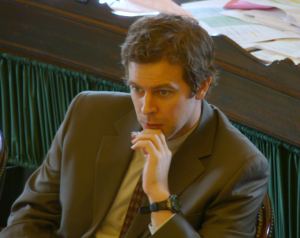
He also reports that Abbott, who is extremely direct, can display a disarming sense of humor. When he was running for the first time as a Progressive on the Democratic line in 2008, he said: “She kept encouraging me to wear a suit when I was at a Democratic event. I said, ‘Well, that really isn’t me.’ And she would say ‘You’re running as a Democrat. Nothing is beneath you now.”
Why a Progressive Party?
Observers like Garrison Nelson, one of Abbott’s professors when she was a student at UVM, while saying that the party’s “greatest success is Bernie,” (who has never called himself a “Progressive,” let it be remembered) gives Abbott the credit for sinking the candidacy of Hinda Miller, which made way for Progressive Mayor Kiss, and of moving Vermont Democrats in such a progressive direction that “the Democratic party the Progressives were created to counter is gone.” He goes so far as to say that, over the last two decades, the Democratic party “has been captured by many of the Progressives’ positions.”
In the evolution of the Progressive Party, with which Abbott has in the last decade had so much to do, Progressives now run on the Democratic line—Ashe and Pollina this year, with Doug Hoffer a Democratic candidate also looking for write-in votes from Progressives. While the Progressives’ hold on Burlington is apparently weakening, an argument can be made that Democrats in the legislature do dance more to a Progressive tune on a number of issues.
Last November, in her blog on the Progs Web site, she rallied the troops for another assault: “We need to begin a conversation taking a hard look at the current crop of candidates, watching them over the course of the upcoming legislative session and evaluating their leadership on [key Progressive] issues, with the goal of deciding whether all or some or any one of them is a leader we want to support.”
Asked this May, after the slate of Progressives was announced, why, with action on Vermont Yankee, with a single-sex marriage law passed and with a single-payer health care system at the top of the list of options the state commission on health care will consider, the party couldn’t just stay out of the governor’s race, Abbott fell back on the statute-based requirements for major parties.
But she did allow that there’s “a new attitude of ‘we need to work together’” when it comes to the Democratic gubernatorial candidates. While Abbott and other Progressives seem to feel Deb Markowitz has snubbed them, the other four Democratic gubernatorial candidates asked to talk with the Progressives, and so far three—Shumlin had to cancel, she says—have done so. From her point of view, the Progressive “threat” of running a third-party candidate has paid off.
As she’s bowing out of the race after the primary, the Progressives are apparently either comfortable with any of the Democrats or unwilling to be blamed for a Brian Dubie win.
Does all this mean Abbott and the Progressives could, as Sen. George Aiken suggested in a somewhat different context, simply declare they’ve won the war and leave the field? There’s no doubt in Martha Abbott’s mind that the Progressive Party still has a raison d’etre.
It might be summed up as “it keeps the Democrats honest.” The third party is the only way, as she sees it, to keep the leftish flag flying. “There have been plenty of waves within the other parties of going in this direction or that direction and they sort of die out in the end and go back to the sort of moderate center that keeps the status quo.”
To her there are two attributes that continue to justify the existence of a Progressive Party. First, the Progressives are still the only party that is “anti-corporate” and therefore pro-“ordinary individuals,” and, second, Democrats who say they take progressive stands on issues are still not ‘walking the walk,’ in her terms.
While she gives credit to other groups for putting pressure on the legislature on single-payer health care and Vermont Yankee, she is still quite clear that “unfortunately there needs to be an alternative. In many cases, our job in the legislature and in the political framework in Vermont is to provide the threat of ‘we will run against you’…maybe a Republican will be elected or somebody else. But we are going to insist that people stand up for ordinary working folks and their interests and stand up loudly and clearly and definitively.”

