

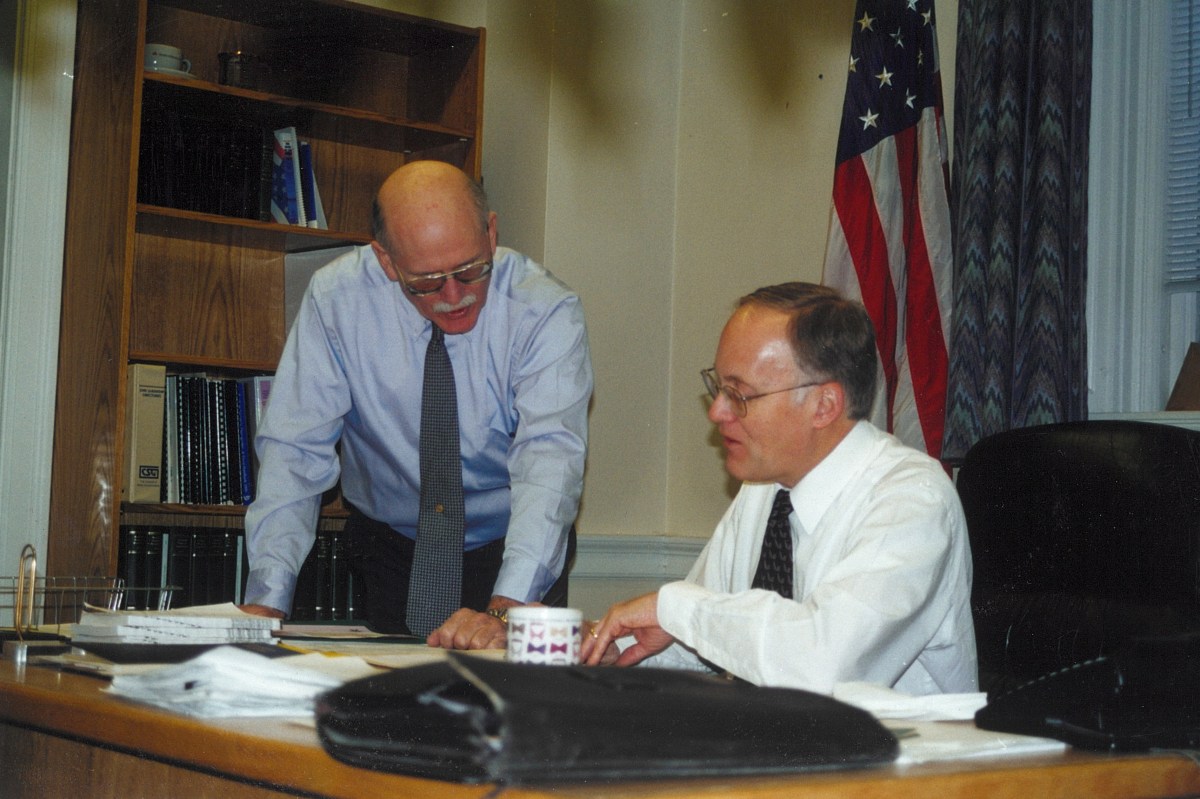
Timothy Hayward, who quietly counseled Vermont governors and members of Congress for close to half a century, died Sunday after a long bout with cancer. He was 82 years old.
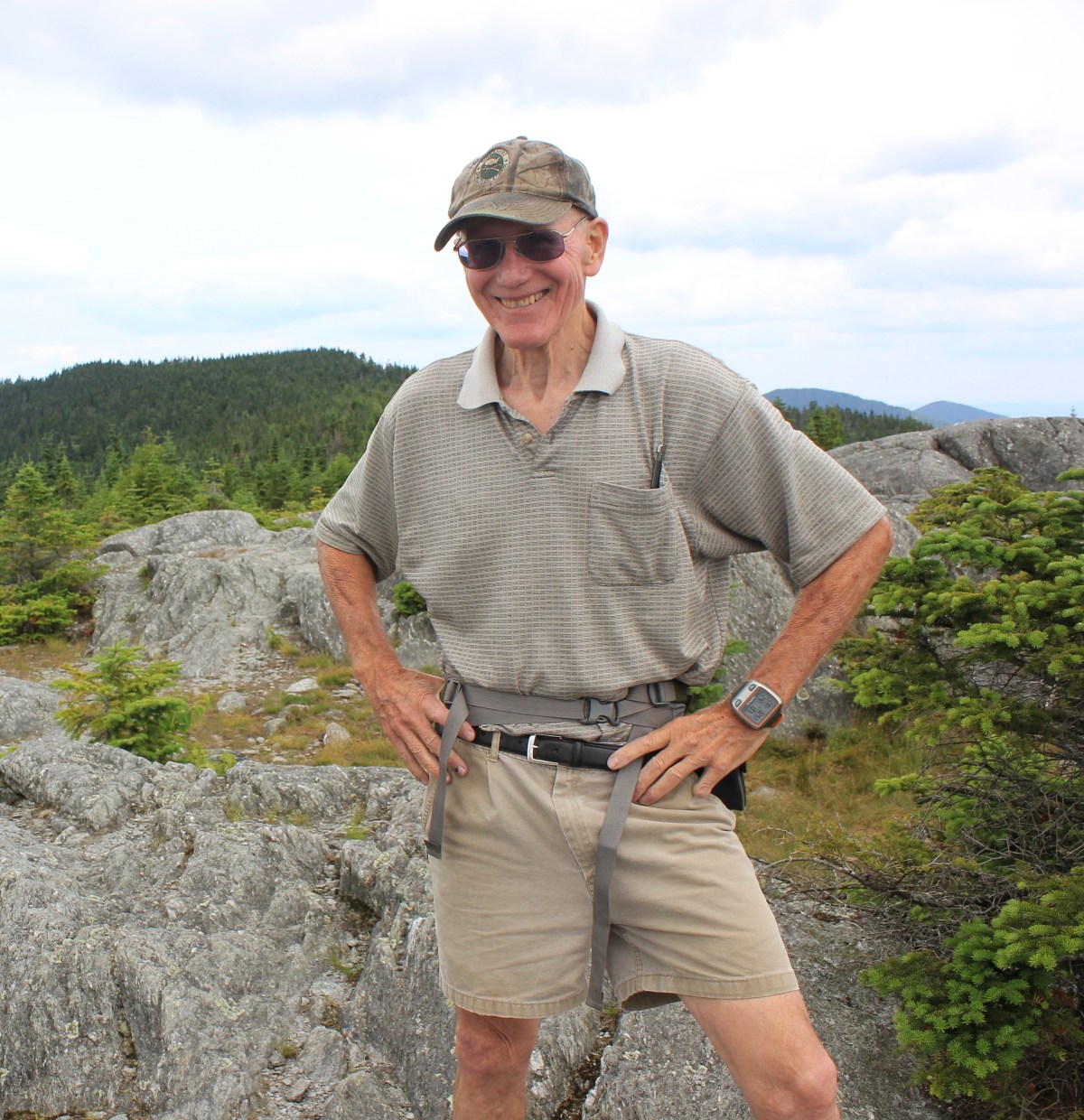
A proud veteran of the U.S. Marine Corps, Hayward brought an intense discipline to everything he did — his jobs advising then-U.S. Rep. Jim Jeffords, Gov. Dick Snelling and Gov. Jim Douglas, as well as his recreational pursuits in the fields and mountains of his beloved Middlesex. He lived in the shadow of Hunger Mountain and hiked it hundreds of times, according to family and friends, typically with a dog in tow.
“He was happiest when he was being productive,” said Zachary Hayward, one of three children he raised with Susan Hayward, his wife of 55 years. “He was even happier if we were with him as a family.”
Tim Hayward spent close to two decades as president of the Vermont Bankers Association, but it was public service that animated him. That began in the late 1960s, when he became involved in local Republican politics, and it included a term in the Vermont House. He eventually became an expert in gubernatorial operations and transitions, setting up Douglas’ administration in 2002, closing it down in 2010 and serving as chief of staff in between. In 2016, he briefly came out of retirement to lead Gov. Phil Scott’s transition into the office.

“He was the right kind of public servant,” Douglas said. “He loved Vermont. He wanted to serve Vermont. He wanted to make it a better place for everyone’s family. He had a work ethic that was unsurpassed. He was loyal to a fault, and he was honest. Vermont is better for his life and service.”
According to Douglas, Hayward was his “alter ego” throughout his governorship, anticipating his every move and setting him up for success. But Hayward largely operated in the shadows and would never become a household name.
“He abhorred the spotlight,” said Neale Lunderville, a close friend and protégé who served in several senior roles in the Douglas administration. “He considered it a failure if he got on camera or got in the newspaper because his job was really to promote the boss.”
According to Tom Evslin, another close friend and Douglas administration alum, Hayward was “the greatest force for good and effective government in Vermont that you never heard of.”
He was also a mentor to a generation of Republican politicos and public servants — as Lunderville put it, the “young, impressionable twentysomethings” who populated the Douglas campaigns and administration and now serve in senior roles in the Scott administration and the private sector. “We always called him ‘the chief,’” Lunderville said.
“He was incredibly loyal — not just to Gov. Douglas but to all of us,” said Heidi Mohlman Tringe, who served as deputy chief of staff under Hayward. “He cared a lot about the staff. He really created a family of us.”
In a written statement Monday, Scott acknowledged the role Hayward played in building the bench in state government.
“His very best work — work he clearly loved — was his mentorship to so many other public servants, who were taught by Tim and who benefited from his example,” said Scott, who ordered the state flag to fly at half-staff for a day in honor of Hayward. “His impact on our state does not end with him, but will live on for generations to come.”
The ombudsman
Born Sept. 9, 1941, Hayward was raised in Keene, N.H., and Milton, Mass., largely by his mother, Ruth Morison Faulkner, according to an obituary prepared by his family. “His father was not in the picture,” Susan said.
“The father figures in his life were hardworking men,” Zachary said: Adirondack camp counselors, professors, Marines. At Middlebury College, where he matriculated in 1960 and did not, at first, apply himself, one professor in particular made an impression on him, according to Zachary, telling the young student in a thick German accent, “Mr. Hayward, it would behoove you to shape up.”
“We all have different experiences that shape our work ethic,” Zachary said, “and I think he would have said that was the swift kick in the ass that he needed to get his act together and get to work.”
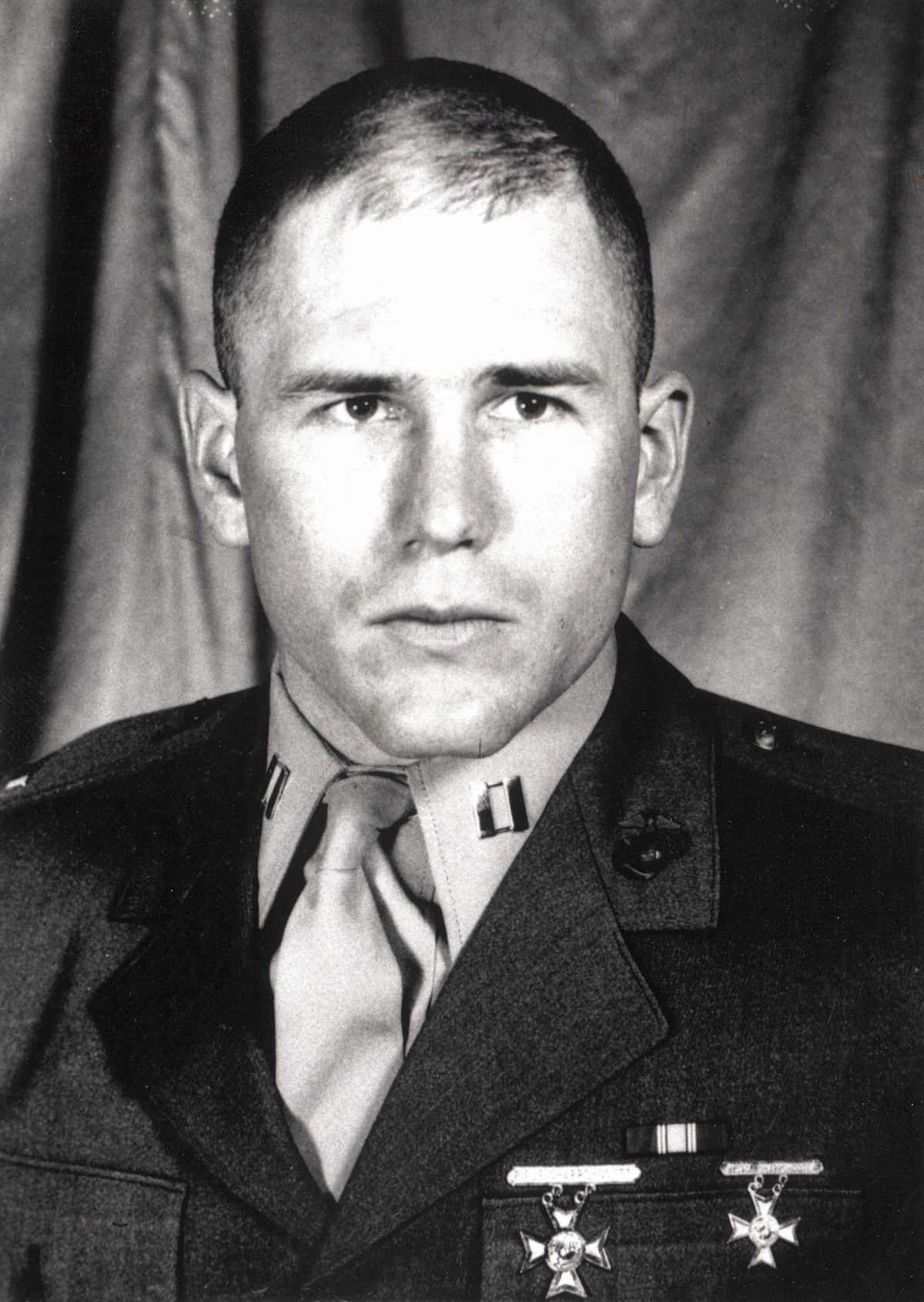
After graduating in 1964 and hitchhiking from Boston to Alaska and back, Hayward spent three years in the Marine Corps, attaining the rank of Captain, according to the obituary. He and Susan, a college friend’s sister, married in 1968 and moved to Vermont, where he worked as an analyst and computer programmer at National Life.
Hayward’s first professional political role came in 1974, when he successfully managed Jeffords’ first campaign for the U.S. House. That’s when he met Douglas, who was working on Richard Mallary’s less successful campaign for the U.S. Senate. “His candidate won and mine did not,” Douglas recalled.
Hayward went on to run Jeffords’ congressional office in Montpelier and, in 1976, won a seat in the Vermont House. Douglas, who chaired the legislative committee to which Hayward was appointed, was struck by his new colleague’s energy and diligence. But Hayward didn’t last long in the House, resigning in 1978, before his term concluded, to join the Snelling administration — first as office manager, then ombudsman, then special assistant to the governor.
A March 1979 story in the Burlington Free Press described his role as ombudsman as “field(ing) complaints from Vermonters at large about the bureaucracy and (acting) upon the valid ones.”
“Most people in state government are pretty reasonable, and if you show them they’ve been unreasonable, they’ll change their ways,” Hayward told the Free Press. According to colleagues, he would bring a similar approach to future roles, seeking to ensure that state government was working for the people it served.
It was in the Snelling administration that Hayward learned how to run — or perhaps how not to run — a governor’s office. “We used to joke that Gov. Snelling was his own chief of staff,” said Douglas, who also left the Legislature to join the administration.
When Snelling left office in 1985, Hayward took the helm of the bankers’ association, but he continued to dabble in politics — advising, among others, U.S. Rep. Peter Smith, R-Vt., and serving as Vermont treasurer of then-Vice President George W. Bush’s 1988 presidential campaign. A moderate Republican, he would later support the White House bids of John McCain, Mitt Romney and Nikki Haley — and he became an outspoken critic of President Donald Trump.
Recently, Hayward’s family came upon a folder at the bottom of his desk drawer labeled “Presidents and Wannabes,” with mementos from his volunteer service on presidential campaigns. Its contents included a postcard from Bush thanking him for his candid impressions of a particular debate performance.
“He cherished all those memories and those relationships, and he wasn’t afraid to give feedback to anybody about how they were doing,” Zachary said.
Hunger for a challenge
As Douglas campaigned for the governorship in 2002, he turned to Hayward to lead his kitchen cabinet, develop a policy platform and prepare for a possible transition.
“Tim was really a visionary,” said Betsy Bishop, whom Hayward recruited to flesh out Douglas’ agenda and who would go on to serve as deputy chief of staff.
Bishop and Jason Gibbs, who would serve as Douglas’ spokesperson, recalled with chagrin the night of the election. After it became clear that Douglas had won — and as young staffers and volunteers partied the night away — Hayward issued an edict that they were to meet early the next morning to brief the governor-elect. It was time to get serious.
“For Tim, every day was a workday, and every workday was a training day,” Gibbs said.
“Tim made sure that everything got done to the governor’s standards, and those standards were exceptionally high,” Bishop said. “There was no slacking. There was no skimming a document and hoping you got it right.”
Though Hayward could be tough, Bishop said, he was also encouraging. “He was creating a work culture that you wanted to be a part of before that notion was the in thing to do,” she said.
Gibbs, who now serves as Scott’s chief of staff, said Hayward had “a profound effect” on his approach to that position. “There is no person who has influenced how I do this job more than him,” Gibbs said. “And right up until his very last conversation with me, he was giving me candid and helpful feedback.”
Hayward wasn’t all business. “He was such a character,” Tringe said. The trim, mustachioed man had lost a portion of his left pinky finger at age 5 when a brother, Duncan, ran over his hand with a push mower, according to his family. When he was chief of staff, Tringe said, he would “wag around” the stub at his subordinates. Nearly every day in Montpelier, Tringe said, he would eat the exact same lunch: an egg salad sandwich from the gas station across the street.
He also dreamed up a highly unusual workplace bonding exercise: the Hunger Mountain Challenge. One summer during the Douglas administration, he invited the team to his Middlesex home and led its members — including the governor — on a leisurely hike up Hunger Mountain. At the summit, they were told to race down the mountain and back to his house, four miles away.
“The first person to the beers on the porch was the winner,” Gibbs said.
“It was a completely bananas race — a friendly race, but it was bananas,” Lunderville said.
“There are a lot of type-A personalities,” Bishop said. “And there are no rules.”
The Hunger Mountain Challenge became an annual tradition, replete with blood and bruises, that has lasted nearly two decades, bringing the Douglas diaspora together again every summer. The competition remains fierce, though some participants, including Douglas, have “transitioned to the senior circuit,” the former governor said.
“It was really a way to build the team,” Bishop said. “Literally climbing a mountain together.”
‘Back to work’
Though Hayward was devoted to his work, it didn’t interfere with his family life, according to his children.
“He was a wonderful father,” said his daughter, Heidi Urish. “He doted on us.”
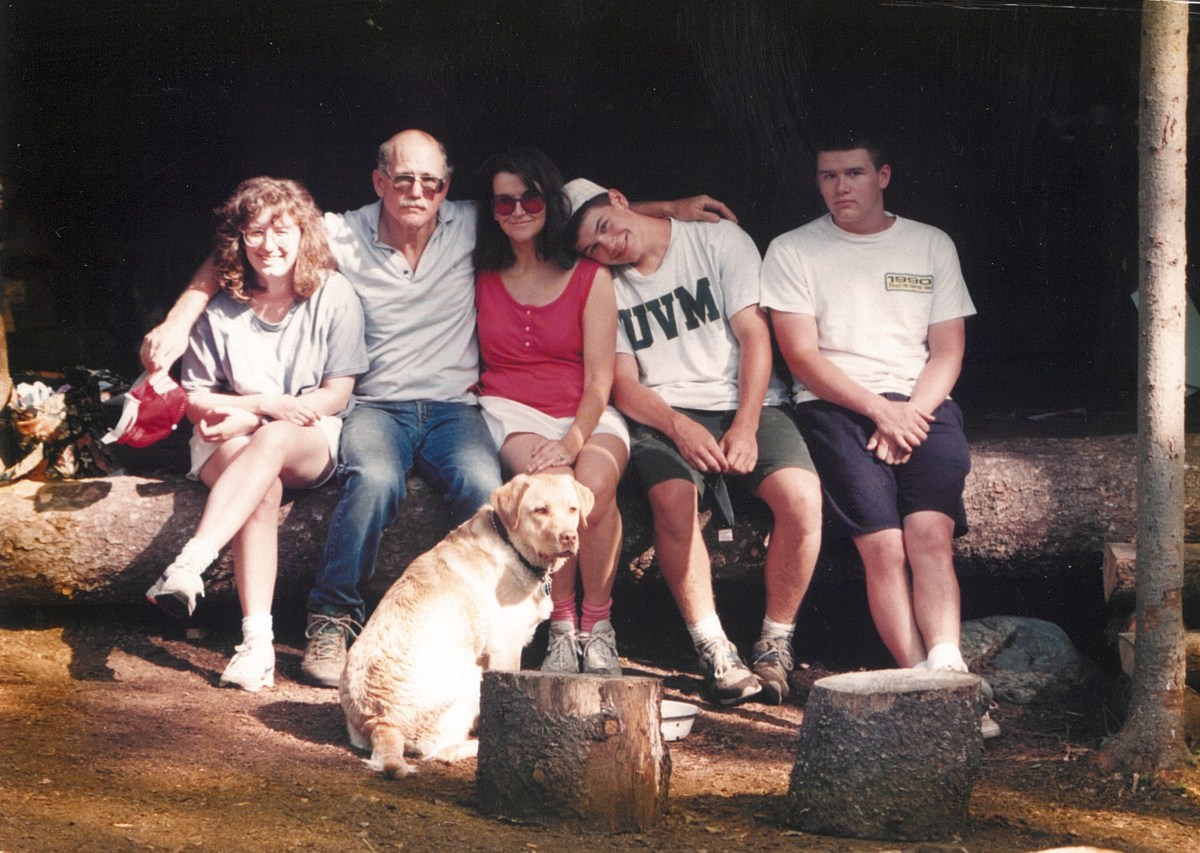
“I look at a lot of the decisions I’ve made and the path I’ve taken in my life, and he just set a great example,” said his son, Nathaniel Hayward, who followed his father into the Marines. “A lot of times when I didn’t know what path to take, I would look at the path he took.”
When Hayward was younger, he climbed all 46 of the 4,000-foot peaks in the Adirondacks. Decades later, Nathaniel and Zachary would do the same — and both times he would join them for their final ascent.
Retirement allowed Hayward to more fully dote on his grandchildren, of which he eventually had seven. He remained active, taking up running again and cutting firewood, dragging brush and clearing the fields around his home. He would split wood for hours, Zachary said, with a grandchild on the tractor, listening to the Red Sox on the radio.
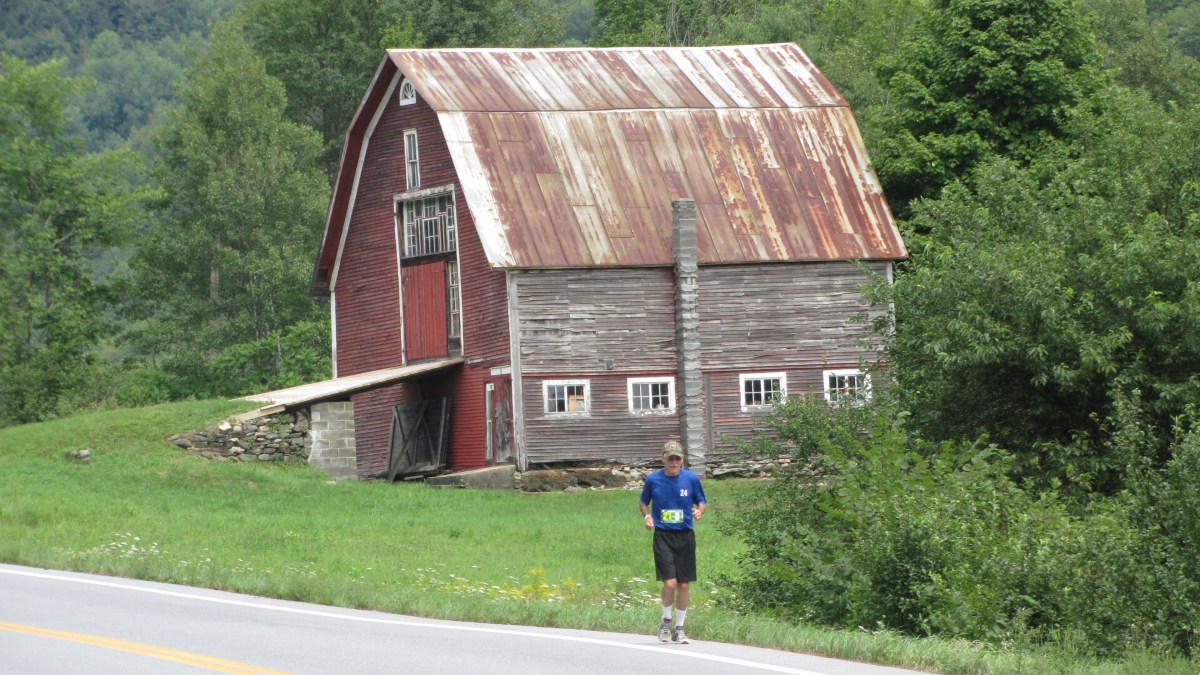
Hayward was diagnosed with lung cancer 11 years ago, according to his family, and navigated a series of health challenges. But as recently as last summer, Susan said, he was still working outside — just taking more frequent breaks.
In his final days, friends and family members inundated his room at Central Vermont Medical Center in Berlin. One day last week, Gibbs and Bishop happened to show up at the same time.
“It was like being in a staff meeting again,” Gibbs said.
Hayward quizzed them on Town Meeting Day results, according to Bishop. He doled out advice on the upcoming elections, Gibbs said, and discussed how to navigate national politics.
“It was really joyful,” Gibbs said. “The last thing he said as we were going out the door was, ‘It’s time for you to get back to work.’”
Disclosure: Neale Lunderville serves on the board of the Vermont Journalism Trust, which operates VTDigger.
