

[A]mong the problems Rutland Mental Health Services must address to remain one of the state’s regional human services contractors is management of a waiting list for adolescent mental health services, a state report shows.
Within the past year a 13-year-old girl took her own life after waiting almost six months to get into mental health treatment at the agency.
The state is reviewing whether Rutland Mental Health Services should keep its status as a designated agency. RMH is one of 11 designated agencies, nonprofits that receive exclusive contracts for mental health, developmental disability and substance use services. The agencies receive more than $300 million from the state each year. RMH receives more than $28 million.
Stakeholder committees made up of clients, family and experts voted on June 26 to place the agency on provisional status with intent to de-designate. That’s a bureaucratic specification one rung below a recommendation that RMH lose its designation altogether.
The state must make a final decision on whether the agency should keep its designated status by July 28. If the state accepts the stakeholder committee recommendation, the agency will have a month to write a plan for improvement and six months to implement it.
Hostile work environment
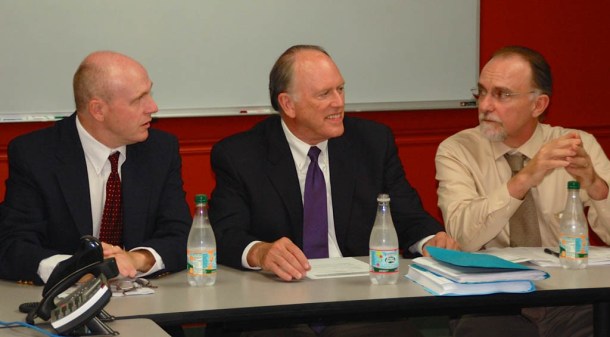
The June 26 meeting was stakeholder committee members’ only opportunity to question RMH officials about the agency’s shortcomings. Discussion focused on a hostile and retaliatory work environment that led former CEO Dan Quinn to resign under duress earlier this month.

At a meeting with state officials in May, RMH employees shared an “outpouring of commonly shared” frustration about negative work culture that Frank Reed, Department of Mental Health interim commissioner, described as “unprecedented” in minutes from a previous stakeholder committee meeting.
Officials from RMH said at the June 26 meeting that Quinn’s resignation and their cooperation with the state has improved morale and will ultimately allow them to provide the level of service that’s expected of them.
“One of the things that we’ve learned about serving our clients is they need to feel safe before they can begin working on anything else, and the same holds true for employees. They have not felt safe, and I think that they do now,” said David Long, vice president of clinical services.
Long is set to retire in the near future, which he said was planned and unrelated to the agency’s current problems. Longtime CFO Tom Pour is also expected to retire soon.
Some members of the committee said they were cautiously optimistic that RMH was on a path to improvement, while others were skeptical Quinn’s ouster could be a panacea for an organization facing serious challenges, including high turnover and low morale.
Designated agencies’ struggle to offer competitive wages can drive turnover, but at RMH that was exacerbated by a destructive work culture.
“Our human resource department was decimated,” said Michael O’Brien, director of crisis and adult inpatient services, adding that a service quality director also recently left.
Wait list for children
Notably absent from discussion between the stakeholder committees and RMH officials, or the stakeholder discussion before voting, were the wait times for children to receive mental health services.
Cinn Smith is a member of the Department of Mental Health stakeholder committee and also a member of a standing committee created by RMH to provide oversight of its children’s mental health program.
Smith said she was shocked to read in VTDigger that a young girl died while waiting to receive treatment from RMH last year, and that the wait list for children, youth and families was not being well managed.
“That’s not what we were told” as members of the RMH standing committee for children’s mental health, Smith said. Anecdotally, she has heard from people in the community that families are still waiting too long to get their children into treatment.
“I’m hearing months,” she said. RMH officials would not answer VTDigger’s questions about the wait list for youth mental health services following their meeting with the standing committee.
Fear and retaliation
Getting accurate information to entities providing internal oversight at RMH appears to be a recurring problem. Smith’s experience on the RMH standing committee is one example. Another is that until the state’s increased involvement this spring, RMH employees weren’t allowed to speak with board members, according to a state report.
A letter from a former employee to members of the board obtained by VTDigger shows there was a culture of fear and reprisals dating back to at least 2011. The former employee circumvented management’s prohibition on employees speaking with board members to share his reservations about Quinn.
He was fired within days of board members acknowledging receipt of his letter.
In that letter, the former employee describes Quinn as uninterested in the agency’s work.
“He does not care about our consumers; in fact, he is quite uncomfortable around them,” the ex-employee wrote. Quinn was also domineering and administered retaliatory discipline that cowed other dissatisfied employees into silence, according to the letter.
The former employee was asked by a former manager if he would get a challenging and expensive certification for a specific type of disability screening. The former employee reluctantly agreed as long as he was given a raise to compensate for the added workload and responsibility. The manager agreed, but left the organization shortly after.
When the former employee went to Quinn, the ex-CEO asked him to take a pay cut in addition to conducting the new screenings. After refusing, the former employee was disciplined and RMH continued to contract for the service, despite having paid for his certification.
Quinn’s unwillingness to approve a raise was actually costing RMH more in contracting fees, according to the former employee. The former employee said he was aware of at least three other employees who were promised something by mid-level managers that Quinn later quashed.
The former employee’s letter appears to have had little impact on the board’s view of Quinn. Minutes from a July 2014 board meeting show they approved a raise for Quinn when he was already making more than $200,000 in total compensation. At the time Quinn was a voting member of the board, but minutes don’t reveal whether he recused himself from voting on his own raise.
The minutes show the board approved a 1.6 percent raise for Quinn, versus a 2 percent or greater raise for the rest of staff, depending on if, and how much, the Legislature increased Medicaid rates. The rates weren’t increased, but the decision shows how RMH planned to use the money.
Changes going forward
The board will no longer be insular from employees, and the CEO won’t be able to exert the same level of control as Quinn, officials said at the June 26 stakeholder committee meeting. Its bylaws no longer allow the CEO to be a voting board member, and the state has indicated that going forward board membership must draw from parts of the county outside the city of Rutland.
Employees will be given an opportunity at the start of board meetings to voice opinions or concerns about how the agency is operating. Current Board Chair Chris Keyser gave workers his cellphone number, an RMH official said. It will take time to rebuild trust, said RMH interim CEO Dick Courcelle, but the agency is committed to improving.
The state’s involvement with RMH has steadily ramped up over the last year-and-a-half as problems became more acute and may have led to some clients being abused or neglected.
Several members of the stakeholder committee wanted to know why RMH had only recently begun to take substantive steps toward improvement. Courcelle responded that he did not know.
That a climate of reprisals and fear permeated a critical — and largely publicly funded — social service agency for at least four years, if not Quinn’s entire eight-year tenure, raises serious questions about the designated agency system as a service delivery model for the state, officials say.
No agency has ever lost its designation. State officials have said they prefer to work with troubled DAs rather than creating a service void by pulling the plug on funding.
But because RMH could lose its designation, Barber, the DMH attorney, said the state will begin contingency planning. It’s unclear what organization in Rutland County or elsewhere could step in and serve Rutland Mental Health’s more than 3,000 clients.
Rutland Regional Medical Center is already offering support. The hospital’s director of psychiatric services is working with clinical staff at RMH, because he said the hospital recognizes the agency’s importance to the region’s system of care.
It’s unlikely, however, that the hospital could step in and provide all of the community support services Rutland Mental Health provides to the region’s most vulnerable, officials say.

