

“The Legislature and my team are working together to try and address a problem that’s really hurting low-income Vermonters,” Shumlin said at a Statehouse news conference. “That’s the rent-to-own business.”
Low- and middle-income people with poor credit are often drawn in by low weekly and monthly lease rates offered by two national chain rent-to-own stores doing business in Vermont, Rent-A-Center and Aaron’s, advocates say. The companies lease new and used furniture and electronics at 14 locations in Vermont for two-and-a-half to four times the actual cost of the product, advocates say. When lessees don’t make the payments, the items are repossessed.
Only 25 percent of rent-to-own contracts result in ownership of the leased item, and with interest rates that Shumlin called “unconscionably high,” many customers wind up paying full price or more for products they will never own.
Sen. Kevin Mullin, R-Rutland, introduced S.73, which would put new restrictions on the rent-to-own industry in Vermont.
The bill requires rental companies to list the amount the items they carry would cost at other stores in the area. The leasing businesses would also need to calculate the effective annual percentage rate for interest on the products. The total amount of interest allowed would be capped at 24 percent under the proposed law. There are at least nine other states with similar laws, according to officials.
In some cases, the annual percentage rate (APR) charged for leases on electronics or furniture is as high as 400 percent, according Vermont Legal Aid.
“This legislation is about providing a fair deal over a fast buck in the rent-to-own business,” said Chris Curtis, a Legal Aid attorney.
“Basically, once somebody’s entered that agreement, the monies that they’re using to pay for that agreement are cutting into their basic needs,” Mullin said.
AARP Vermont, which supports Mullin’s bill, estimates that 72 percent of rent-to-own customers earn $36,000 a year or less. The industry, meanwhile, has expanded from 2.7 million customers in 2004 to 4.8 million customers in 2012, and is now worth $8.5 billion.
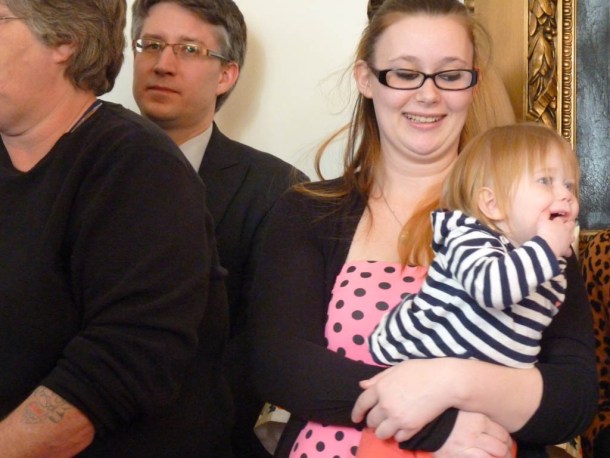
Ashlyn Murano, 20, a single mother from Brattleboro who is on a fixed income through public assistance, leased a used bed set for her and her daughter from a rent-to-own store.
“I needed a bed for me and my daughter to sleep on,” she said, adding that her plan was to rent for a few months until she could purchase a bed on her own.
The mattress was infested with bed bugs, which Murano believes were there before she rented the mattress. The store would not help her pay for an exterminator and she was “harassed” to pay off the $4,000 it would cost to own the bed set, Murano said.
If pre-leased or new items are considered “damaged,” the companies sue people like Ashlyn in small claims court, according to Curtis, who said he found 370 claims against lessees filed by Aaron’s and Rent-A-Center. They frequently win judgments because customers are intimidated or unable to fight the claims in court, he said.
Representatives for the rent-to-own companies argue that they are providing a service to people who have poor credit ratings and cannot get loans or credit cards to buy goods. Several attended a recent hearing on Mullin’s bill, but did not testify.
S.73 is currently before the Senate Committee on Economic Development, Housing and General Affairs, which the he chairs. Mullin said he will have the rent-to-own companies representatives in to testify Friday.
The companies have asked for the opportunity to bring in consumers who oppose further regulation, and Mullin said they will testify next week.

