

On the verge of possibly reigniting an international territory dispute in the Caucasus, the Senate Government Operations Committee this week retreated.
The committee considered endorsing what seemed like a harmless resolution to recognize the independence of a region few, if any, state senators knew existed.
The resolution called for the president and Congress to recognize Nagorno-Karabakh, a landlocked region within Azerbaijan, as a sovereign country.
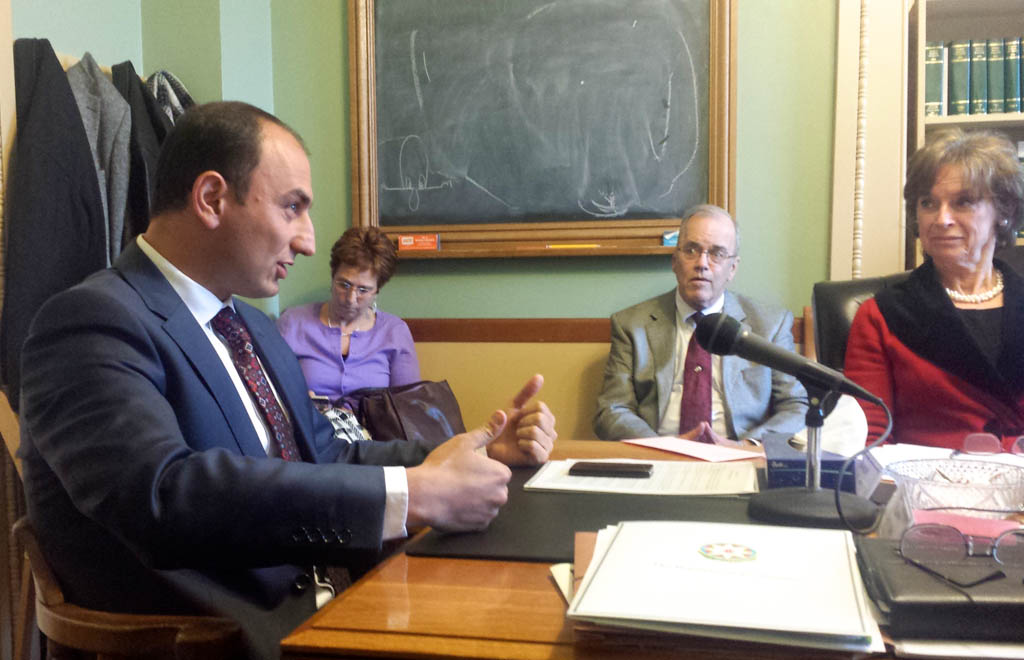
Before they knew it, the resolution had drawn Azerbaijan representatives to Room 4 of the Vermont Statehouse, toting Russian documents and strong opinions.
The Azeris told senators that passing the resolution would jeopardize the partnership between Azerbaijan and the United States, which share interests in oil and the war in Afghanistan.
“This specific bill is a risk to our strategic alliance and diplomatic ties between Azerbaijan and the U.S.,” said Yusif Babanly, co-founder of the U.S. Azeris Network.
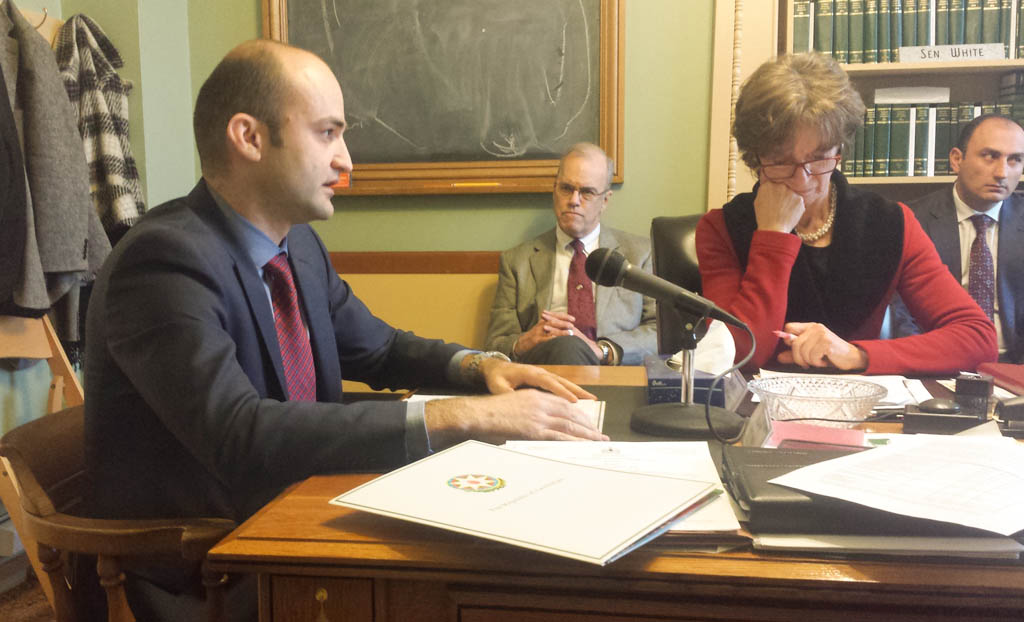
Senators, after listening to Babanly and an attorney from the Azerbaijan Embassy, dropped the resolution.
In the Vermont Legislature, lawmakers use resolutions for housekeeping, ceremonial matters or to express an opinion.
One filed this session congratulated Mad River Glen ski area on its 65th anniversary.
But this resolution, the five senators learned, could have ignited a geopolitical battle in a far-away region that is still healing from scars formed during the break up of the Soviet Union. Armenia and Azerbijian were at war over the Nagorno-Karabakh region in the early 1990s.
“I believe that countries should be able to determine their own destiny, however … it isn’t Vermont seceding from the U.S., which we have threatened to do. It’s complicated,” said Sen. Jeanette White, chairwoman of the Government Operations Committee.
The federal government caught wind of the Vermont resolution and the U.S. Department of State urged senators not to pass it, White said.
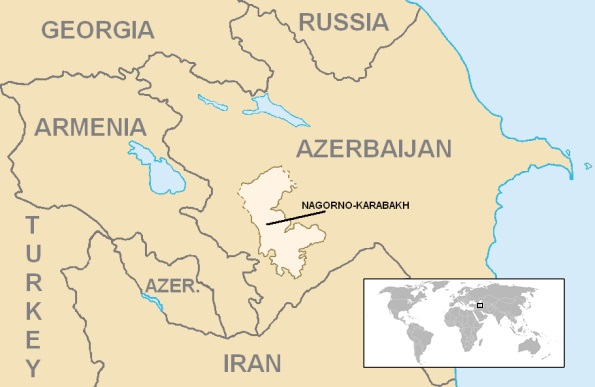
Nagorno-Karabakh is a 1,700-square-mile region populated primarily by Armenians. But it is in the middle of Azerbaijan, where U.S. companies have offshore oil projects and where the U.S. military uses air bases to prosecute the war in Afghanistan.
Azerbaijan borders the Caspian Sea between Russia, Iran and Armenia. It is also a close ally of Israel and has a bilateral trade agreement and investment treaty with the United States.
Although Azerbaijan and Armenia in 1994 signed a truce over Nagorno-Karabakh, there has been fighting across the borders ever since.
As the committee heard from the Azeri representatives Tuesday, senators realized how little they knew about Nagorno-Karabakh.
Senators stumbled even to formulate questions to ask the witnesses from Azerbaijan, who laid out a chronological history of the conflict from their point of view.
“Are you guilty of doing the ethnic cleansing here?” Sen. Norm McAllister, R-Franklin, asked Babanly.
There was an exchange of refugees but in Nagorno-Karabakh, armed Armenian forces pushed out Azeris, Babanly said.
“We’re never going to know in this little committee who’s actually telling us the whole story,” McAllister said.
How did a resolution about such a conflict make its way to the Vermont Senate? At the request of Chris Bohjalian, a Lincoln author who said he is the grandson of survivors of the Armenian genocide. His novel, “The Sandcastle Girls,” is about Armenian genocide in Turkey.
Nagorno-Karabakh is a 20-year-old country and a “thriving fledgling democracy” that deserves to be recognized as such, Bohjalian said Wednesday in a phone interview.
“I don’t think it’s ever bad to pass a resolution on the side of the angels,” Bohjalian said, adding that he wanted the resolution to pass and thanked the senators for considering it.
The committee previously heard testimony from several people in support of the resolution.
“You can’t even begin to know it, much less solve it,” said Rep. Warren Kitzmiller, D-Montpelier, who testified Tuesday. Kitzmiller said his daughter works for an Azerbaijan-American alliance.
“I don’t think there are any clean hands here,” he said.
The committee decided it wasn’t their place to decide.
“We’ve learned just enough to know we have a lot to learn,” said Sen. Anthony Pollina, D-Washington.
Sen. Eldred French, D-Rutland, on Wednesday said it is not unusual for the Legislature to pass resolutions on national issues. He said he didn’t know anything about Nagorno-Karabakh until last weekend.
“It was fascinating, quite frankly, but we came to the correct conclusion that we couldn’t take up the resolution regardless of the merits because it soon became a sensitive subject,” French said.
Anne Galloway contributed to this report.

