

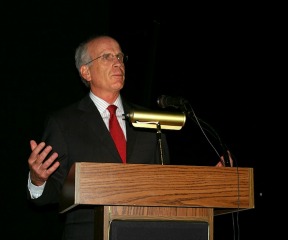
Russia’s offer to take control of Syria’s chemical weapons might be a way out of the crisis if it proves to be “real,” Rep. Peter Welch told callers during a telephone town hall meeting Monday night.
According to Welch, at least 5,000 Vermonters dialed in Monday night, though just over a dozen had time to weigh in during the hour-long phone call.
President Barack Obama expressed guarded optimism for the proposal, which surfaced Monday, and news arrived Tuesday morning that Assad has agreed to the potential arrangement.
Welch, when answering questions Monday night, struck a similar balance between hope and skepticism. “Obviously, all of us hope it’s [Russia’s offer] real and not bogus,” Welch said.
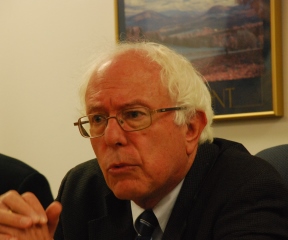
During a PBS interview Monday, Sen. Bernie Sanders, I-Vt., said “My sense is that it is really good news.”
Sen. Patrick Leahy, D-Vt., was also optimistic, saying in a statement:
“It is encouraging that President Obama’s strong condemnation of Bashar al-Assad’s heinous war crime apparently has moved Syria toward conciliation on its chemical weapons stockpile. Everyone seems to be taking a deep breath. But we need to see verifiable action by the Syrian regime to relinquish control of its chemical weapons arsenal and agreement to other conditions. It is appropriate that the President intends to call on the United Nations to help broker a solution that can be agreed to by all governments of conscience.”
ABC News reported Tuesday that Russia plans to introduce a U.N. resolution that would put Syria’s chemical weapons under international control and prepare them for destruction.
Welch repeatedly lauded Obama’s decision to ask Congress for a vote, and credited the president’s “restraint” with helping bring about the offer from Russia.
Welch also emphasized the weight he’s giving to Vermonters’ views. “My vote is your vote. I work for you.”
A couple of hours before the call, Welch, along with other House members, was briefed on Syria by Secretary of State John Kerry, Secretary of Defense Chuck Hagel, National Security Adviser Susan Rice, Joint Chiefs Chairman Martin Dempsey and Director of National Intelligence James Clapper.
The congressman didn’t have much new to say Monday evening, and he didn’t appear any closer to coming down for or against a strike against Syria.
“I gotta tell you, I believe the intelligence,” Welch said. The most convincing piece of information, he said, is the “indisputable” evidence that the weapons were launched from Assad-held territory into rebel-held territory.
Welch reiterated one of his key concerns — whether or not a strike could be effective — but he also downplayed the importance of the military intelligence he’s privy to, and he thanked Vermonters for raising “practical kinds of questions.”
“This does not come down to intelligence. … It comes down to common sense judgment,” he said.
Callers, among them a Vietnam veteran and a woman with a grandson who has done two tours in Afghanistan, pled with Welch to oppose military involvement in Syria.
The discussion also turned tactical at points. A caller, identified as Steve from South Wallingford, suggested that a strike, though once plausible, has been deliberated too long and in too high profile of a way to be effective. “It should have happened immediately,” he said.
Welch agreed that was possible, speculating that, “He’s [Assad] obviously had plenty of time to move his equipment around and put it in safe places, and safe places are probably in civilian neighborhoods.”
Toward the end of the call, after nearly an hour of hashing out benefits and drawbacks of military action, a woman, identified as Margaret from Middlebury, returned to Russia’s offer as a possible solution to the U.S.’ dilemma.
“Let’s hope that Russian offer is real,” Welch agreed.
