

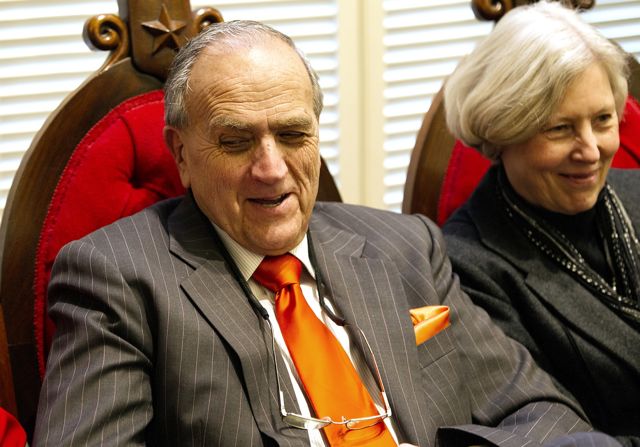
John Margolis is VTDigger’s political columnist.
Get ready for the Prius Tax.
Well, it’s not really a tax, it isn’t just about the Prius, and immediate preparation is not necessary. The Prius Tax, by that or any other name, is not imminent.
But considering the bipartisan (though hardly unanimous) approval of the suggestion rattling around the Statehouse last week, it could be coming, perhaps sooner rather than later.
What is it?
It’s a proposal to raise the auto registration fees on all those vehicles that use little or no gasoline, and therefore pay little or no gasoline tax. That means they make no (or paltry) contributions to the Transportation Fund, which is now so starved for cash that lawmakers are on the verge of raising the gas tax by … well, by almost 7 cents a gallon now but primed to go up automatically as fuel prices rise.
And as the legislators know, the Transportation Fund’s troubles have barely begun. As cars get more fuel efficient and more drivers opt for hybrids like the Toyota Prius or all-electric vehicles like the Chevrolet Volt, gas tax revenues are likely to decline even more.
Or, as Transportation Secretary Brian Searles put it, “The gas tax is not the future.”
Those Priuses, Volts and trucks burning natural gas add to the wear and tear of roads and bridges just as other vehicles do, but contribute little or nothing to the fund that builds, fixes and maintains those facilities.
Hence the idea that those who pay less at the pump should pay more when they register their vehicles.
House Republicans actually proposed an amendment to the $657 million transportation budget Wednesday to charge an extra $146 a year to register a “specialized fuel driven motor vehicle.”
As an amendment, it was a complete fizzle, attracting only 34 votes of the 140 members in the chamber. No surprise; an overwhelmingly Democratic House is not likely to accept a untested Republican amendment.
But the idea survives, with interest from key Democrats, including House Speaker Shap Smith.
“We’re going to have to look at it,” Smith said. “There are definitely vehicles that are not participating in paying for our roads and bridges.”
Sen. Richard Mazza, the Democrat who chairs the Senate Transportation Committee, also said he was “interested in it, because we have to be interested in it.”
The idea of charging higher fees for some cars did not burst out of the blue last week. Neither did that $146 figure. They both come from earlier Transportation Agency planning documents, including a study done for the Transportation Agency last year by the Vermont Energy Investment Corp. of Burlington.
Mazza said he thought that within 10 years roughly 25 percent of all trucks in the country would be fueled by either compressed or liquefied natural gas.
“That’s a bigger threat to (gas tax) revenues than the hybrid or electric cars,” he said. “That will really dig into our diesel (tax revenue).”
Sen. Richard Westman, the Republican who is on the Senate Transportation Committee, said like most states, Vermont has for years supported transportation as “a user system,” and increasing registration fees for electric cars and hybrids would be consistent with that policy.
There is also, he said, an equity aspect to the discussion. It’s middle- and lower-income drivers who “can’t afford to move over to the alternatives” who pay gas taxes that “can be very regressive,” Westman said. The Priuses (Toyota seems really to prefer ‘Prii’ as the plural) and Volts cost roughly $40,000, and some all-electric vehicles are more expensive, putting them out of reach for many buyers.
The idea of charging higher fees for some cars did not burst out of the blue last week. Neither did that $146 figure. They both come from earlier Transportation Agency planning documents, including a study done for the Transportation Agency last year by the Vermont Energy Investment Corp. of Burlington.
That study analyzed the pros and cons of several “alternative fuel vehicle user fee options.”
One was a “revenue neutral” $146 added fee for some cars, that being how much a typical Vermont auto pays in gas taxes each year. Another was a “vehicle miles traveled fee” assessed on each vehicle based on how many miles it traveled.
But measuring how far every car in the state traveled per year would require a mechanism that could be both expensive and intrusive, “raising privacy concerns,” the report said. If anything, that phrase seems to understate legislative distaste for that option. Transportation Committee Chairman Mazza said he would never consider it.
The sudden interest in raising some registration is not likely to stave off higher gas taxes, which Mazza said are “inevitable” this year. The registration fee increase idea is just that – a general idea, not a specific proposal. Legislators – and perhaps legislative staff – would have to answer several questions before the idea could become a bill. Would all-electric vehicles and hybrids pay the same fee? Or would there be a sliding scale? How would natural gas-fueled vehicles fit in?
One advocate who likes the idea is Joseph Choquette, the lobbyist for the Vermont Petroleum Association, who is still fighting the gas tax increase.
“It’s a more balanced approach,” said Choquette, who fears that the higher gas taxes would mean less business for service station owners near the border of New Hampshire, where gasoline taxes – and hence prices – are already lower than they are in Vermont.
There is, of course, one disadvantage to raising the registration fee for electric and hybrid vehicles: It’s a disincentive to buy one. Considering that both the state and federal governments have been creating incentives to buy the vehicles for years, there’s a certain inconsistency there, as acknowledged by Secretary Searles, who said, “We’ve been trying to promote the purchase and use of electric and hybrid vehicles.”
House Natural Resources Committee Chair Tony Klein agreed.
“Usually you tax the things you don’t want people to do,” Klein said. The “owners of these cars are not going be contributing as much to the gas tax,” but he still considered raising registration fees on more fuel-efficient vehicles “a little misguided.”
Eventually, he said, the whole country is likely to “move off fossil fuel for our transportation.” Meanwhile with more electric cars and hybrids being produced, their prices are coming down toward the range of “most car buyers,” and now that they’ve been on the market for several years, “Who knows? There are probably Prius beaters around.”
As proposed, though, the higher fees would not seem to take away much of the incentive for buying a Prius or other ultra fuel-efficient car. A Prius, which uses gasoline to supplement its electric motor, gets about 45 miles to a gallon. Assuming 15,000 miles of driving a year, that’s about $1,000 less in fuel costs than a car averaging 25 miles a gallon. And if the price of gasoline continues to rise, that spread would grow.
Searles said one reason the agency did not propose raising fees this year was that there are not enough hybrid, all-electric, or natural gas vehicles in the state to bring in much revenue.
“But we have to look to the future and ask how are these vehicles going to pay for their use of the system,” Searles said. “It’s a serious question and what we do support is a discussion that will continue throughout the legislative session.”

