


The state’s mid-year profit and loss statement is in and once again the Department of Finance and Management has found ways to bring the net losses and gains as close to zero as possible.
The difference between the budget as passed and the mid-year correction? It was widely reported, based on information from the Shumlin administration, that the increase is a one-half of 1 percent. Or, a $3.88 million uptick on an overall budget of $5.013 billion.
The Joint Fiscal Office told lawmakers on Friday that the differential is more nuanced once spending on federally funded programs is taken into account. The increase is about $6 million on $2.12 billion in state funds. The upward pressure on the total budget ($5.013 billion) is $21.6 million, which represents a 6.7 percent increase overall for fiscal year 2013 above 2012 levels.
However you look at the difference, the budget adjustment details belie a troubling undercurrent of caseload growth in human services.
The state is spending $30 million more than anticipated on human services, including mental health, developmental services, child care reimbursements, programs for needy families and elderly and housing for the homeless. By comparison, general government departments saw increases of about $6 million. The Agency of Human Services budget represents about 25 percent of all state spending, or about $1.3 billion.
What saved the day for AHS was a reduction in Medicaid expenditures of $53 million.
Jim Reardon, commissioner of the Department of Finance and Management, told lawmakers last week: “This is extremely alarming to me. The projections are even higher than this for fiscal year 2014. I hope the Legislature will look carefully at this because it’s not sustainable.”
General Fund revenues meanwhile were downgraded by $10 million for fiscal year 2013. The tax receipt losses were covered by one-time funds: about $5 million in settlements from the Vermont Attorney General’s Office; renter rebate savings of about $1.37 million; and a transfer of $4.77 million in reserve funds.
The caseload increases are of particular concern to the Shumlin administration and the Legislature in the context of budgetary uncertainties in fiscal year 2014, namely plans for closing a $50 million to $70 million budget gap, possible federal cuts, the impact of the fiscal cliff on state revenues, a projected Transportation Fund shortfall, an Education Fund deficit and undetermined FEMA reimbursements for the Waterbury State Office Complex and Vermont State Hospital.
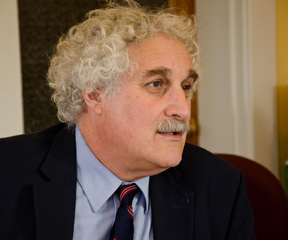
Reardon presented the annual Budget Adjustment Act proposal to lawmakers last week in an unusual prelude to the legislative session. Typically, the mid-year correction is rolled out after the session starts, but this year, because Rep. Paul Poirier dropped his quixotic bid for House Speaker and there are no major changes to the House Appropriations Committee, the House leadership of the three parties — Republicans, Democrats and Progressives — agreed to move ahead with the budget adjustment process in light of new fiscal pressures in FY 2014. (There is only one new member, Rep. Peter Fagan, R-Rutland, who replaces Joe Acinapura, a longtime member of the committee.)
As of Friday, the budget adjustment bill was tentatively set to go on notice on Jan. 18. The House leadership hopes to pass the bill before Gov. Peter Shumlin gives his budget address on the 24th.
Shumlin was originally scheduled to give his address on the 17th, but the annual unveiling of the administration’s priorities for the Big Bill was delayed — not because of fiscal cliff impacts as was widely reported, which won’t be known until sometime in February at the earliest, but because the administration is waiting on the latest revenue reports from the state’s economists at the Emergency Board meeting set for the 23rd.
Human services caseload on the rise
Services for low-income, mentally ill and disabled Vermonters are in higher demand than last year, even as the economy slowly inches toward recovery. The state has blown its fiscal year 2013 budget for housing for the homeless, welfare, developmental services and mental health treatment.
Expenses for General Assistance have doubled since July 1. Lawmakers put about $2 million into the program, which provides emergency housing for homeless Vermonters, in last year’s appropriations bill. Now the state is looking at an additional expenditure of $2.2 million on the program.
Costs for development services could also be twice what officials anticipated next year.
The Shumlin administration has asked the Legislature to approve new language that would require the developmental services program to manage costs within its current budget and take steps to modify the State System of Care Plan for individuals accordingly. Modifications to the plan may include revising “the definition of imminent risk to the individual’s personal health or safety” and making a budget rescission.
Doug Racine, secretary of the Agency of Human Services, said the upward caseload pressure has to be addressed as a policy issue this legislative session as part of the budget discussion. “If we don’t get stronger authority to manage that budget, we will end up needing more than that before the end of the year,” he said.
Racine said he expects the trend of increased caseload to continue. He attributes the trend to to people with disabilities living longer and in some cases outliving parents. Another factor, he said is an increase in the number of graduating special education students who expect a “fairly high level of services.”
“Put all those forces together, and we have a bunch of things that are difficult to manage,” Racine said. “What’s saving us is spending for health care isn’t as high as expected. We can only speculate as to why that’s happened, but I’ve got to believe the work of the administration and the Legislature is having an impact.” He pointed to the blueprint for care, the chronic disease care management system and prevention services as factors in the $53 million reduction in Medicaid spending this year. “A lot of those things are coming together, and we’re trying to figure out which one is having an impact.”
Here is a breakdown of the increases by human services program:
• $20 million in adjustments for mental health services, including $8.3 million in additional spending
• $2.2 million in temporary housing for General Assistance
• $4.7 million in Reach Up costs
• $3.9 million for developmental services
• $2.1 million for increased childcare reimbursements under the STARS certification program (there has been an increase in the number of qualifying providers and a cut in federal funding)
• $8.8 million for LIHEAP from special Emergency Board funds
Mental health spending mounts
The largest spending increase in this year’s proposed Budget Adjustment Act is a $20.3 million requested by the Department of Mental Health.
Of that amount, $12.3 million is considered “net neutral.” Most of these costs are shifted from one of the agency’s departments to another, in this case the Department of Mental Health.
The Department of Vermont Health Access is transferring $6 million from its budget to mental health for children’s services. The Department of Disabilities, Aging, and Independent Living and the Department of Children and Families are shifting a combined $4 million to mental health for various programs.
The department is seeking $8.3 million to cover unforeseen costs associated with children’s mental health programs and personal support for people who are severely functionally impaired.
One “net neutral” item, however, would come from program growth. The department asked for an additional $2 million to meet growing demand for child behavioral interventionists, school-based clinicians and funding for specialized schools via the Success By Six program.
Heidi Hall, director of finance for the Department of Mental Health, said the other $8.3 million the department is seeking would cover administrative and other unforeseen costs associated with children’s mental health programs and personal support for people who are severely functionally impaired.
None of the additional spending in fiscal year 2013 would go directly to the construction and operation of a range of new mental health facilities called for by the Legislature in Act 79, passed last year. The cost of implementing and operating those facilities is slated to drop $230,863 in FY 2013, from $39,909,145 to $39,678,282.
But in FY 2014, when the new 25-bed state psychiatric hospital in Berlin is up and running, those costs are expected to rise $6.8 million, to $46.7 million total. This proposed increase would require an extra $2.7 million from the General Fund.
In December, the department submitted to legislators a budget sheet for Act 79, which showed a $20 million hike in expenditures to operate the new mental health system in FY 2014. Hall said the department soon identified the mistake due to a spreadsheet error. Media outlets brought the issue to the department’s attention, she said.
Hall also qualified that none of these requests are final without Shumlin’s approval.
“Until the governor approves the Agency of Human Services proposals, all of these numbers for FY13 and FY14 are simply projections,” she said.
Judiciary faces $2.5 million deficit
The state is anticipating about $6 million in adjustments in other areas of the budget.
The state’s Judiciary, which manages state courts, faces a $2.5 million budget shortfall in fiscal year 2013, and is seeking an additional $2 million from the state.
From July 2011 to 2012, the Judiciary failed to meet a projected budget savings target related to vacant positions, and the court system ended the year about $1.5 million short. A $420,000 spike in security costs for sitting judges, along with a handful of smaller costs for unemployment compensation and labor negotiations, among other costs, brought the total spending excess to $2 million.
Combined with an ongoing operational deficit of $500,000, this leaves the Judiciary $2.5 million in the red. The courts plan to make spending cuts of about $500,000 in FY 2013, and $800,000 in cuts for FY 2014.
According to a memo from court administrator Robert Greemore to the House Appropriations Committee, this shortfall comes despite restructuring efforts in past years which have cut the Judiciary’s workforce by 40 employees.
Plans to digitize case management paperwork would have allowed for more staff cuts, but a functioning new computer system has so far failed to materialize. The Judiciary is currently negotiating with IT vendor New Dawn Technologies.
Greemore said he couldn’t comment on the ongoing negotiations, which started since the Judiciary’s last payment to New Dawn in March 2011.
The memo also says that cutting spending by increasing layoffs or furloughs wouldn’t work, while closing courts or cutting down on probate judges were other cost control options, rejected in earlier years for other reasons.
Speaking to the House Appropriations Committee, Vermont Supreme Court Chief Justice Paul Reiber said: “Frankly there was little we could’ve done along the way to have adjusted out and balanced the budget, even if it had been on our radar screen a year ago.”
He added that a permanent financial solution for the Judiciary, beset by a lack of technological progress, a recent backlog of cases thanks to too few judges, and excessive temporary employees, remained unclear.
Court administrator Greemore put the Judiciary’s total annual budget at about $37 million, of which about $2 million is federal funding.
Accounting anomalies at Fish and Wildlife
The Department of Fish and Wildlife faces a $492,000 deficit in fiscal year 2014 and a $125,000 deficit in budget adjustment for 2013 because of accounting anomalies.
Those numbers had been much higher — $3.2 million and $600,000 respectively — until the department hired an outside accountant to conduct a forensic audit and brought in an Agency of Natural Resources expert to get to the bottom of the problem, according to Patrick Berry, commissioner of Fish and Wildlife.
The forensic audit found that the department had not adequately tracked federal grants, had not created realistic revenue projections and had not been planning for decreases in federal grants. A simplistic budgeting process compounded the problem. The combination of factors over time pushed the department’s budget into the red, Berry explained to members of House Appropriations.
“Revenues and expenditures crossed each other before we took over,” Berry said.
Berry said the department may need to shutter the state’s two conservation camps or close the Grand Isle fish hatchery.
For a number of years, until fiscal year 2010, a fund from excess license revenue receipts was used to top off the budget each year, he said. In 2011, about five months after Berry took over the department, Fish and Wildlife had to borrow to make its budget because the fund was depleted.
“It was the result of a budgeting process that was inadequate to deal with the complicated nature of the the department’s budget,” Berry said.
Meanwhile, the department lost $600,000 in Dingell-Johnson fisheries money that it uses to pay for the cost of running the state’s hatcheries. The federal funding through fishing license receipts (Dingell-Johnson) is declining by about 8.3 percent a year.
Berry says the department has had to cut its budget as a result of the decline in federal funding and the excess license receipts fund has been depleted. “We’ve been burning the furniture to keep the house warm for so long now we’re burning the house,” he said.
The department stopped hiring wardens a few years ago because it couldn’t afford to buy new trucks. Last year the Legislature appropriated money to the department for this purpose. The department is still maintaining five vacant warden positions.
The total amount the department is requesting for budget adjustment in 2013 is $428,000. Part of this total is a carryforward liabilities from fiscal year 2012, including: $193,000 in unfunded purchase commitments for snowmobiles; a $125,000 deficit; an $82,000 payback to the federal government for uncoded expenses for a storage building (the department is slated to pay an additional $82,000 in fiscal year 2014); and a bill back of $14,000 to Forests and Parks for gas pump use.
Berry told lawmakers his department has very few budget-cutting options in 2014. “We could lay off staff, but it wouldn’t help because most are federally funded,” Berry said. He suggested that the department may need to shutter the state’s two conservation camps for children or close the Grand Isle hatchery to make up for the anticipated $600,000 deficit next year.
House Appropriations members thanked Berry for tackling the department’s fiscal issues, which they said had plagued Fish and Wildlife for a number of years.
Rep. Martha Heath, D-Westford, chair of the committee, said: “It’s a sad story, but it feels fabulous to me that you have figured this out. It won’t surprise anyone on this committee for a while to know I have been completely frustrated by the inability to get answers to question on this budget for a long time. I have a new sense of confidence.”
Rep. Bob Helm, R-Castleton, also had high praise for Berry. “I appreciate Patrick’s diligence,” Helm said. “I had my suspicions on a number of things. It takes a lot of strength to walk into something like that you’re going to have to live with it for a few years but it’s probably going to be your legacy, I truly believe that.”
Other government spending changes
The state will spend an additional $1 million on the Vermont Attorney General’s litigation costs associated with the state’s failed IMS case, which went to the U.S. Supreme Court in 2011. The state paid out $3 million toward the settlement with the pharmaceutical company last year.
The Attorney General’s Office is requesting $190,000 in additional funds to cover the costs of hiring outside counsel from Washington, D.C., for a federal lawsuit brought by Entergy against the state alleging an unfair tax or levy. Entergy is now appealing the lower court’s initial decision. Sorrell said to lawmakers that most of the case work was done in-house, but that more technical areas of the law warranted help from Robbins, Russell, Englert, Orsek, Unterener & Sauber, the firm advising the state.
The AG’s office is also asking for $142,000 to replace funds formerly received in interdepartmental transfers. Sorrell said the office didn’t increase any of its budgetary expenses, and that this shortfall was simply due to changes in funding at the Department of Labor and the Department of Public Safety.
The Tax Department is requesting an extra $150,000 to prepare for potential litigation against TransCanada over property valuations of dams in five towns.
The state needs an additional $220,000 for mosquito control efforts in the wake of an outbreak of eastern equine encephalitis in Addison County last fall that killed two people.
An expenditure on a new building for the Vermont State Colleges in Brattleboro was transferred from the General Fund budget to the Capital Budget, which is used to pay for the state’s construction projects and infrastructure improvements.
The Shumlin administration wants to allow corporation registration monies to flow through the Secretary of State’s office where the registry is created. The office would derive its budget from these receipts and any overflow would be available for state spending through a special fund.
Editor’s note: Andrew Stein and Nat Rudarakanchana contributed to this report.
CORRECTION: The grand totals for budget adjustment from Joint Fiscal Office were misreported in the original version of this story.
