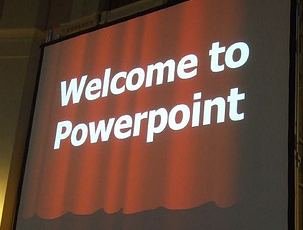
“For a successful technology, reality must take precedence over public relations, for Nature cannot be fooled.” So wrote the Nobel Prize-winning physicist Richard P. Feynman. He could have been, but was not, writing about Vermont Yankee.
The Feynman quote appears just prior to a revised edition of “The Cognitive Style of PowerPoint” by Edward R. Tufte, the famous Yale University expert on visual evidence. This latest version of Tufte’s seminal essay, which among other things contains the infamous PowerPoint slide that helped destroy the space shuttle Columbia, appears in his 2006 book Beautiful Evidence.
The not-so-beautiful evidence of how Vermont Yankee failed to communicate to state officials the existence of tritium-leaking underground pipes at the Vernon facility is chronicled in the February 22, 2010 report of the law firm Morgan, Lewis & Bockius that the nuclear plant commissioned and filed with the Public Service Board in April. The lawyers’ key conclusion: “Although [we] did not find a basis to substantiate intentional wrongdoing,” certain Vermont Yankee personnel “failed at times to clarify understandings and assumptions.”
To offer an example of this failure to clarify, and as a fan of Tufte’s essay, I recently focused on the Morgan Lewis report’s discussion of a particular PowerPoint presentation given by Vermont Yankee employees to state investigators on September 11, 2008. (See “The Perils of PowerPoint at Vermont Yankee,” May 5, 2010.)
As noted there, one of the Vermont Yankee employees present at this meeting told the investigators that he couldn’t understand how anyone could have walked away from the meeting not understanding that two different kinds of pipes were at issue. One kind, underground pipes making direct contact with the soils beneath the plant, contained no radioactive materials. The other kind, leaking tritium, were buried in trenches and were therefore not considered “underground.” My hypothesis was (and remains) that maybe, just maybe, PowerPoint contributed to this muddle.
At least two noteworthy people found this publicly expressed theory to be unhelpful. One was David O’Brien, commissioner of the Vermont Department of Public Service (DPS). The other was Meredith Angwin, formerly of the Electric Power Research Institute and now the person behind the “Yes Vermont Yankee” blog. Particularly if you don’t like Vermont Yankee, Angwin’s blog is worth reading because her analysis is clear and notably devoid of nuclear industry PR blarney.
Angwin’s contention is that “everyone,” by which she means both Vermont Yankee employees and the state investigators who were scrutinizing the plant, knew of the existence of the now-infamous pipes. Her ‘beautiful evidence’ of this is piping diagrams that, according to the Morgan Lewis report, Vermont Yankee gave the investigators on September 9, 2009, two days prior to the PowerPoint pow-wow. Angwin further points out that at the September 11 confab, the Vermont Yankee folks didn’t just show slides, they also distributed a table that described the various piping systems at the facility. I acknowledged this as well.
The “Yes Vermont Yankee” blogger therefore discounted my analysis as mere “rhetoric” intent on “tarring [Vermont Yankee] with completely unrelated disasters” like the Columbia disaster and military setbacks in Afghanistan, both of which I did indeed mention. O’Brien likewise found my analysis to be sensationalist and oversimplified.
In reality, the three of us are in complete agreement. But why is this significant and not just a written record of obscure written exchanges among two smart people and one law professor? O’Brien gives the answer in the response to Angwin he posted on her blog.
The commissioner pointed out that regulatory agencies like DPS “have to trust a utility to provide us with accurate information. Our entire system of regulation is based upon that basic premise. If that was not true, the DPS and every other [utility regulator] in the country would have to be at least twice as large.”
In other words, this isn’t the Watergate scandal. Vermont Yankee insists that its employees did not intentionally spread falsehoods. It is unlikely that anyone else (including DPS) will be able to prove otherwise. But this episode throws into sharp relief a related and potentially even more disturbing reality about the regulation of nuclear power plants and, indeed, the rest of the electric power industry.
Basically, it comes down to this: If the regulators don’t ask it, and if they don’t ask it with excruciating specificity, and if they don’t follow up those queries with equally precise questions in person and in writing, utilities do not volunteer the information, much less offer assistance to the regulators in getting the data they need. Every utility regulator in the country knows this. I knew it when I served as general counsel to a utility commission in a nearby state.
This is not the regulators’ fault. Employees of regulatory agencies, including DPS and the Vermont Public Service Board that decides utility cases, are dedicated, idealistic and insightful people. But they are completely out-gunned by the companies they regulate – companies that know the rules and how to work them. For example, they know how to put regulators in the position of having too little time to deploy their meager resources to full effect.
“People forget that the legislation [ordering the Vermont Yankee investigation] had us on a very tight schedule where we had less than 4 months to complete a massive inspection,” O’Brien noted. “We had to get the scope of the inspection agreed upon with the [outside “Public Oversight Panel” created by the legislation] so we could get started before the clock ran out. We did not have reason to believe that VY was not providing accurate information with regard to the pipes and therefore had no reason to second guess them by spending more time and money to verify their statement upfront.”
In these circumstances, it is not sensationalist to compare the Vermont Yankee investigation to the situation confronted by NASA decisionmakers on late January of 2003 as a fatally damaged Space Shuttle Columbia orbited the earth. They saw PowerPoint slides prepared by a private company (Boeing) that failed to convince them of the gravity of the situation. They had other sources of information, of course, as did the state’s consultants who watched Vermont Yankee’s PowerPoint slides five Januaries later. But in both situations, the reliance on PowerPoint was emblematic of the way so many private companies react to public scrutiny.
Seven astronauts died as the result of Columbia’s fateful final flight. That’s seven more people than Vermont Yankee has killed over the course of 38 years in service. Everyone is testy about nuclear power, which, in turn, engenders a low tolerance for an analogy between the causes of the Columbia disaster and the failure of investigators to understand what was leaking tritium at Vermont Yankee.
Though highly critical of PowerPoint, Tufte nowhere contends that anyone should eschew its use altogether. Rather, he argues for a responsible approach to the challenge of information transfer on the part of those charged with explaining complex technical matters to others. When those others are regulators and their consultants, the situation is particularly acute not because these professionals lack expertise but because they are short and time and resources despite being charged with undertaking efforts of high public importance.
Thus, as to what occurred at Vermont Yankee three years ago, PowerPoint was not the disease. It was the symptom of the disease.
Donald M. Kreis, associate director of the Institute for Energy and the Environment at Vermont Law School, is the former general counsel to the New Hampshire Public Utilities Commission.


Permalink |
Those opposed to VY have used the political system to stack the deck against the plant. They work for organizations who believe all nuclear power should be shut down – Beyond Nuclear, VPIRG and all the PIRGS and Public Citizen (all Ralph Nader originated), and the New England Coalition. Fairewinds believes all nuclear power plants should be shut down, according to the firm’s President speaking at the Vermont Law School on February 9 this year, on a panel with Prof. Kreis
The hope of having a Comprehensive Vertical Audit was to find issues that will cause the plant to not continue in operation, as happened at Maine Yankee. There, the plant could have continued in operation, but without the requested uprate, per the NRC. But the shutdown to correct issues would have possibly caused bankruptcy for one of the small owners, Bangor Hydro, it is reported. So management chose decommissioning.
The VY plant knew the deck was stacked against them, and tried to “limit the scope of the inspection” as reported in the press about VY’s legal firm’s report.
Also, VY and the industry have been very foolish in not fighting back and immediately answering charges. As former US Senator Alan Simpson, now on the Deficit Commission said in Newsweek “A charge unanswered is a charge believed.” The press reports the charges and will report the responses too.
VY handed their opponents a sword, lifted their shirt and said “here” by sending Jay Thayer and Mike Columb to Montpelier unprepared. At the December 2, 2009 Joint Legislative Hearing, on the Enexus issue, both were asked at the very end of the hearing, is it true there is no UNDERGROUND piping. Both indicated there is no such piping. We know now they probably meant to say there is no BURIED (meaning in contact with the soil) piping carrying radioactive material that could leak. By UNDERGROUND VY meant below grade and not in contact with soil – in an enclosure. There is piping like that connected to the Condensate storage tank, carrying safety related radioactive water. The large covered concrete “boxes” are heated to prevent freezing – I’ve been in them. The Advanced Off Gas piping was found to be in a “box”, but the design was such that it was uninspectable, unlike the pipe I inspected.
Of course, the opponents were waiting to pounce, as they are getting paid to do, and Jay Thayer foolishly did not be get back to the Committees. Then the leak fom the “box” around the UNDERGROUND, not BURIED Advacned Off Gas Piping happened.
And Senator Schumlin pounced, rushing the bill to the floor for a vote.
The larger perspective is that there are 31 countries besides the US with nuclear power programs, 93 reactors under consruction around the world, and 439 reactors for electric power production in operation now. And Senator Schumlin, and Speaker Smith stood behind Deb Katz last spring on the Statehouse steps when she said shutting down VY is the first step in shutting down all nuclear power plants!! What do the Senator, the Speaker and Ms. Katz know that the 32 governments don’t?
Permalink |
Mr. Shaffer wonders what Mr. Shumlin and Ms. Katz know that nuclear governments don’t know. They know that nuclear is poison power. They know that unless it is 99.9% contained, absolutely isolated from the environment, the wastes nuke plants generate and spew into the air and water kill all forms of life. They know that it is costly to build and maintain,(they saw CVPS and GMP nearly bankrupted because of it, and by only passing the stranded capitalization costs on to energy users in other states, allowing Entergy to buy it at a bargain price on OUR backs, kept VY running). They know it is enormously costly to decommission, and utterly impossible to “clean up” or dispose of the contamination. They know that only lies make it appear economically feasible or environmentally defensible. They know that it is not OK to use the common air and water as a nuclear and thermal garbage disposal. They know it is a technology that persists through lies about the real risks, especially to the most vulnerable human beings, and the real costs in health, security, and potential genetic damage as this generation’s gift to future generations. Governments can’t “know” these things or they could not allow a single nuke to be built or operate. Therefore governments look at “cost-benefit” calculations that put a dollar value on someone else’s life. That Someone pays the taxes the government gives away to the greedy poison power mongers, but can get no health care when they get sick.
What do governments know? How to keep the powerful in power.
Permalink |
Thanks, Mr. Kreis. Your observations of what Ed Tufte is trying to get across are spot on. Having studied with Tufte, I believe these are a few of the essential points he makes in his critique of how we present data and information:
1. Powerpoint — or Keynote, for that matter — is nothing more than a projection medium. Because we are dealing with a visual medium, what we project and how we do it have the power to illuminate or obscure;
2. Tufte is an absolute bear on “multivariate data.” In other words, presenting data one way or restricting data to a narrow fact set again can mislead and ill-inform; and
3. Presentation software programs can make for lazy presenters and lazy audiences. That is a dangerous combination.
Even many folks who are aware of Tufte’s body of work are unaware that he was a professor of public policy. Therefore, he is a great resource on how information presentation can undermine a sound debate over public issues. Plus, as an artist who specializes in large, landscape-placed objects, Tufte is aesthetically and cognitively attuned to how the senses receive and process images.
So, thanks again. I recommend that folks also examine Irving Janis’ work on groupthink. Although it is a little dated, it certainly applies to the space shuttle disasters and might even be relevant to Vermont Yankee and the State of Vermont.
Permalink |
Don.
Thanks for the good words about my blog. This is an important conversation, and I will continue it on my blog with links to your posts here. This is a key issue and I am happy to discuss it.
I have a lot to say (as usual) and so I think my blog is a better place for me to write most of it.
However, I do want to comment here on the utility/regulator comments you made above. Yes, regulators have to ask exact questions, and utilities usually do not volunteer extra information in response to the questions. You write about this, however, as if it was a unique utility/regulator issue. That approach surprises me.
You are a law professor. You know that, in preparing any client for cross examination or hostile questioning, you would advise your client: “answer each question truthfully, but don’t volunteer extra information.” If you were an accountant preparing a client for an audit, you would say the same thing.
Or would you advise a client, facing a hostile questioner, “Volunteer anything you think will help the questioner”? THAT would be interesting and unusual advice!
In other words, “the agencies have to ask specific questions” is not exactly a scandal. For you, as a lawyer, to act as if it were an unusual situation….well, you and Claude Rains are shocked, shocked to discover that…
Don. Please don’t. Please don’t pretend that limited replies to hostile questions is a unique horrible thing that utilities do to their regulators. You are very smart and articulate law professor. You really do know better.
Permalink |
To my friend Meredith Angwin:
I respectfully but emphatically disagree that a regulated utility (or an employee of a regulated utility) is in the same position, vis à vis regulators, as a witness subject to cross-examination in a civil proceeding. As to the latter, I agree with the classic formulation: If such a witness is wearing a wristwatch and is asked, “Do you know what time it is?,” the correct answer is: Yes.
This approach might apply — and I use the word “might” advisedly — if a witness for a regulated utility were answering questions from an adverse party in an administrative hearing before the Vermont Public Service Board, the Federal Energy Regulatory Commission or the Nuclear Regulatory Commission. But, in my respectful opinion, a different set of imperatives applies, and a different set of ethical standards should apply, in the distinctly different context we are discussing.
A utility subject to lawful discovery in connection with a proceeding before one of the agencies mentioned above should cooperate rather than obfuscate. Why? Because regulation is not, or at least should not be, adversarial the way a lawsuit is adverserial. Utilities actually benefit from regulation — ask the ghost of Samuel Insull, who persuasively argued, on behalf of the electric power industry he dominated in the early decades of the 20th Century, that states should create administrative agencies to regulate utilities.
The enabling statutes that each state enacted thanks in part to Insull typically grant the regulator plenary authority over the state’s utilities, including the right to inspect all books and records. It’s part and parcel of the so-called ‘regulatory compact’ — in which utilities submit to that authority, and agree to provide service to all comers, in exchange for the right to a monopoly and to rates expressly calculated to yield a reasonable return on shareholder investment. Part of the utilities’ side of the bargain is the obligation to operate prudently — so that they have nothing to hide. As someone who frequently points to the exemplary safety record of Vermont Yankee, you presumably don’t see any reason for VY to circle the wagons when the regulators show up to inquire about the plant’s operations . . .? Shouldn’t they take pride in the safety efforts they undertake with their customers’ money?
In the competitive marketplace, all’s fair in love and war. An unregulated company has the right, perhaps even the obligation, to be secretive — to treat any effort, whether lawful or not, to inquire into its internal operations as a hostile incursion. Utilities play by different rules. Just ask all the New England electricity customers who have disgorged hundreds of millions of dollars in the past decade or two to compensate utilities for their stranded costs, including but not limited to those associated with northern New England’s other functioning nuclear power plant. It too has a good safety record and, thus, should be pleased when the regulators come a calling.
Thanks for considering my views.
Permalink |
A few further thoughts . . .
The astute among you — by which I mean those with the moxie to read this far into the discussion — will point out that Vermont Yankee is a merchant generation facility and not a regulated utility. Therefore, VY is not subject to the regulatory compact I described above.
Except that it is, in the following derivative sense. Prior to 2002, Vermont Yankee was owned principally by two regulated, investor-owned Vermont utilities (Central Vermont Public Service and Green Mountain Power). As a condition of receiving authority from the Public Service Board to purchase Vermont Yankee, the plant’s current owner (Entergy, in Louisiana) agreed to be subject to certain state authority that a merchant generator could ordinarily ignore. Indeed, the whole tritium pipe controversy arises in the context of the state’s effort to exercise the authority it reserved to itself in connection with Entergy’s purchase of the facility.
Permalink |
My friend Don Kreis
Thank you, once again, for the thoughtful reply. I think that this interchange is tremendously important. You and I (and also O’Brien on my blog) are not running around saying “they lied” or “they’re the best”. We are really trying to get our facts and opinions in order. A rare moment of civility in what has been a manure-throwing (literally, in one case) situation.
That said, I am going to respectfully disagree yet again! (what did you expect?) In your post above, you said that when you were with the PUC of a neighboring state, the regulators had to ask very precise questions, or they wouldn’t get answers. And the regulators all knew this. There was a time when I knew a bunch of people at P G & E in California, and they also approached each meeting with the PUC as a battle.
In other words, this adversarial attitude between utilities and regulators is universal, as far as I can tell. You said the same:”Every utility regulator in the country knows this.” We may, perhaps, regret it, but we cannot deny it.
In other words, why are you shocked at business-as-usual between utilities and regulators? My comments on “never volunteer” and your comments on how things are done are completely in accord. The only thing out of accord is your assessment that somehow, VY had an obligation to behave quite differently than any other utility.
This has been an amazing conversation. I am going to put a quick post up on my blog about it. Thank you.
Permalink |
Having read the dialogue between Meredith Angwin and Don Kreis, and having been the perpetrator of manure throwing, (actually, it was clean compost, and not thrown, but sprinkled daintily with smiles and small talk into the water pitchers and glasses of the NRC. O.K., I did toss a handful onto Michael Colomb’s lap, but I wanted to return waste for waste…think of it as a downpayment for the lies that were to come…) I simply have to comment on the irony of this discussion. It is happening in the context of radioactive leaks and corporate lies. Ms. Angwin doubts the presumption that regulators (and the citizens they represent) have a right to the full truth. Without that trust, how can civilized society proceed? Hence Ms. Angwin brings up manure throwing, as if leaks and lies are fine, failure to disclose is fine, spewing tritium, Cobalt and Strontium into our air and water is fine, but sprinkling compost is outside the rules of the game. Precisely. The game, as she would have it, is to voluntarily disclose nothing. I failed the game by fully disclosing what I was putting into NRC’s drinking water, while Entergy sought to hide what they might be putting into ours. Having witnessed the game for the past 10 years, it is clear that there are many ways to hide the truth, and ignore the most important questions. We were not getting answers about what is leaking or had leaked into the groundwater over the past 38 years, because NRC fails to require groundwater monitoring. Having testified to Boards and Commissions and legislative committees that despite documented evidence of tritium in storm drains and cobalt 60 in the river, no one was independently monitoring the groundwater at the site and no one was monitoring 10 of the 11 storm drains for radioactive effluents, I never got a meaningful response to my questions. My efforts to get documents showing tritium leaks that had been referenced in other NRC documents met with a dead end–I was told they were Entergy’s property. When questions with an obvious concern behind them are answered misleadingly, partially or falsely by a regulated entity, or by regulators, the potential victims of all these nods, winks and lies have a right to act to protect their own interests, before catastrophe strikes. And indeed, my concerns were proven to be correct. And yet Ms. Angwin rationalizes Entergy’s false witness? All’s fair in business and finance? Fortunately in Vermont, or at least in the Legislature, truth has a higher value. And so, I might add, has compost.
Permalink |
I wasn’t present for the scatalogical scattering in question, but I am sorry that references to it have found their way into this discussion. I agree with Sally Shaw that administrative proceedings, particularly those dedicated to the lawful examination of the safety, reliability, and affordability of our energy supply, are serious undertakings that call upon the participants to be cooperative and forthcoming. Regulators, in turn, should take with the utmost seriousness their responsibility to be vigilant in advancing the public good.
In my respectful opinion, it undermines rather than furthers such notions when citizens treat administrative hearings as opportunities for street theatre. The surprise application of manure in such a setting, by whatever method, to make a poetic statement about contamination is certainly clever. And I will even admit that, back in my days as a journalist covering administrative hearings, I would have reported on such doings with glee. Nevertheless, it remains the case that if citizens expect regulatory proceedings to protect them, they should treat such proceedings with respect rather than with contempt.
Permalink |
Thank you Don. I couldn’t have said it better myself!
Permalink |
I hope people remember who is to blame when electricity costs skyrocket in Vermont. When people start going broke and losing their jobs because of energy prices, will you pat yourselves on the back still?