

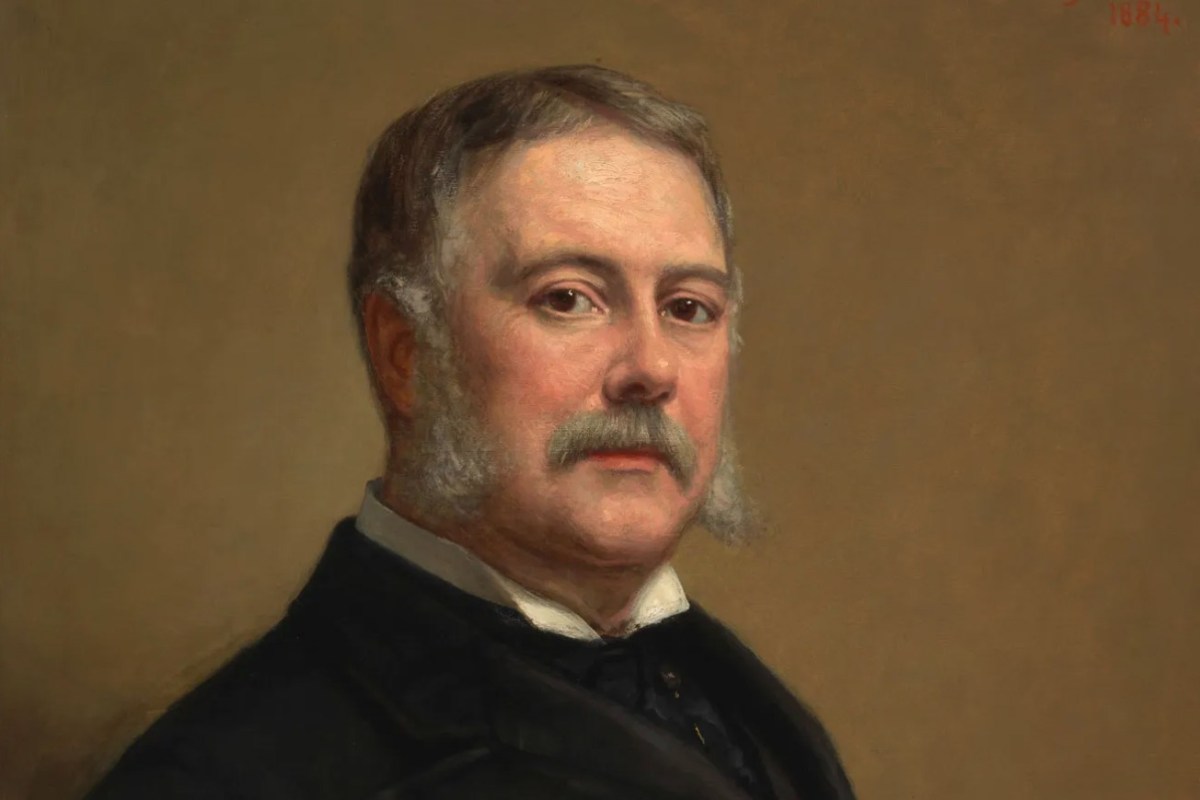
President Chester Arthur is back in the spotlight. It’s been a minute.
Netflix’s hit new historical series “Death by Lightning” tells the story of the assassination in 1881 of President James Garfield, so it’s only natural that Garfield and his assassin, Charles Guiteau, take center stage. But Arthur is the one who gets the redemption arc. Plus (spoiler alert) he’s the only one of the three still breathing at the end.
Arthur was an extremely unlikely president. He didn’t seek the office and only attained it through a bizarre sequence of events. In the years since his single term, the native of Fairfield, Vermont, has been largely forgotten, so it feels strange to see him get serious screen time in a major production. But the story can’t be told without him.
It seems a minor miracle the story is being told at all. What was the pitch to Netflix like? How did anyone convince the streaming service that viewers today would love a story focusing on a group of 19th-century politicians who can vie with Arthur for the title of “most obscure.” In addition to Garfield, whose name is rarely mentioned today outside of trivia nights, viewers are introduced to such former political heavyweights as Roscoe Conkling and James Blaine.
Yet somehow the show works. It has its share of ahistorical aspects, such as characters speaking like modern Americans and cursing liberally. But other details that could seem invented to make the show more relatable — Black men serving in positions of power in 1880s Washington, D.C., and Garfield’s intense focus on rooting out political corruption — are drawn from real life.
“Death by Lightning” has a surprising amount of humor, given the topic, which might have helped get the project green lighted. The barrel-chested, heavily sideburned Arthur is played by Nick Offerman and in his early scenes, he provides comic relief as a man of unquenchable appetites, particularly for liquor and sausages.
His outsized cravings could be a stand-in for the greed that was at the heart of the era’s rampant graft, in which Arthur actively participated. Famously, Chester Arthur served as customs collector for the Port of New York. Seventy-five percent of American imports flowed through New York’s harbor and it was Arthur’s job to collect import duties on those goods. In an era before the federal income tax, those duties provided nearly half of U.S. government revenues.
Arthur and other top Customs officers were entitled to a “moiety,” or share, of any fines on importers or any seizures his department made. As a result, Arthur’s total annual income was the equivalent of about $1.25 million today, making him the nation’s highest-paid politician, including the president.
Overseeing a workforce of about 1,300 gave Arthur substantial political power too. He used the patronage or spoils system (as in, “to the victor go the spoils”) to dole out well-paid positions to applicants based on their loyalty to the Republican Party, not their qualifications for the actual job. Jobholders were expected to kickback a share of their paychecks to help fund the party. Showing up for work was often optional.
Arthur wasn’t at the top of New York’s political pyramid, however. He owed his job to U.S. Sen. Roscoe Conkling, who enlisted Arthur as his loyal protégé.
“Death by Lightning” begins with James Garfield, an Ohio representative, attending the Republican Convention in Chicago to nominate another Ohio politician, Sen. John Sherman, for president. This was in the days before political primaries; convention delegates chose who was on a party’s national ticket, not voters.
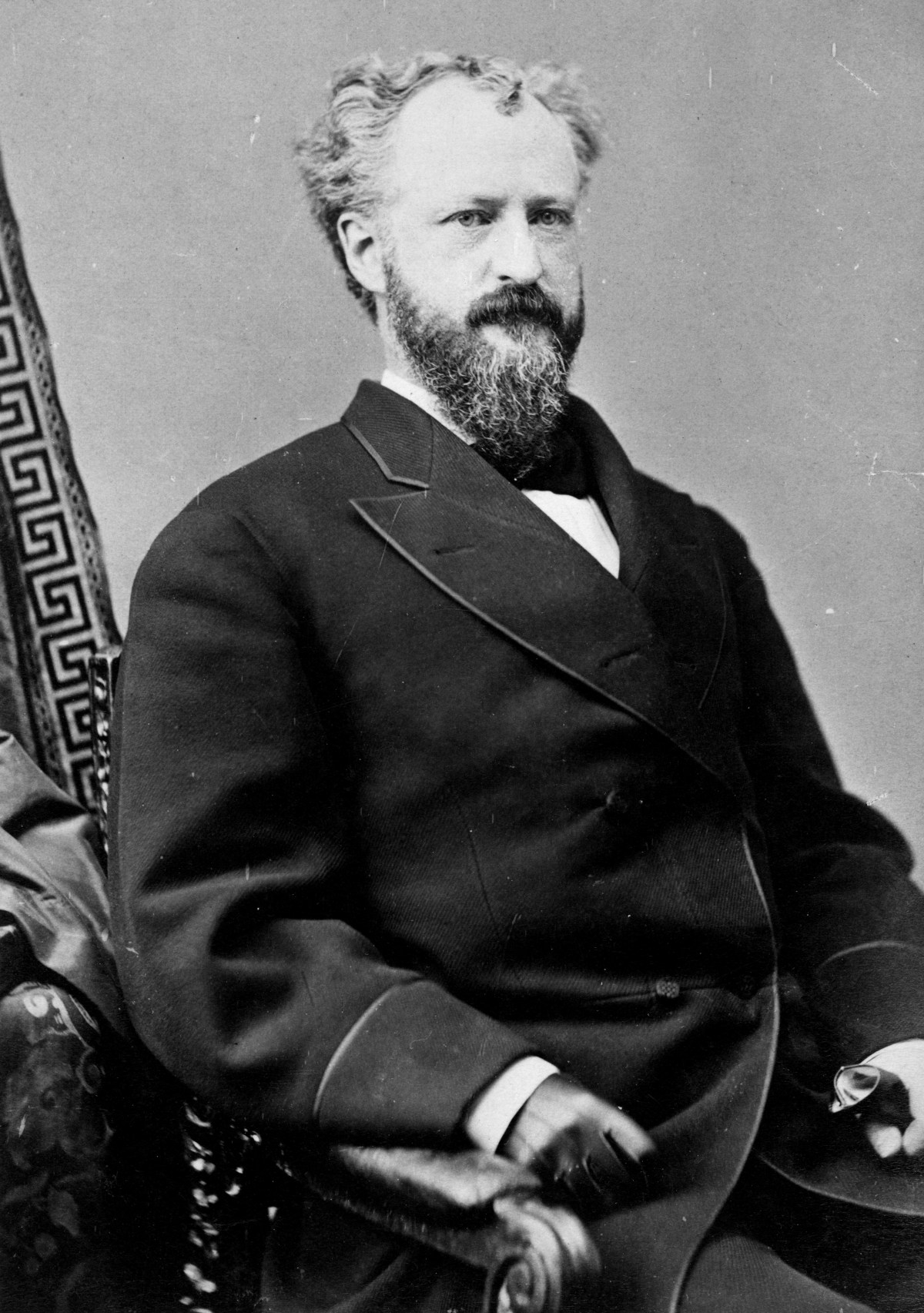
The delegates divided into factions. Many supported former President Ulysses Grant, who was seeking a third term; presidents weren’t yet term-limited by the Constitution. James Blaine was the other main contender. (Among the lesser candidates, U.S. Sen. George Edmunds of Vermont received a smattering of votes.)
But no one was able to get the required majority. With the convention deadlocked after 33 ballots, 16 Wisconsin delegates voted for a new candidate, James Garfield. Garfield protested, saying the votes for him shouldn’t be counted, because he wasn’t a candidate. The convention chairman disagreed. Two ballots later, a majority of delegates swung their voters to this compromise candidate and Garfield was named the Republican nominee.
New York acted as a kingmaker in those days. As the most populous state, it possessed the most electoral votes. So Republican Party leaders curried favor with New York Republicans, and other supporters of the patronage system nationally, by having one of their own, Chester Arthur, selected as the vice presidential nominee. It was a fraught marriage of convenience, pairing a politician who vowed to fight the spoils system with one who embodied it.
After the Garfield-Arthur ticket won the presidency, things went about as well as you might expect. Once in office, Garfield took aim at the patronage system by appointing a new collector for the Port of New York without first consulting New York’s two U.S. senators.
Seeing this as a direct challenge to his political machine, Conkling resigned his senate seat in a symbolic protest, as did New York’s other senator. The incident highlighted the schism within the Republican Party. When Arthur opted to remain loyal to Conkling, he showed that there was a divide within the White House as well.
Less than four months into his term in office, Garfield was shot by Charles Guiteau. Clearly suffering from some form of mental illness, Guiteau had expected to be the beneficiary of the spoils system by being handed a plum job for his supposedly invaluable support of Garfield during the campaign. In fact, Guiteau believed he deserved to be appointed U.S. consul to Paris, a job for which he was wholly unqualified.
As he was being arrested, Guiteau said excitedly, “Arthur is president now!” When Guiteau’s comment was widely reported, many Americans suspected Arthur of being involved in the plot. Arthur received death threats and was deeply troubled by the accusation.
But Garfield wasn’t dead yet.
He survived for weeks with the bullet lodged in his abdomen. Doctors tried repeatedly to remove it. Secretary of War Robert Todd Lincoln, son of the late president, summoned Dr. Doctor Willard Bliss (yes, Doctor was his first name) to tend to the president.
Dr. Charles Purvis, a Black physician who was among the doctors treating the president, urged Bliss to employ the relatively new practice of surgeons’ washing their hands and using sterilizing instruments, but Bliss brushed him off. Garfield suffered through multiple attempts to locate the bullet, all without anesthesia.
When he died 79 days after being shot, an autopsy determined that the bullet hadn’t damaged any major organs and could safely have been left in place. The president had died of a massive infection, sepsis, caused by the unsanitary conditions under which he was treated.
Arthur had taken no executive actions while Garfield lingered, not daring to feed the rumors of a power grab.
In fact, the assassination seems to have reawakened Arthur’s long-dormant political integrity. Once in office, Arthur set his mind to reform, both of the political system and of himself. He worked to fulfill Garfield’s mission of dismantling the patronage system, by successfully championing the Pendleton Civil Service Reform Act, which introduced competitive exams for many federal positions and made it illegal to fire federal employees for political reasons.
People who had only known Arthur as a linchpin in the political machine might have thought these impulses came out of the blue. But as a younger man, Arthur had shown he could be highly principled. Like his Baptist preacher father, Arthur was an abolitionist. Early in his legal career, he represented a Black woman who had been accosted and thrown off a “whites only” New York City streetcar, winning a sizable judgement in her favor.
As president, Arthur ultimately defied public expectations, running an administration free of major scandal.
“No man ever entered the presidency so profoundly and widely distrusted,” Pennsylvania newspaper editor Alexander K. McClure noted at the time. “And no one ever retired more generally respected.”
Or, as Mark Twain quipped: “I am but one of 55 million; still, in the opinion of this 1/55 millionth of the country’s population, it would be hard to better President Arthur’s administration. But don’t decide till you hear from the rest.”
While Arthur is the most significant Vermont appearing in “Death by Lightning,” alert viewers might note a couple other Vermont cameos. U.S. Rep. Levi Morton, born in Shoreham, appears in all four episodes, though as a minor character. In one scene, he tells Garfield he can’t accept the position of Secretary of the Navy (Conkling had pressured him to reject the position).
In real life, it was hardly the end of Morton’s career. Garfield soon appointed him U.S. minister to France. He was later elected governor of New York and, in 1888, vice president of the United States—along with Arthur and Calvin Coolidge, one of only three Vermonters ever to hold that position.
Another Vermonter, John Humphrey Noyes, also appears briefly. Born and raised in Brattleboro, Noyes started a utopian commune in nearby Putney. His neighbors were outraged to learn of the commune’s belief in free love and he soon moved the community to Oneida, New York.
Noyes appears in flashbacks with the future assassin Guiteau, who spent six years as a member of what people in series call a “sex cult.” Guiteau is depicted as getting on people’s nerves because he believes he is too good for the manual labor expected of all community members.
Despite the commune’s free-love edict, the women of Oneida want nothing to do with Guiteau, who they nickname “Charles Git Out.” That unlikely detail — like so many other startling aspects of “Death by Lightning”— is true.

