


The initiative’s title: “Vermont’s Plan to End Homelessness.” Its intent: To move upwards of 3,000 people from the streets into permanent shelter.
“By any measure, too many of our fellow Vermonters are without housing today,” the 16-page report begins. “In the same way that the causes of the problem are varied, so too are the solutions.”
The plan, however, isn’t about current issues spotlighted by the Covid-19 pandemic. Instead, state leaders drafted it a decade ago in hopes of addressing a continuing plight not quickly solved.
“Homelessness has been a challenge in Vermont for years,” Angus Chaney, one of the report’s authors, said recently. “It’s usually an indicator of some other system — economics, mental health, substance use — that’s broken or overwhelmed.”
Government limits on the fastest fix — temporary lodging at hotels and motels — continually spark protests and press coverage. The state doused the latest flare-up just this month, for example, by announcing it will tap federal funds to house everyone seeking shelter through March 1, 2022.
Yet such headlines, while spotlighting the problem, can siphon attention from lasting solutions.
“If we can house so many people to keep them from getting or making others sick during a public health crisis, then we should be able to house them for their permanent well-being and dignity,” the Rev. Debbie Ingram, executive director of Vermont Interfaith Action, said at a press conference this month.
The faith leader echoed experts who want more focus on the development of affordable housing.
“There has been an unusual fixation on what’s going to make somebody eligible for the state’s general assistance program,” Chaney said. “But unless there is a medium- and a long-term strategy, we’ll be dealing with the same crisis in another year.”
‘Across all age and demographic groups’
The state has tried to address homelessness in a variety of ways throughout its history, from poor farms that sprouted in the 1800s to a reliance on private boardinghouses and psychiatric institutions in the 1900s.
By the start of 2012, then-Gov. Peter Shumlin signed an executive order establishing the Vermont Council on Homelessness to develop a comprehensive 10-year plan.
“Homelessness,” the council went on to write, “can be encountered across all age and demographic groups, and, like poverty, can impact veterans, workers in low-wage jobs, persons struggling with substance abuse or mental health crises, victims of domestic violence, and almost any other vulnerable population.”
That paragraph, featuring more description than data, points out the state’s first problem: Although Vermont social service agencies annually count clients facing homelessness — 2,591 this past winter, up from 1,160 in 2012 — they stress that the federally required one-day survey misses many who are “couch surfing” or unseen on the streets.
Whatever the full number — advocates estimate it to be consistently closer to 3,000 — they know shelters can’t host everyone. That’s why the council has called for more prevention measures, economic and social support and, most importantly, long-term places to live.
“The state should reduce reliance on hotels and motels,” its 2012 plan said, “and move towards affordable permanent housing.”
But only months after the report’s release, the state ended its 2012-13 fiscal year with a $4 million bill for temporary lodging — eight times the $500,000 tab of five years earlier, when it relaxed its rules that once limited aid to those fleeing a fire, natural disaster or domestic violence.
State leaders, seeing temporary lodging applicants rise from 548 households in 2008 to 2,851 in 2013, have tried to curb the figure ever since. They argue motel rooms don’t offer incentive to find shelter with friends or relatives or a path toward permanent housing, but instead divert money from rental subsidies and support services to help with education, employment and health care.
Local social service workers, for their part, counter that without temporary lodging, they often can offer little more than tents and sleeping bags.
“It’s a very hard job — we’re balancing limited resources and seemingly unlimited needs,” Dave Yacovone, former head of the state Department for Children and Families, said in 2013 at the start of the ongoing and often diversionary debate. “Wherever you draw a line, there are people who won’t be served.”
‘There isn’t anything vacant to rent’
The council, releasing a five-year update after Gov. Phil Scott’s 2017 inauguration, renamed its report “Vermont Plan to Prevent and End Homelessness.” But its first priority remained the same: “Increase the number of homes affordable to Vermonters.”

Even so, temporary lodging has continued to attract the most public and press attention — especially when the pandemic brought a massive influx of federal money. Since the spring of 2020, the state has tapped up to $200,000 of that money per night to shelter as many as 2,800 homeless people in hotels and motels.
Experts know that short-term fix isn’t sustainable. Chaney, who helped author the 2012 plan as housing director for the Vermont Agency of Human Services, now is putting the report’s recommendations into practice as head of Rutland’s Homeless Prevention Center.
“I think the strategies are still the right ones,” he said at an office that helped 190 people secure permanent shelter over the past year and assisted hundreds more in retaining their living spaces.
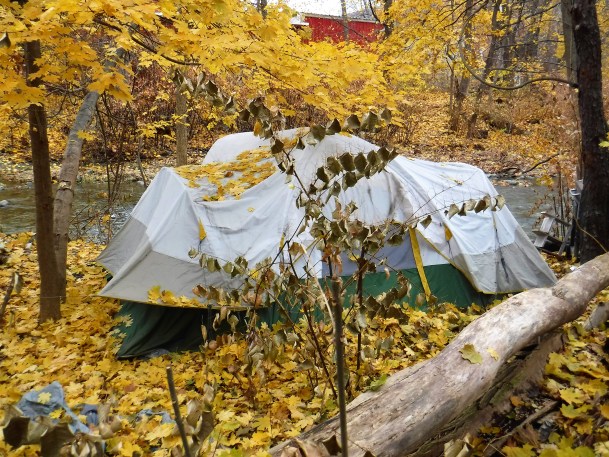
The Rutland nonprofit has supported a record number of people during Covid-19 — a fact overshadowed by statewide news of scuffles over temporary lodging and tent encampments.
“We’re rehousing people at a greater rate than ever, so do we talk about that or about the numbers still homeless?” Chaney said. “Vermont has a lot of the right approaches for getting people into housing and staying with them so they don’t cycle back into crisis. But the sheer number in need can be frustrating. You come down to that challenge with the numbers on the resource side versus those on the need side.”
The pandemic has compounded the problem. Many people lack shelter not only because of economic pressures, experts say, but also because some can’t stay with family or friends or were released from prison early because of physical distancing concerns.
“We have some really good programs — financial assistance for security deposits, rental subsidies, case management — to help people move in and get started,” Chaney said. “But the immediate challenge for us right now is the supply of housing. There isn’t anything vacant to rent.”

‘Thinking about something longer term’
The annual rate of Vermont home growth, which rose an average of 1% before 2010, is expected to slow to less than 0.2% by 2025, according to the latest Vermont Housing Needs Assessment.
“Based on these projections, Vermont will need to increase the state’s total housing stock by about 5,800 primary homes before 2025,” the assessment says, “to meet expected demand among new households while also housing the state’s homeless.”
In response, advocates are pushing the state to allot more federal Covid-19 money for housing.
“What the pandemic has brought to light is the degree to which we have negligently underinvested in our housing system,” the Vermont Interfaith Action coalition of more than 70 spiritual communities wrote in a recent report. “We are now blessed with the opportunity to correct that deficiency. Not only is it the morally right thing to do, but it is also the economically right thing to do.”
Faith leaders argue that allocating money for permanent housing would cost significantly less than continuing the status quo.
“Providing stable housing reduces the downstream costs of poor physical and mental health, substance use disorders, educational support for students whose primary challenge is chaos and trauma, and ultimately, the costs in our criminal justice and corrections systems,” they wrote in their report.
Gov. Phil Scott is asking legislators to invest $179 million of federal money into affordable housing as part of a larger $249 million plan that could add 5,000 units statewide.
“Ultimately, permanent housing solutions, not simply emergency housing and shelters, are needed,” Scott said in a recent statement.
But legislators have yet to commit to Scott’s proposal, which doesn’t include a schedule for planning, permitting or construction.
In the meantime, Chaney wants the state to involve all arms of government — not just human services, but everything from education to commerce and community development.
“A lot of the homelessness response is still geared to serve people once they’re in crisis,” Chaney said. “How can Vermont engage additional agencies and departments in this challenge? We can write the same article every year about the motel crisis or we can get people thinking about something longer term that might bear more fruit.”

