

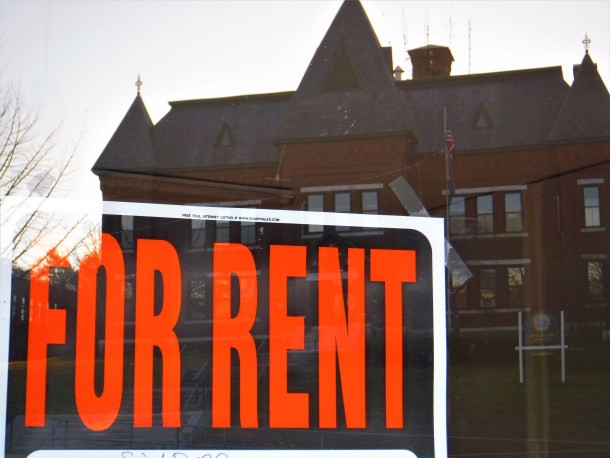
BRATTLEBORO — The town government has delayed debate on a proposed cap on what local landlords can charge renters for move-in costs.
Leaders want a chance to study other options, including tapping municipal money to create a financial aid fund.
“I want to help tenants be able to afford to move into apartments,” Selectman Daniel Quipp said at a recent meeting, “and I also recognize that we can’t just put all of this burden on landlords and expect it not to have any consequences.”
A new Tenants Union of Brattleboro wants local leaders to adopt an ordinance similar to one in the state’s largest city, Burlington, and a second that was just rescinded in Barre that prohibits landlords from preemptively collecting someone’s final month’s rent.
“The enormous costs of securing a new place to live is an ever-rising hurdle to housing people in our town,” the advocacy group has written in a request to the selectboard. “There is no reason to require more than the first month’s rent and a security deposit equal to that amount before allowing a tenant to move in.”
About half of Brattleboro residents are renters, local statistics show, with many challenged financially because of Covid-19. But members of the tenants union say they couldn’t afford to pay first and last month’s rent and a large security deposit in one lump sum pre- or post-pandemic.
“We know this isn’t ending any of these larger housing crisis issues — we just asked ourselves what is some small thing we could pass here to help tenants?” union member Trevor Stannus told the selectboard at a recent meeting.
“Having that extra month’s rent in our account in case of emergencies,” fellow renter Dory Hamm added, “can save a life for people of low income.”
But many local landlords have countered that, under the proposal, their only recourse for collecting unpaid rent is suing, which can cost more in legal fees than what’s ultimately reaped.
“This avenue of going to small claims court — pipe dream,” property owner Ralph Buchanan said. “More times than not, I’ve evicted a tenant for nonpayment of rent. Bring them to small claims court if they don’t have any money? If I start running into bad situations, I’m either going to have to raise my rents or become stricter on the background requirements to let somebody in.”
In a split decision, the selectboard voted 3-2 last month to pursue an ordinance, only to have a majority of board members go on to ask about other options.
“I do have concerns about the situation where, even though a rental agreement says you may not use a security deposit as last month’s rent, it then happens and the recourse is slow and costly and may not result in prompt repayment,” Quipp said at a recent meeting. “If we want to address the issue, is there a different way to go about it?”
Local leaders are studying proposals to use municipal money to establish a fund to help both low-income renters who can’t afford move-in costs and landlords challenged by unpaid rent.
“You want to do something for tenants and I’m not disagreeing with that, but you also have to figure out what you can do for landlords,” former local leader Dick DeGray has told his successors. “I think just saying ‘go to small claims court’ is very shortsighted because there’s no guarantee of any money.”
The selectboard is scheduled to discuss the issue again Nov. 17.
“The housing issues in Brattleboro require increased wages and incentives to create new housing units, and this ordinance does neither,” said selectboard member Elizabeth McLoughlin. “What are our options that would best help tenants without harming landlords?”
“I think that there are issues being brought up from both sides that are very real,” said select board member Ian Goodnow. “We have an opportunity here to do something that could really positively impact a lot of people.”
