


[V]ermont has one of the highest rates of young people receiving federal disability benefits in the country, but economists, lawmakers and others are unclear about what the trend means.
Social Security Disability Insurance (SSDI) recipients typically tend to be older, but a report by the nonpartisan Legislative Joint Fiscal Office found that a growing number of young Vermonters receive benefits.
The prevalence of Vermonters under age 35 receiving Social Security Disability Insurance (SSDI) was 2.12 percent (2,017 people) in 2013. The only state with a higher rate for that age group was Maine, with 2.31 percent. New Hampshire’s rate also was well above the national average of 0.9 percent.
Overall, there were 22,534 Vermonters who received SSDI in 2013, putting the state at a rate of 6.15 percent of the population — slightly above the national rate of 4.8 percent.
SSDI benefits are for people who have a physical or mental disability that would prevent them from working. The program, which serves workers who become disabled before they reach retirement age, allows recipients to continue to work in less demanding jobs, but if they earn above a certain threshold within a month their benefit will be docked.
The analysis also showed that between 2000 and 2013, the rates of people under age 45 on SSDI in the three northern New England states increased at a rate four times higher than the national average.
Joyce Manchester, who authored the report, said it’s not clear what the statistics indicate. Manchester, who previously worked for the Congressional Budget Office and the U.S. Social Security Administration, is now a senior analyst with JFO.
“We need more people thinking about what this means,” Manchester said.
That’s because the SSDI trust fund is rapidly depleting, and it is expected to be exhausted by the end of 2016.
And once Vermonters start receiving Social Security Disability Insurance benefits, they rarely leave the program. Only 0.5 percent go off SSDI, according to state officials.
In the report, Manchester postulates that the high rates of young people on SSDI may reflect that Vermont is particularly adept at getting people who are eligible for benefits enrolled. While SSDI is handled on a federal level, the state and other independent agencies help in the enrollment process for some Vermonters.
The numbers could reflect that many able-bodied young Vermonters leave the state for job opportunities, Manchester wrote in the report. The state has seen an out-migration of 20-year-olds and 30-year-olds.
She also suggested that the numbers could be linked to the growing rate of opiate addiction among young Vermonters. Substance abuse qualifies as a mental disorder to receive SSDI, and it can be linked to other mental illness issues as well, Manchester wrote.
One result could be that the state is missing out on revenue because people on disability benefits are not earning income, and therefore not paying income tax, Manchester said.
She also said that it could have an impact on the recipients, because people who go on SSDI tend to stay on SSDI.
“JFO is not trying to point the finger to say this is a too-high percentage, we just don’t know what this means,” Manchester said.

Rep. Ann Pugh, D-South Burlington, who chairs the House Human Services Committee, said that she was surprised by the numbers.
“The fact that it’s a higher percentage of Vermonters than in other states, that in and of itself is not necessarily problematic,” Pugh said.
The numbers could prompt a review of the so-called benefits “cliff,” which makes it difficult for benefit recipients to shift from dependence on SSDI to earned wages and financial independence.
“Part of our work is to try to make the cliff a slope,” Pugh said.
Economist Art Woolf, who published an editorial on Manchester’s report in the Burlington Free Press earlier this month, said the trend could point to a small loss of revenue for the state.
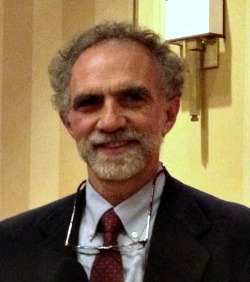
A high rate of people of working age who are drawing an SSDI check could also have implications for a state that already has an aging workforce, he said. People who begin receiving SSDI tend to remain on SSDI, and while he says that’s not a drain on the state budget, he said, it does keep most recipients at a very low income level.
“In the long term it’s very detrimental to the people themselves,” Woolf said.
Monica Hutt, commissioner of the Department for Disabilities, Aging and Independent Living (DDAIL), said that SSDI is “a very stabilizing benefit in terms of creating income for people.”
Through the vocational rehabilitation division of DDAIL, the state works with individuals on SSDI to increase their time in the workforce, while balancing their eligibility for benefits. There can be “a lot of risk” for people leaving benefits, she said.
“We do a lot of work to figure out what kind of work they can do,” Hutt said.
According to James Smith, budget and policy manager for the vocational rehabilitation division of DDAIL, only a small portion of people who go on SSDI go off the program — approximately 0.5 percent.
That reflects the very broad range of people who receive the benefits, he said.
Most of the people who receive SSDI are in situations where they will not be returning to full-time employment during their lifetime, he said. That may be because they have a terminal illness, like ALS or cancer. It could be that they are already nearing retirement age, so they would not be planning to return to work anyway.
Mental health tends to be a factor for many of the younger recipients of SSDI, he said. The state has had success helping people with mental health challenges get back to work, Smith said, but there are broader issues with the way work requirements are managed within the federal program.
“What we do know is once people go into the program, the work rules provide a very powerful disincentive to going back to work,” Smith said.
Smith has been involved with efforts to address the disincentives. He has testified before Congress about SSDI and federal benefits several times, most recently in July, about how the work requirements undermine the ability of recipients to get back to work and off the benefit.
Hutt and Smith emphasized that they do not yet know what Vermont’s high numbers mean, but they are interested in learning more. They’ll be discussing the trend more with Manchester, as well as considering it in the context of the high rates in neighboring states.
“I think what’s the real mystery is if there’s something going on in these New England rural economies that’s making it hard with people with disabilities to work,” Smith said.

A.J. Ruben, of Disability Rights Vermont, said there is a big effort to support people who are trying to get off SSDI benefits and get into the workforce.
Ruben said the numbers in the JFO report show the state is doing a good job of getting Vermonters with disabilities enrolled for the federal benefit, but the numbers show the state could do more to support Vermont SSDI recipients so that they can get back to the workforce.
“There has to be more money in human services, more money for case management, more money for (vocational rehabilitation),” Ruben said.

