

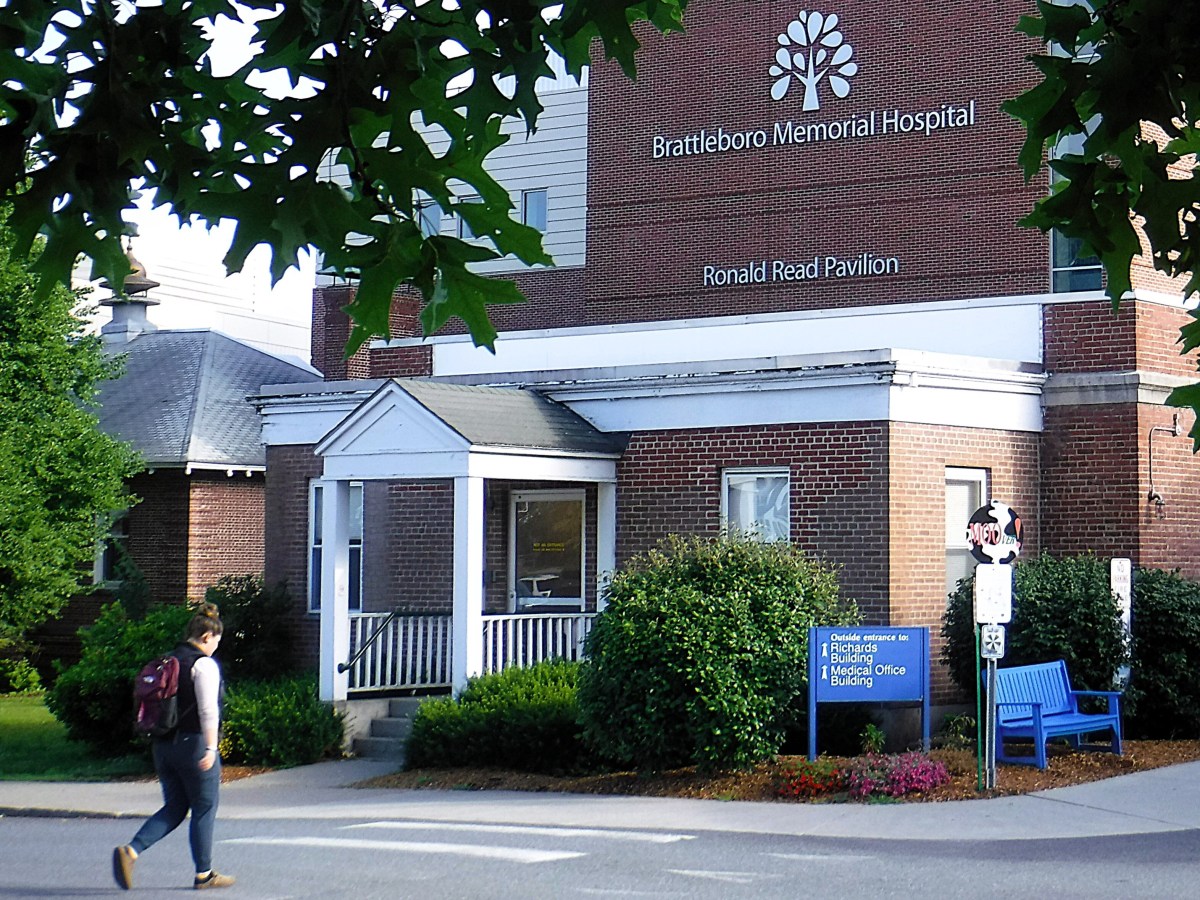
Brattleboro Memorial Hospital’s board of directors voted to close the hospital’s birthing services, according to an email sent to staff Wednesday evening.
The news comes amid intense financial precarity and executive-level strain at the hospital. The hospital said its obstetrics unit lost $3.8 million in 2025. Its leaders predicted a loss of $4.8 million in 2026.
There are no current changes to patient care, and the hospital intends to take the next six to nine months to close the services and find alternatives, the interim co-CEOs, Dr. Elizabeth McLarney and Dr. Tony Blofson, wrote in their email to staff.
“We acknowledge that we need to keep this hospital open. When we took over, the lack of knowledge and understanding about finances at this institution was pretty astounding, and we have been working really hard to kind of rebuild the foundation,” McLarney said in an interview.
Outrage from community members has been swift and resounding. Overnight, a “Save Birth at Brattleboro Memorial Hospital” website popped up, with a list of contacts, a donation link and upcoming opportunities to protest.
In early June, the hospital issued a press release “reaffirm(ing) its commitment to providing high-quality maternity care close to home,” even as it faced financial challenges. But weeks later, that stance has appeared to change.
“I’m really heartbroken by this,” Emily Martyn, a midwife at the hospital, told VTDigger in an interview. She said she was born there, as were her mother, grandmother and her children. “I feel very blindsided by the board. We were not expecting this to happen now.”
She estimates that about 50 staff members will lose their jobs directly, though she expects the closure to have ripple effects on other services at the hospital.
This isn’t the first time in recent years a Vermont hospital has wanted to cut its birthing services. In November, Copley Hospital in Morrisville closed its birthing center. Copley’s closure prompted the state to revise — and then re-revise — its process for approving hospital service closures. Currently, the Vermont Agency of Human Services oversees closure work as part of its broader hospital restructuring project. Still, Brattleboro Memorial Hospital needs to seek public input before it can end its birthing services.
The Brattleboro hospital said it is working with the agency and the governor’s office to identify ways to preserve local access to obstetric care.
The next closest hospitals with birthing services are Cheshire Medical Center in Keene, New Hampshire, and Baystate Franklin Medical Center in Greenfield, Massachusetts.
Martyn and others who have spoken out against the board’s decision worry about the safety risks of shuttering birthing services. Since Springfield Hospital closed its birthing program in 2019, the Brattleboro hospital has become the destination for many people giving birth in the area. The hospital is especially important for high-risk births, for which radiologists, pediatricians and other higher-acuity care doctors are on hand.
“We’re the last ones. There’s no safety net, which is really terrifying,” Martyn said. “This is not the end of birth at BMH, it’s the end of safe birth at BMH. People are still going to show up in the emergency department and still going to have babies here.”
BMH outsources its emergency department to a contractor, McLarney and Blofson said, which has experience training ED staff to deliver babies in hospitals with no birthing centers.
“We have been in active conversations with them,” McLarney said. “But still, it is scary. They are not the same as an obstetrician. They are not the same as a pediatrician.”
The hospital also intends to maintain its gynecological services and is in the process of figuring out how to preserve pre- and post- natal care locally. But that depends on if the hospital can keep the midwives and obstetricians to do so.
He added that staffing, in addition to financial headwinds, was part of the hospital’s decision.
It’s hard to plan when a birth will happen or how long it may take. Hospital obstetrics services normally have maternity staff on call all day, every day.
The hospital is down to one-and-a-half full-time nurse midwives, Blofson said, noting two resignations occurred in just the last two weeks. The hospital only has one full-time pediatrician covering the birthing center and relies on contracts with outside doctors, who are put up in hotels, to fill the gap — a practice that alone costs the hospital half a million dollars a year, McLarney said.
Birthing is often considered a “loss leader” in hospitals. It’s a service that’s known to cost more than it earns but fosters a relationship with patients who may return throughout their lives.
McLarney and Blofson said they wrote Gov. Phil Scott’s administration a letter asking for $3-4 million a year for the next three years to make up for the hospital’s inability to make money on birthing and keep the birthing center afloat. They are planning to meet with his administration.
Martyn remains optimistic that robust fundraising and state intervention will change this week’s announcement: “There is still hope. This is not a done deal. I think if people’s voices are heard, I’m hopeful that we can reverse this decision.”
Kevin O’Connor contributed reporting.
