

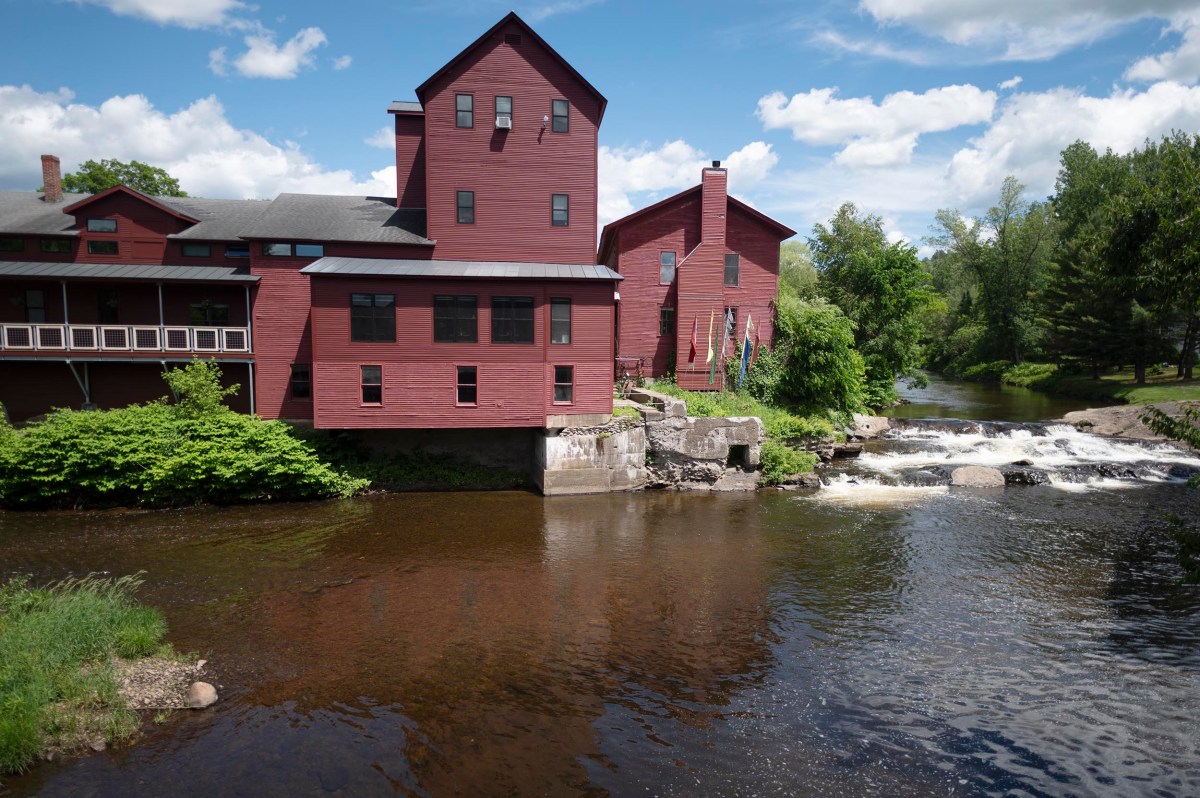
The river that runs through the Vermont Studio Center has for years been a source of inspiration and solace for the thousands of artists and writers who have filtered through its residency program, one of the largest in the U.S. But three years ago, the Gihon River’s currents were instead the source of damage and destruction when catastrophic floods inundated the campus in Johnson — and the center is still recovering.
“I’ve been here for 10 years at the time, and went home that night thinking, ‘Lawn is going to get wet, things are going to get a little bit damp,’ and it was amazing to see what happened that day,” said Trevor Corp, the center’s senior director of campus operations, thinking back to the night of the flood in July 2023.
“It changed not only our view, but the whole community of Johnson’s view on the river.”
Although the flood engulfed the entire campus in several feet of water, the center’s Wolf Kahn Studio was hit especially hard and has since been demolished. But thanks to a $1.9 million award from the Federal Emergency Management Agency, announced last week as part of a $4 million grant heading to four applicants, the center is starting to recover.
The funding will cover nearly half the costs to rebuild the studio. But the studio isn’t just being rebuilt. It’s being relocated outside the floodplain. It’s one of the many ways the storied center is adapting to a changing climate and the river itself, an integral part of the studio’s roughly 40-year history and identity.

Besides the federal funding support, the center has also received immense help from community members. The morning after the flood, dozens of people showed up to help with the center’s immediate recovery, according to Executive Director Hope Sullivan, who called the efforts an “extraordinary rallying of people in the region.”
That support is what’s helping the center cover the remaining 57% of funding needed to rebuild and relocate the studio, especially since it took roughly three years for the center’s application for federal funding to be accepted, Sullivan said. Those funds were delayed in part due to shifts within the federal government, as President Donald Trump began his second term, according to Sullivan. During the three years, different FEMA representatives would cycle through, leading the center to have to explain its request again and restart the rigorous review process, Corp said.
Additionally, FEMA funding for the back-to-back floods that wrecked Vermont communities in 2023 and 2024 have, until recently, stalled as then-Homeland Security Secretary Kristi Noem imposed higher levels of scrutiny for large aid requests.
However, that policy has since been rescinded under Noem’s replacement, Markwayne Mullin. Earlier this month, the federal government approved more than $30 million in specialized relief funding for the state’s farmers and other agricultural producers.
The Vermont Studio Center received the largest part of the recent $4 million FEMA award for Vermont flood recovery. The remainder will go to the Green Mountain Railroad, the Vermont Agency of Transportation and Washington Electric Cooperative.
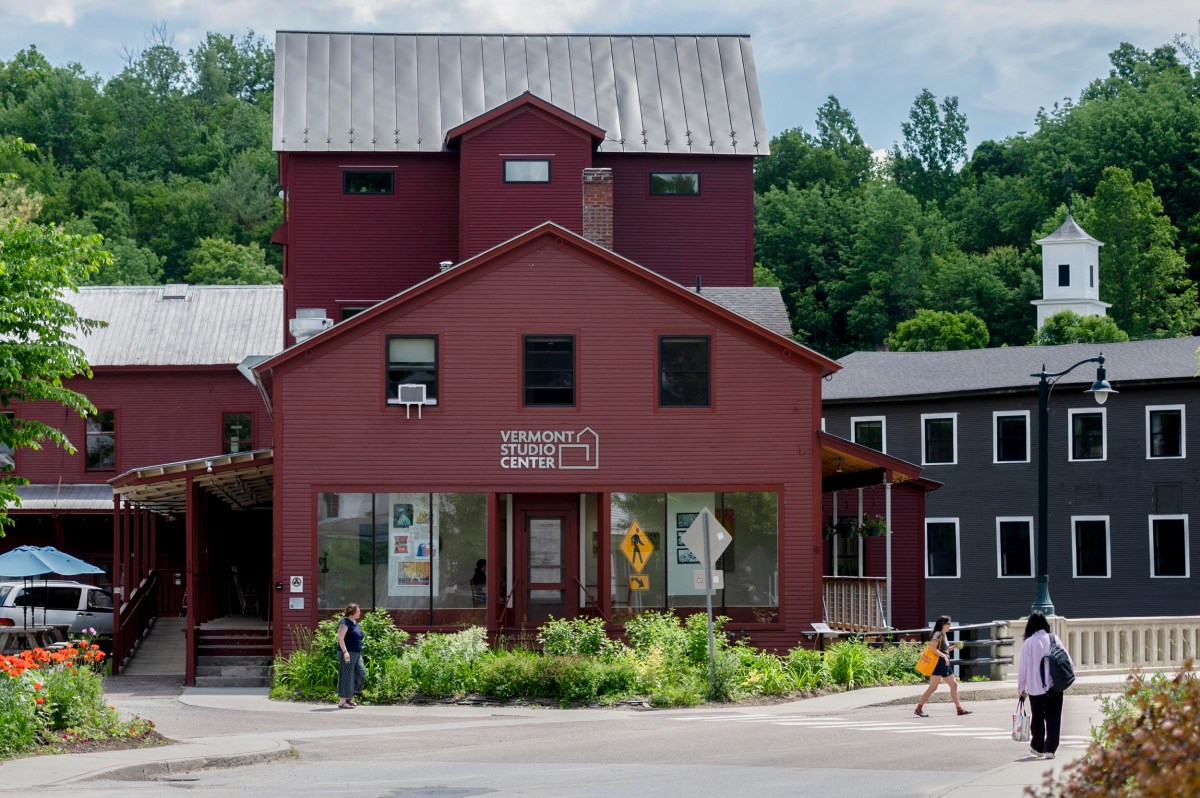
The scale of funding for the center is a testament to its economic importance and cultural significance, according to its leaders. The center draws hundreds of new residents to Johnson each year and boasts an international network of artists and writers.
“It allows us to continue to be an economic driver for Johnson as we provide artists and writers from around the world with the time, space and community they need to further their work,” Sullivan said, describing the ripple effect of the funding onto Johnson’s economy.
When artist Cami Davis, who has worked in the Wolf Kahn Studio for several years, saw social media images of it crumbling during the flood, she felt an “emotional attachment.”
“My favorite studio was the one that got melted away, the Wolf Kahn barn studio,” Davis said. “The whole back half of it came off, and that was an amazing studio. It was huge. I always had a view on the end with windows to the trees, and you could hear the river.”
Davis’ connection to the studio led her to help in the center’s recovery efforts, contributing to a project that sought to restore prints damaged by the floods. Shortly after the floods, the Vermont Arts Council sent conservators trained in emergency response to help recover a print collection damaged at the studio, according to council Deputy Director Amy Cunningham.
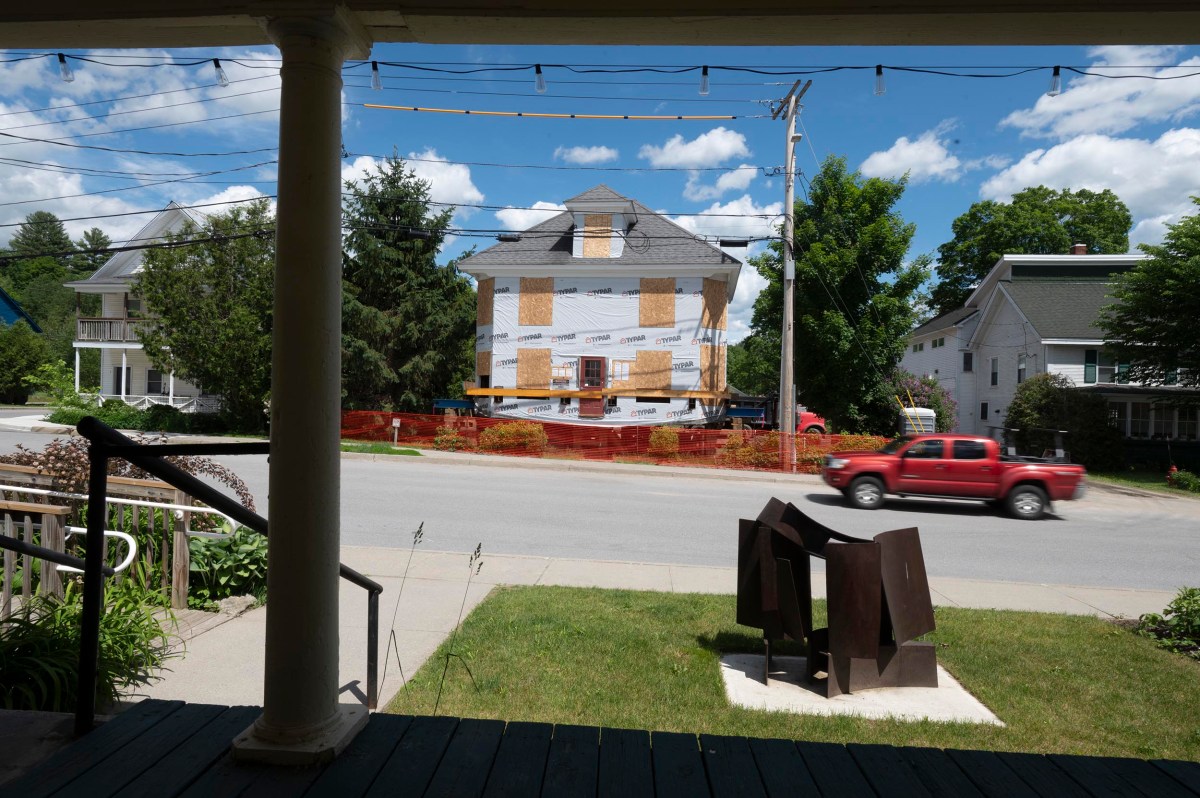
“We are committed to supporting artists, creative cultural organizations of all size and scale, regardless of their economic impact,” Cunningham said. “But I think it is noteworthy that the studio center is a real engine.”
The rebuilt studio is expected to be complete in April 2028. Meanwhile, the center is focused on carrying out other climate resiliency efforts, including shifting building standards so that some of its buildings use only electricity rather than fossil fuels.
Although the center is rethinking the river, Sullivan said it remains “one of our biggest assets.”
“The life cycle of the river is very present in the life of the residents here, and it’s beautiful,” Sullivan said. “So we do see it as a huge asset, in spite of it also being a potential challenge.”

