


The news was “heartbreaking.”
After 26 years, the Pride Center closed its doors in October due to a critical funding shortfall, said Monica Allard, co-chair of the center’s board of directors. It had lost money that typically comes from the federal government through the state of Vermont, a result of changing priorities from the Trump administration.
But the board knew right away “this really couldn’t be the end,” Allard said. “Our community really wants and needs a Pride Center.”
The Pride Center of Vermont is a nonprofit that has provided health care, mental health support, events and other programs for LGBTQ+ Vermonters since 1999.
For the past eight months, the board has been working on a comeback. It received a head start in November in the form of a “transformational” gift of $350,000 from an anonymous donor, according to the center’s website. For context, the center earned $773,000 in revenue in 2024, according to their most recent available tax filings.
“That gave us a little bit of breathing room to really think about what it would look like to come back in earnest,” Allard said.
The board hopes to change its funding model to be less reliant on the whims of state and federal budgets. Allard has also been at work on a survey that maps community needs and priorities for the center to focus on.
At the same time, 2026 marks the first year in a quarter of a century that Vermont’s LGBTQ+ community and its allies have celebrated Pride Month without the Pride Center to help organize, coordinate and sponsor events throughout June.
Pride Month is an important way of increasing the visibility of LGBTQ+ people and bringing them together to support each other, Allard said. It’s even more important at a time when the federal government is rolling back steps that previous administrations had taken to protect the rights of trans people nationwide, like the rollback of coverage for gender-affirming health care.
“There is a particular need right now when trans people, in particular, are being targeted by the federal government for discrimination, for increased support,” she said.
Allard said that in the absence of a central statewide organization, a growing number of local LGBTQ+ and community groups have stepped up to take command of their local Pride events.
“There are more and more local Prides in more rural areas, and grassroots organizing groups that are coming together and helping people find that community,” she said. “A true and valid criticism of the Pride Center is that it’s pretty Chittenden County-centric, pretty Burlington-centric.”
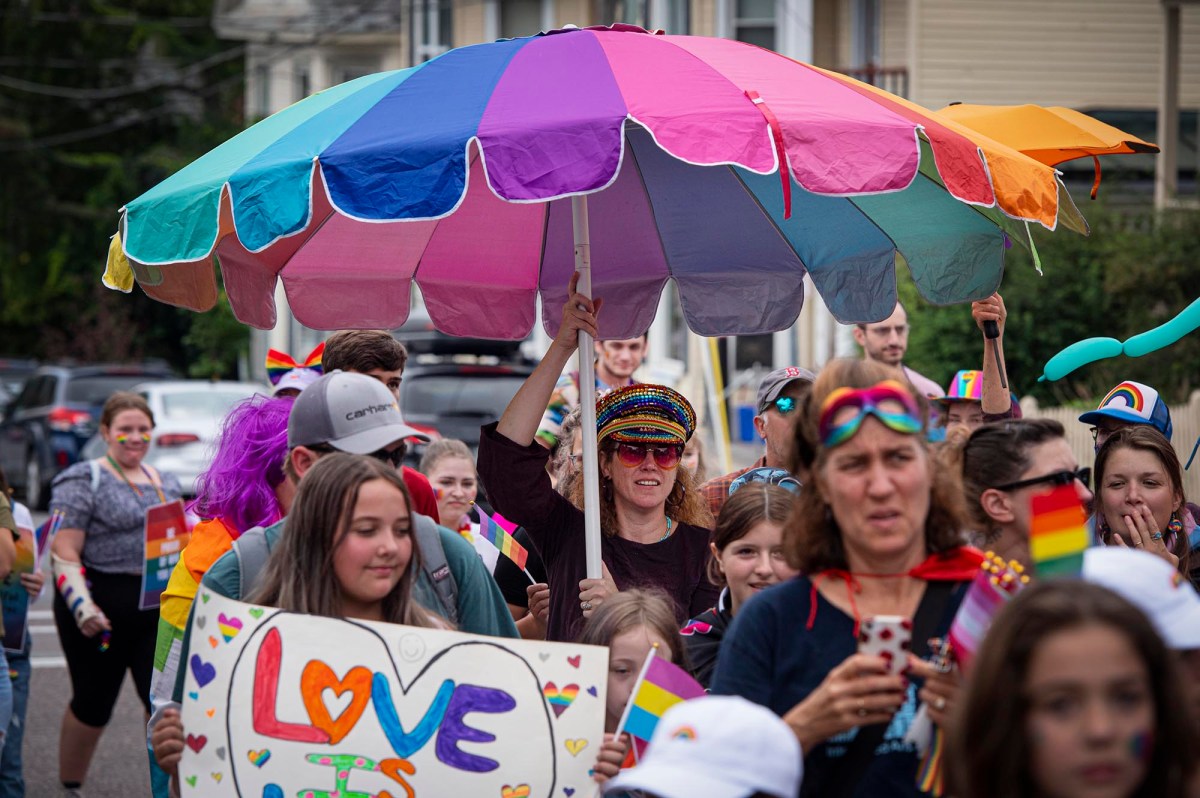
She recommended that Vermonters check out Queer Era, a new website that aggregates LGBTQ+ events across the state. It provides not just the date and location of Pride events, but details about their accessibility and environment, Allard said.
One example is the Queer Film Festival, a 10-day showcase of LGBTQ+ cinema hosted by the Savoy Theater in Montpelier. In previous years, Kell Arbor from the Pride Center helped with everything from selecting films to emceeing the theater’s showing of “The Rocky Horror Picture Show,” said Leah Fishman, programming director for the Savoy.
“They supported us, we supported them, and it was a really lovely integrated partnership that we really appreciated,” Fishman said.
This year, a local organization named Montpelier Pride stepped into Arbor’s role in helping to put together the event, Fishman said. The theater also got sponsorships from at least 14 local businesses, more than it’s ever had.
Some organizations have also stepped in to take over the Pride Center’s other work, Allard said. One of the most critical programs it provided, a support group for LGBTQ+ survivors of hate and violence, has moved to the Vermont Network.
Outright Vermont, an organization that provides programming and support for LGBTQ+ youth, offered to host the Pride Center’s drop-in space for transgender adults in its Burlington office, said Outright’s Executive Director Dana Kaplan.
Kaplan has been watching closely as nonprofits across the country see what he called widespread cuts. Outright and the Pride Center have played different but complementary roles to the LGBTQ+ community, “so when one organization steps back, there’s definitely a whole impact on the ecosystem,” he said.
There’s also pressure to step up their work to respond to the challenge, he said, adding that Outright has seen increased levels of despair in the LGBTQ+ youth coming to the organization.
“We need to be expanding right now, not shrinking,” he said.
Outright plans to participate in multiple Pride events across the state, Kaplan said. He reflected that while Pride has been somewhat commercialized with merchandise and advertising, it began with acts of political activism such as the Stonewall uprising in New York’s Greenwich Village in 1969.
“It is a celebration, but it has always been about resistance, and building and sustaining community,” he said.
