
When Eric Fitch gets an idea, he runs with it.
“In 2006 I was driving and listening to the radio, and I heard the price of natural gas went through the roof and I thought – you could probably make it for less than that. That’s a company!”
So, he went to work doing research and fine-tuning his idea, eventually realizing he could partner with food and beverage businesses that output organic waste and use that waste to make methane.
“The concept was, ‘what if you set up one of these digesters behind a food and beverage manufacturer?’ You took their waste, made gas, you put the gas right back into the process for use of say, pasteurization or, if you’re running your kettle in a brewery.”
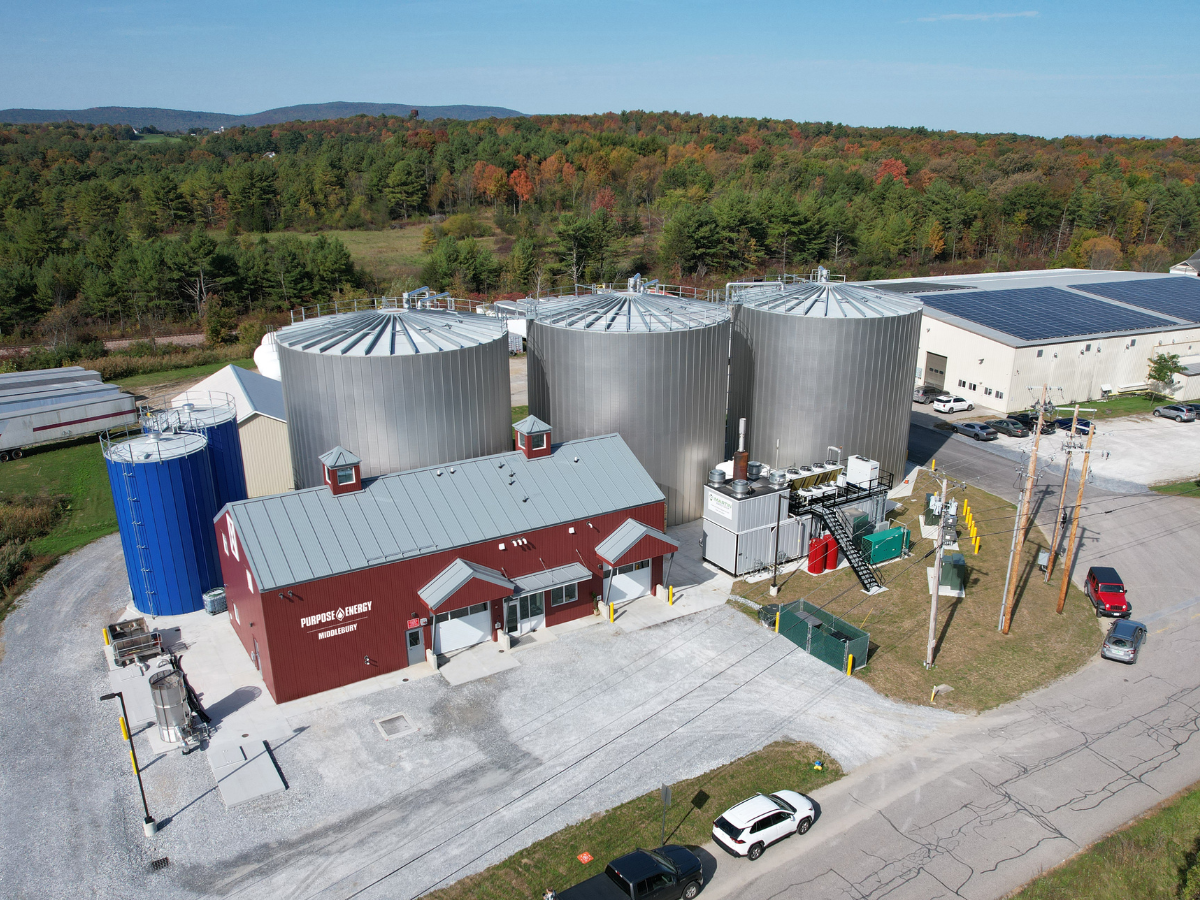
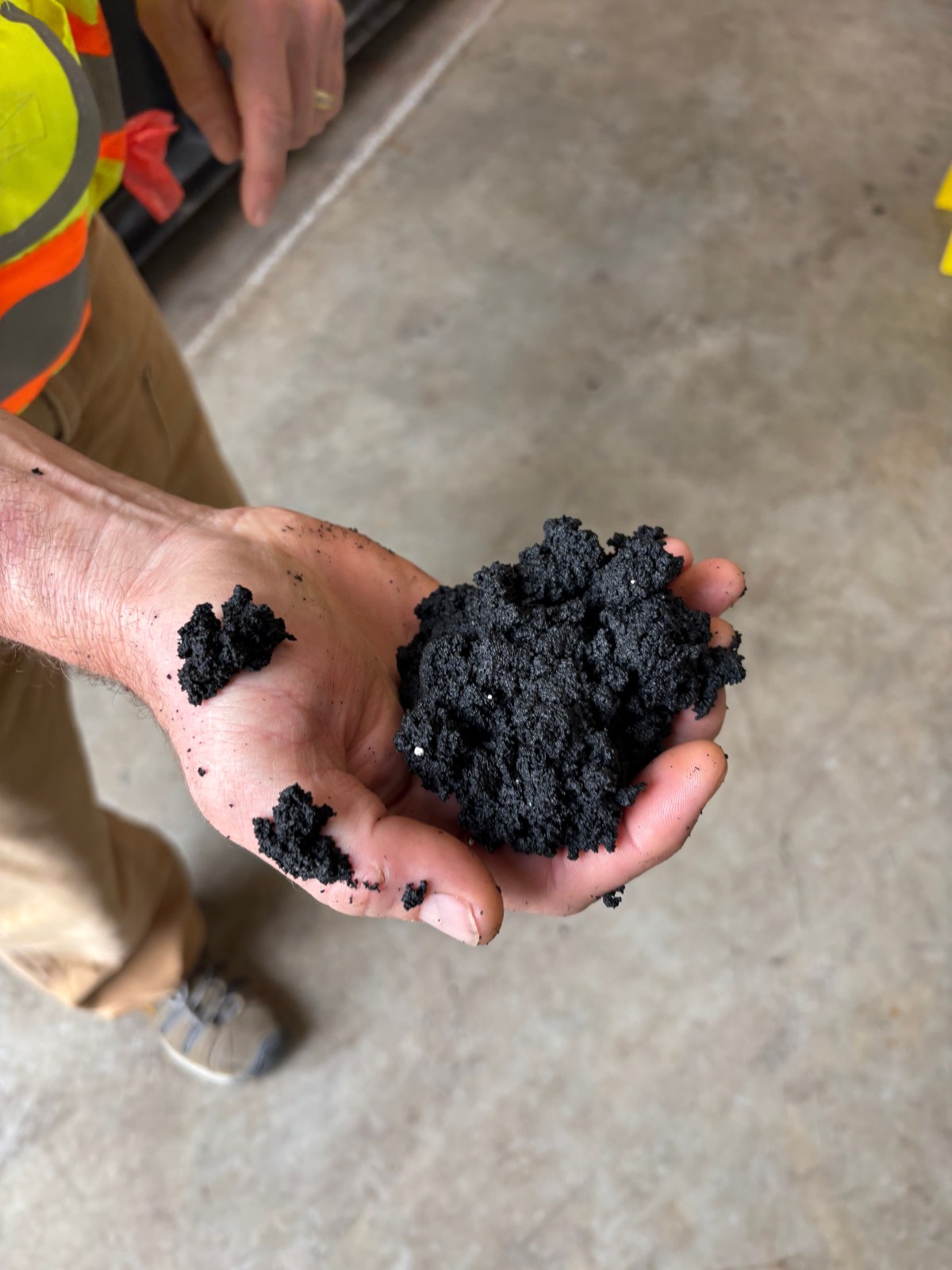
PurposeEnergy designed a process that 1) uses industrial anaerobic digesters to convert carbon from industrial organic waste into biogas, 2) adds iron to participate phosphorous and create fertilizer, and 3) cleans the remaining water before sending it to the municipal wastewater treatment plant.
But they needed financing to make it a reality. So, they raised money and obtained loans from several sources including the Vermont Economic Development Authority (VEDA).
“VEDA financed two of the first projects for PurposeEnergy in South Burlington and Shelburne, and we were successful.”
The third plant in Middlebury, also financed by VEDA, would be bigger and the most expensive. Fitch says when he told VEDA’s Director of Energy and Broadband Lending, Sam Buckley, about the Middlebury project, Buckley said to let PurposeEnergy’s other lenders know VEDA was on board.
“That was really helpful for us because we went to the market to get debt and equity money and could say, ‘here’s somebody who’s been with us for two projects that go back more than 10 years, and they’re willing to invest at their maximum.’”
Today that Middlebury plant takes 100,000 gallons of organic waste and wastewater daily from Cabot, WhistlePig, and Vermont Hard Cider, converts it into energy, and sends it to the grid offering enough green energy to power up to approximately 1,200 Vermont homes.
“I’m so happy because, I think about all these projects that probably we wouldn’t have been able to finance without VEDA because VEDA’s capital is flexible and low cost.”
Today PurposeEnergy has ten facilities: four in Vermont, one in New Hampshire, one in Ohio, one in North Carolina, one in Delaware, one in Hawaii, and one in Taiwan.
Fitch encourages other Vermont entrepreneurs and businesses that need capital to reach out to VEDA.
“If you need some investment money to build a plant like PurposeEnergy did, VEDA can help.”
The Vermont Economic Development Authority is Vermont’s statewide economic development finance lender. Created by the General Assembly in 1974, VEDA’s mission is “to contribute to Vermont’s economic vitality by providing a broad array of financing programs to eligible businesses that create jobs and help advance Vermont’s public policy goals.”
Since 1974, VEDA has provided over $2.8 billion in financing assistance to thousands of eligible Vermont entrepreneurs, manufacturers, small businesses, and agricultural enterprises, helping them realize their business goals, create jobs, and enhance the vitality of Vermont’s economy. In collaboration with Vermont financial institutions and other partners throughout the state, VEDA’s diverse loan programs help businesses and farmers grow, prosper and create a more vibrant economy for all Vermonters.

