

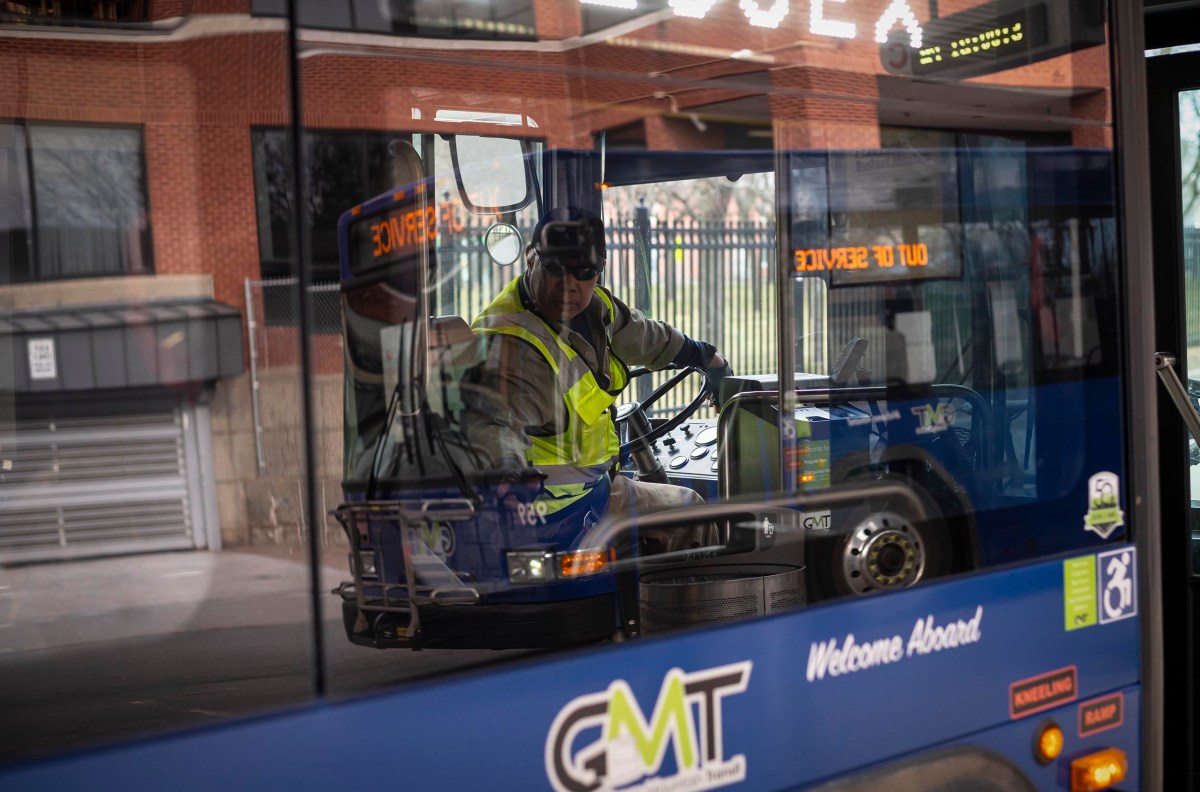
Vermont’s largest public transportation agency is weighing another cut to its bus service in Chittenden County, this time on a route that serves Essex Junction and Essex Town.
The proposal to eliminate Green Mountain Transit’s No. 4 route comes as the agency has already slashed the equivalent of 20% of its bus service across the region since late 2024, an effort that saved the Burlington-based transit provider $2 million annually.
But the agency still faces financial headwinds, said Clayton Clark, its general manager. The cost of running its buses was already rising due to inflation, and is likely to get higher if the war in Iran continues to drive up fuel prices. At the same time, he said, there has been a growing desire for its on-demand transit services for older adults and people with disabilities.

Absent major increases to the amount of money it receives from the state or federal government, he said, the transit agency will face an even larger, $2.5 million hole in its budget for the 2028 fiscal year, which starts in July 2027. That could mean more service cuts down the line, though nothing has been formally proposed yet, Clark said.
While the agency’s coffers were for years buoyed by pandemic-era federal relief funds, as that one-time money has been used up, the bus provider has struggled to find solid financial footing. It runs local buses around Burlington and commuter routes to Franklin and Washington counties. Its routes are the busiest of any transit provider in the state.
In addition to more potential cuts, the agency might need to lay off some of its bus drivers, Clark said. The agency has not laid off any drivers in the time it’s been making substantial service cuts, though has lost a number of positions through attrition, said Nate Bergeron, who is a shop steward for the agency’s driver union.
“All these things combined are going to lead to dramatic service reductions and cuts,” Bergeron said Wednesday, “which is going to make it even harder for people to get to the doctors’, and the pharmacies, and the dentist and the grocery stores.”
Green Mountain Transit’s board of commissioners is slated to vote on whether to cut the No. 4 route at its meeting Tuesday.
The Essex route is on the chopping block because it’s long been among the agency’s least cost-effective routes, Clark said. The service costs about $28 to operate per passenger each trip, compared with an agency-wide average of $7 per passenger.
The route currently carries a relatively low number of passengers — fewer than 1,000 a month — compared to other agency routes, its data shows. Clark said eliminating the route would save the agency $112,000 a year, as well as free up staff and other resources that could focus on routes that give the agency more for its money.
Still, “I don’t like to talk about the potential of reducing service,” Clark told the Essex Junction City Council at a meeting Wednesday night. “I would prefer to be doing the opposite.”
Marcus Certa, the council’s vice president, said that “it just hurts me to see this, because I do think about the people that are going to be impacted, and struggle to get to and fro.”
There is a potential lifeline for the service, however. The Essex Westford School District has offered to help pay for it, Clark said, which could help the agency to keep buses running. The route is used by many students at the Essex schools, he said.
The school isn’t able to chip in just yet. Lawmakers would first have to approve a change to the state law that governs how Green Mountain Transit operates. That change would allow the agency to raise funds from public and private organizations. Right now, it’s able to raise money from the local governments of the cities and towns where its buses run to supplant the state and federal dollars it receives.
The change is included in this year’s annual transportation funding bill. The legislation, H.944, passed the House last month and is now being considered in the Senate.
The Senate Transportation Committee voted out its version of the bill on Thursday, including the provision about Green Mountain Transit’s fundraising authority.
“I will be pretty frank that most of the news recently about public transit in this country, and public transit here with GMT specifically, has not been great. But, this is something that I see as positive, and perhaps helping us move toward more diversified funding and, in a way, to be less reliant on the state and feds for our service,” Clark said.
‘Absolutely critical’
In addition to rising costs, the transit agency is concerned about possible changes the federal government could make to public transportation funding this year that could have “cataclysmic” impacts on its budget, as the agency put it in a presentation to state legislators.
The Trump administration has proposed, among other changes, eliminating states’ ability to redirect federal funding for highway projects for public transit instead, a process known as “flexing.” Clark said these “flexed” funds cover a quarter of the agency’s bus operations around Chittenden County — so without access to that money, even more bus service might need to be cut.
That change could be included in federal legislation known as the surface transportation reauthorization bill, the current version of which expires in September. Congress is slated to work on the bill this month, Politico has reported.
Ross MacDonald, head of the Vermont Agency of Transportation’s public transit program, said Thursday the change in “flexing” was “at this point, conjecture,” so the agency wasn’t willing to comment on it.
He called the mechanism, however, “an absolutely critical part of our funding approach” for buses and other forms of public transportation in the state.
