




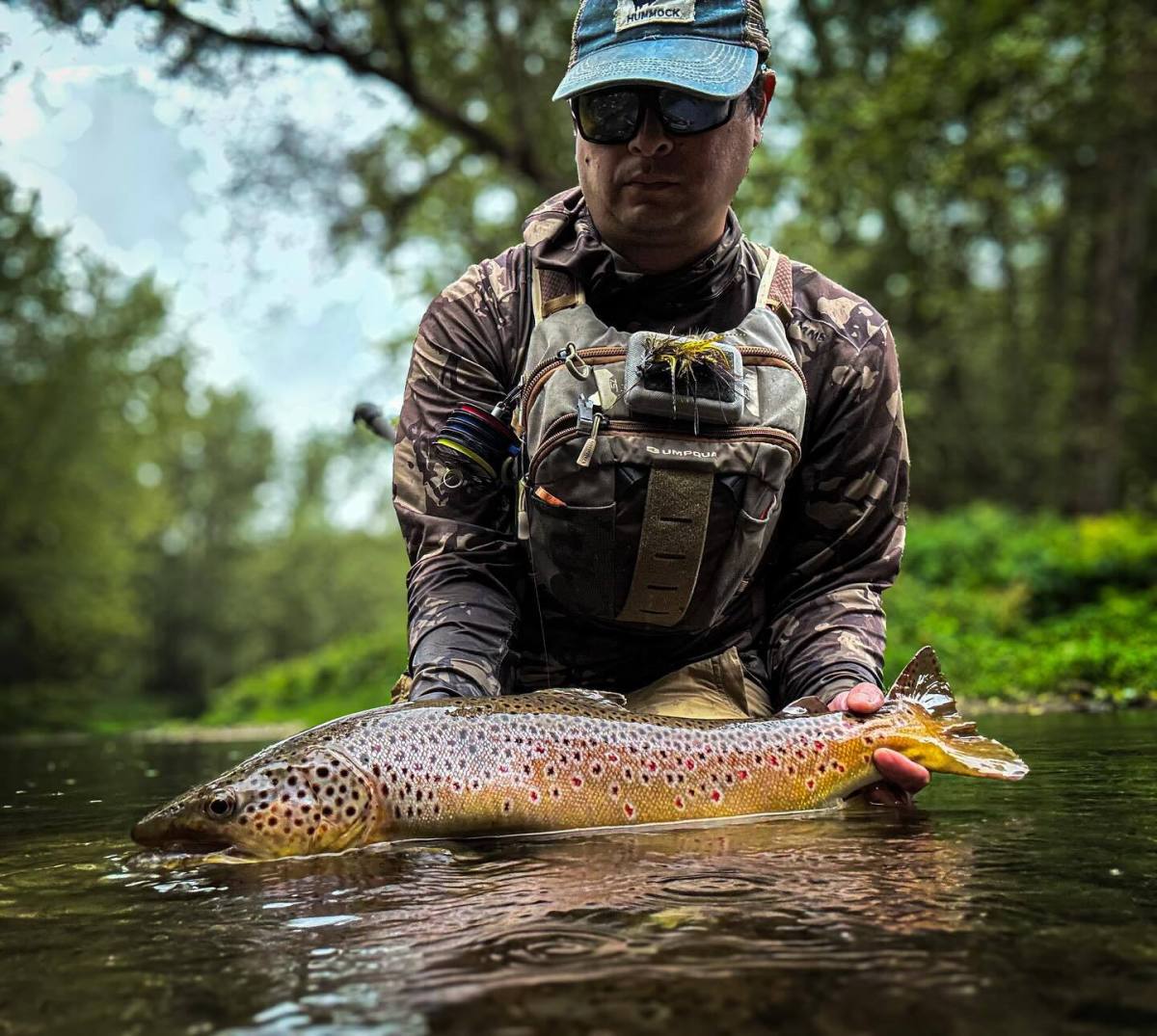
When Min Brown isn’t fishing, he’s thinking about fishing. Or getting ready to fish. Or tying flies to fish with.
“I usually pick one hobby and then get, like, very excessively into it,” he said.
Brown has been excessively into fly fishing for well over a decade now, since first being introduced to the sport about 18 years ago. He’s been guiding professionally for the past eight years, in addition to his day job at an aviation repair station.
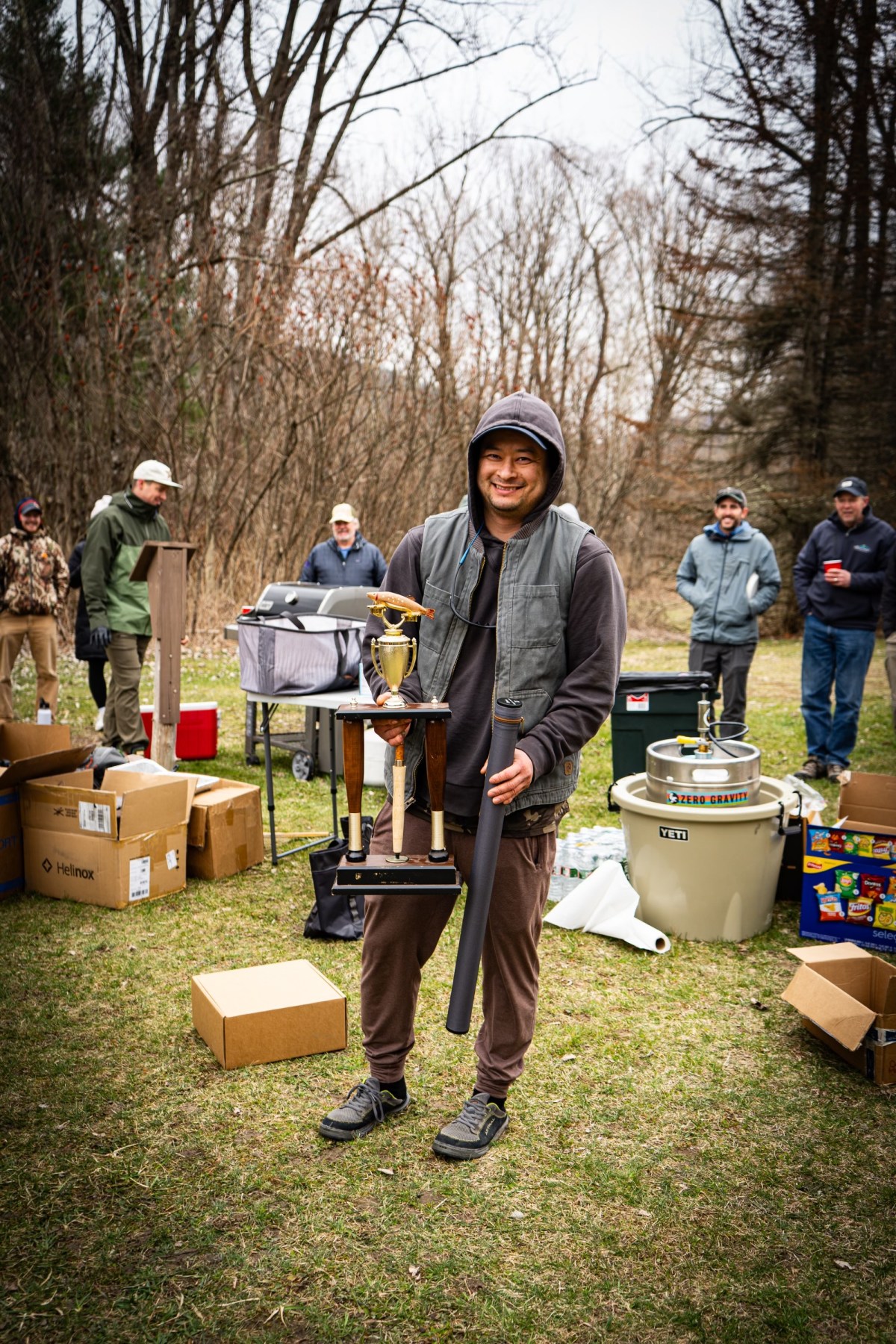
And in the past four years, he’s taken home the trophy three times in the Otter Creek Classic, one of Vermont’s few fly fishing competitions, which will bring anglers to the Otter Creek and White River watersheds this Saturday and Sunday.
Since 2008, the Classic has brought anglers together at the start of Vermont’s trout season to fish the rivers and streams of the Otter Creek and White River watersheds. In its nearly two-decade history, only two people have bagged a triple win, according to Steven Atocha, who helps organize the Classic.
That would be the competition’s founder, Jesse Haller –– who now works for Vermont-based hunting and fishing gear purveyor Orvis –– and Min Brown.
In a state where even the pros admit that fishing doesn’t come easy, and in a competition that happens during one of the slowest-biting parts of the season, Brown has won out against Team USA anglers and experienced locals.
Last year, his score was more than double that of the runner-up.
As fellow angler and owner of Vermont-based Diamondback Fly Rods Joe Goodspeed put it in an Instagram comment after last year’s competition: “They say 10% of the anglers catch 90% of the fish. But I looked at the OCC results and “Min catches 90% of the fish” would be a better description of the situation.”
“It’s hard to catch fish here”
Vermont’s mountain streams aren’t for those seeking an easy bite, according to Atocha, who runs a gear shop and guiding service in Middlebury that hosts the Classic.
“We’ve been guiding here since ‘98, and I tell people all the time, ‘it’s hard to catch fish here,’” he said. Even so, the Fish & Wildlife Department estimates that about 47,000 Vermonters fish for trout and salmon in the state each year, and another 15,000 people come from out of state to seek the species.
The Classic isn’t for the faint of heart either, Atocha said. It usually takes place early in the season, in April or May, when the water is still frigid with snowmelt and the weather conditions can change on a dime.
“We have fished in snowstorms, you know, sunny days, you know, rain, just about everything you can imagine.”
This year’s Classic coincides with the start of the state’s open trout season. Catch and release fishing for trout is allowed year-round in almost all of Vermont. But during trout season, anglers can generally keep a portion of the fish they catch.
Atocha has known Brown for about 15 years, first as a customer in Atocha’s fly shop, then as a fishing buddy, and, for the past eight or so years, as one of the fly fishing guides who works at the shop.
“Min is probably one of the best anglers I know in the state of Vermont,” Atocha said –– which can make fishing with him a humbling experience.
“I’ll work a hole for 10, 15 minutes, trying to catch fish,” Atocha said. “And then he’ll come in, you know, two minutes later and land a fish on the second cast.”
Atocha said that Brown’s humility masks a depth of knowledge.
“He’ll never say that about himself. But he’s a very technical fisherman.”
“There’s no waiting in fly fishing”
Fly fishing is part sport, part craft. Success demands a knowledge of biology and ecology, craftsmanship — and a whole lot of fish psychology.
A knowledge of the landscape is also key in a competition like the Otter Creek Classic. While other competitions assign “beats” of a river to each angler, competitors in the Classic are allowed to roam hundreds of miles of streams. Conditions can vary widely depending on the weather, especially in early spring, and anglers need to adjust accordingly.
That’s advice straight from the mouth of the champion himself.
“You just don’t know what the conditions are going to be like,” Brown said. “You can’t really have a solid game plan. You have to be ready to just kind of move around based on what it’s like that day.”
In the leadup to the competition, Brown pays close attention to weather conditions, snowmelt that will cool down the rivers and the water level in different parts of the river system. This weekend looks likely to be sunny.
With conditions in mind, Brown taps into his deep local knowledge of the Otter Creek watershed. After nearly two decades living and fishing in the area, he doesn’t need a physical map.
Like the most serious competitors, Brown rises before dawn on the day of the competition to get a good spot on the river. He’ll pack his gear the night before, then head out early to make sure he’s the first to arrive at his chosen spot.
But in chilly spring waters, the cold-blooded trout are slow to bite. It can be hours between fish. Some years, competitors go full days without catching any fish.
But even at that pace, fly fishing is never passive, according to Ben Wilcox. Wilcox, who used to fly fish on Team USA, has competed in the Classic in the past, clinching a win over Brown in 2023 but losing out to him in 2024.
“There’s no waiting in fly fishing,” Wilcox said. “That’s what makes it so interesting.”
“The river is always moving, you’re always moving,” he added. “Even if you’re fishing one spot, I’m constantly shuffling my feet and changing my approach and changing my angle.”
Wilcox also runs a maple sugaring business. With sugaring season still in full swing, he won’t be able to compete this year, he said.
While anglers like Brown and Wilcox come out to win, the Classic is also an opportunity for the community to gather after a long winter.
“That’s probably my favorite part of it all,” Brown said of the Classic’s social side. In a sport that can involve a lot of quiet, solitary hours out in the woods, the opportunity to gather is special.
“It is cool,” Brown added, “to see people that are as interested in something as you.”
“Trout really thrive in cold, clean and clear water”
The Classic is also a fundraiser, with proceeds from registration fees going to river restoration projects and public programming, Atocha said.
With rising temperatures and the past few years of floods and droughts, those kinds of projects are increasingly important to ensure trout can survive — whatever the future holds for Vermont’s climate.
“Trout really thrive in cold, clean and clear water,” said Vermont Fish & Wildlife biologist Austin Galinat.
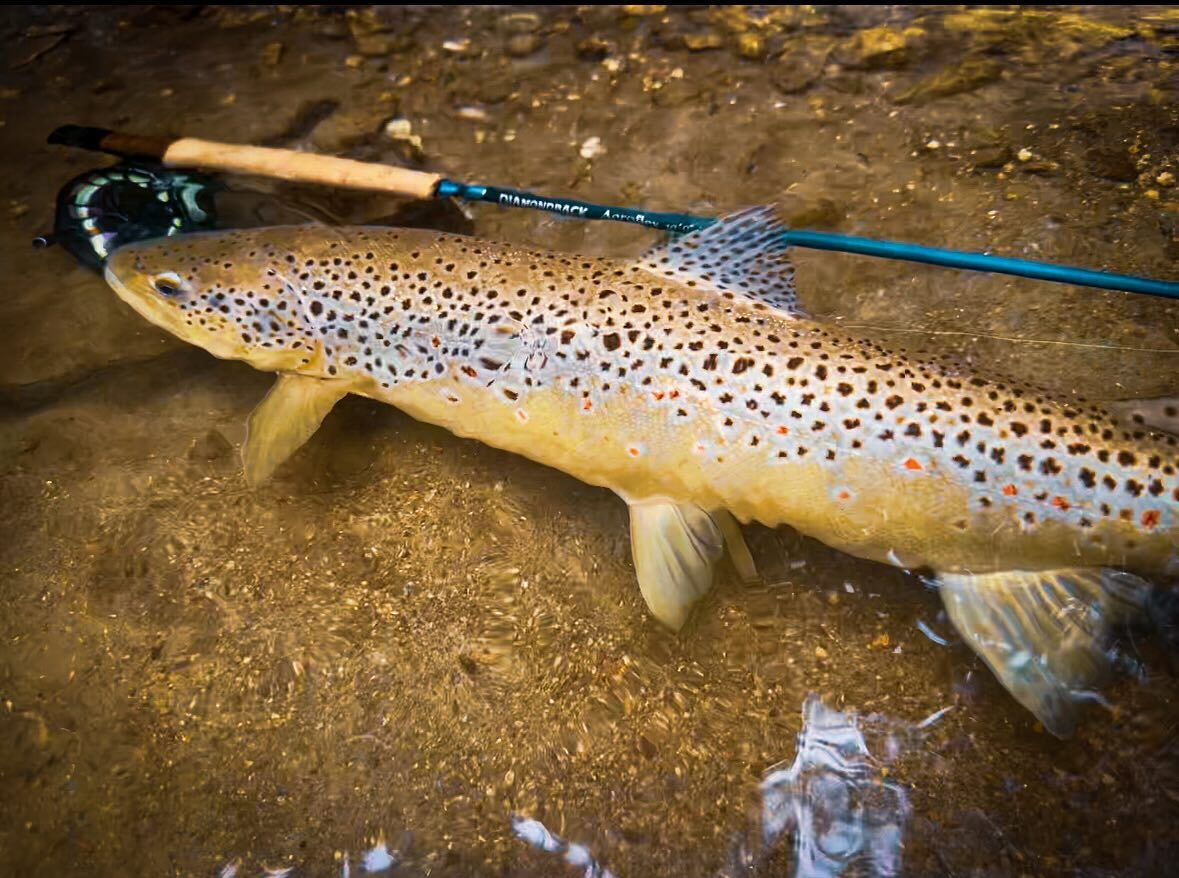
With the northeast’s climate warming, those cold temperatures may become harder for fish to find.
Erin Rodgers, the eastern region program manager at Trout Unlimited, which does stream and river restoration work across the country, said that making it easier for fish to move upstream and downstream is key to helping them survive warmer temperatures and droughts like the one Vermont saw last summer.
That can look like removing dams and replacing culverts, which can also make Vermont’s rivers more resilient to flooding and protect roads from being washed out.
“Anglers are some of the people who care most about rivers,” Rodgers added.
“I think I’ll kind of put my winning on the side”
Brown said that this may be the last time he enters the Classic with the intention of winning. He said that the way he fishes when he is competing, totally locked in, moving from spot to spot, makes it hard to fish with other people.
“I still feel pretty competitive, but I think it kind of takes away from it a little bit, because I’m so focused on trying to win,” Brown said. “I think it could be more fun just to hang out the whole day.”
He started taking his daughter out to fish a few years ago, and his priorities have changed.
She will be 10 next year, and Brown hopes that she might want to enter the Classic.
“At that point, I think I’ll kind of put my winning on the side.”