


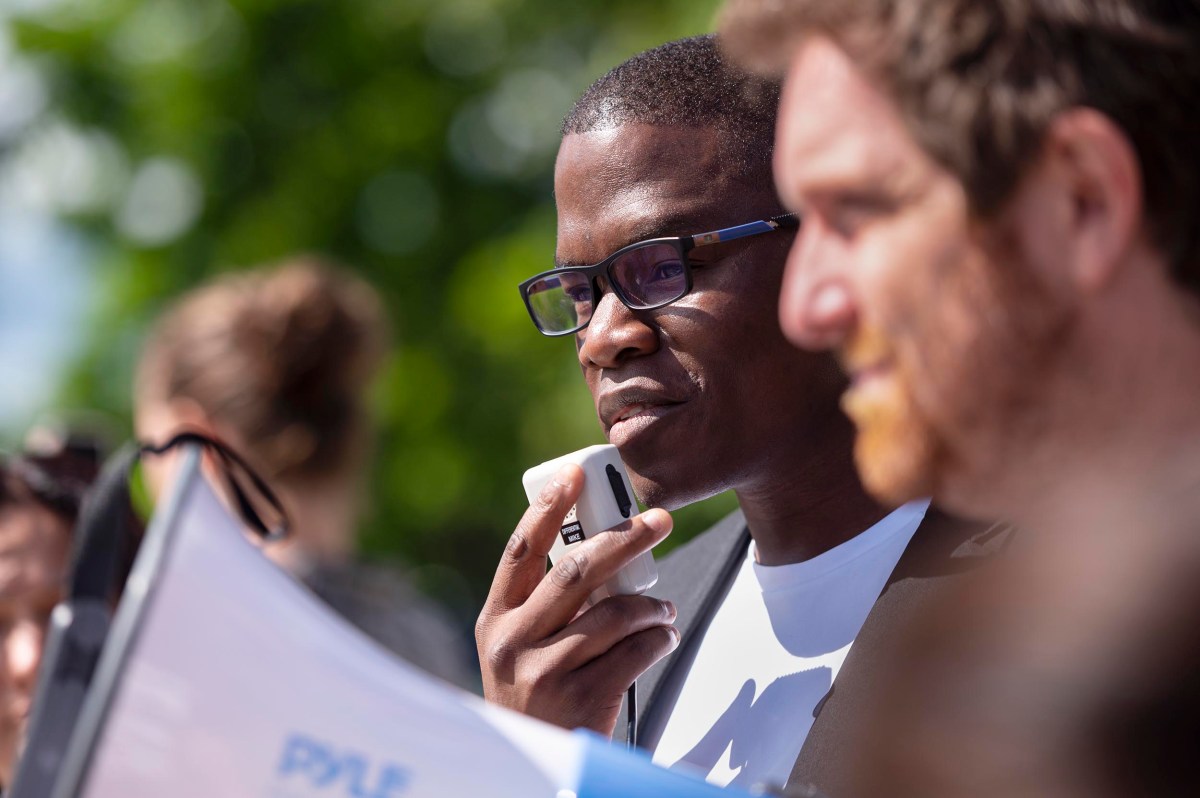
In February, I was surprised to receive a phone call from jail. It was Steven Tendo calling from the Strafford County jail in Dover, New Hampshire, where he was being held after being violently arrested by ICE agents on Feb. 4 at the Vermont assisted living facility where he works.

Tendo was determined that his voice be free even if his body was not. That determination is a throughline in his life. It is why he is alive to tell his story today as a free man, at least for now.
Steven Tendo is a minister, health care worker, nursing student and asylum-seeker from Uganda. He fled his native country in 2018 after the Ugandan government targeted him for the education and voter registration work that he was doing through an organization that he founded. He endured a harrowing ordeal in Uganda: he was abducted by armed men and interrogated and tortured in a secret facility. Several of his fingers were cut off. At another time, he was placed in an underground room with a python. Several members of his family have been killed. He was warned that he was next.
After making his way to the U.S. in 2018, Tendo applied for asylum and spent two years in immigration detention in Texas, where his case drew the attention of Amnesty International. Tendo’s asylum application was denied and he has been fighting deportation in the courts ever since.
Tendo told me that if he is deported to Uganda, “I would definitely die. They would kill me.” He said that Ugandan operatives told his family “that they should prepare my grave because they are ready for me.”
In 2021, after being released from detention, Tendo settled in Vermont, where he works as a licensed nursing assistant at UVM Medical Center and is pursuing a nursing degree at Vermont State University. He is a minister of a small church.
On February 20, a New Hampshire judge ruled that ICE had failed to follow proper procedure and ordered Tendo released after 16 days in jail.
Tendo said that his violent arrest in Shelburne on February 4 “exhumed the trauma that I went through in Uganda.”
He compared what he experienced at the hands of ICE agents in Vermont to Uganda, where justice is “kind of a jungle. There is no process. There is no warning. There is no nothing. They would just pick you up anyhow, anywhere. I thought that the U.S. being a first world country, a super power, a democracy… it would be different. And so when that happened to me, I cried deeply down in my heart. I was like, ‘Why does it have to follow me wherever I go?’”
Tendo remains in constant peril. On March 20, Tendo had to report to the ICE office in St. Albans for what was supposed to be a routine check-in. ICE has periodically used these check-ins to arrest people. In what is now a familiar ritual, some 200 people rallied outside the ICE office in support of Tendo last week and his check-in occurred without incident. He was ordered to check-in again with ICE in a month.
Tendo said that the support he has received from Vermonters throughout his ordeal “means a lot to me, and it sends a message to ICE that I am not a criminal.”
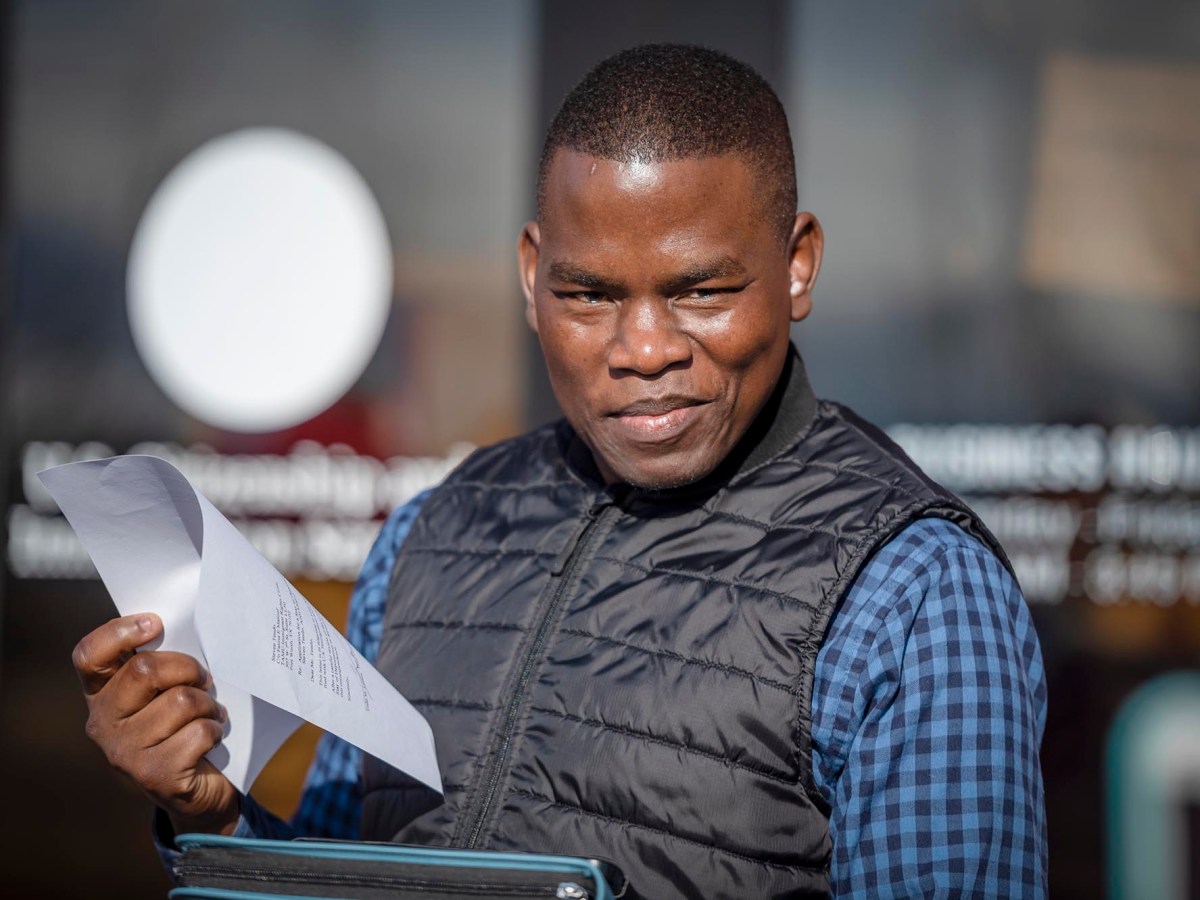
He is motivated to keep going by “the people that benefit out of my voice being aired out there on their behalf. They see me as a beacon of hope.”
“I just can’t put up with injustice against anybody, irrespective of their skin color, irrespective of their faith, irrespective of who they are.”
The treatment that he and fellow detainees were subjected to in the immigration jail in New Hampshire was “inhumane,” Tendo said, with 40 men sharing one bathroom and being subjected to constant cold.
“I witnessed a lot of fear and a lot of desperation among most of the people” in the jail, which included primarily Latin American and African immigrants. He asserted that everyone in immigration detention had paperwork such as active asylum cases. No one, he said, was “illegal.”
“Everyone was confused, everyone was scared, everyone was traumatized, because most of them had been picked off the streets.”
I asked Pastor Tendo what keeps him going.
“My faith has brought me a long way. I am someone who sees a light at the end of the tunnel. …My eyes see beyond what people are seeing right now. I am seeing a community where everybody can be accepted and work together and use our unique differences to build each other.”
Tendo said that he uses every challenge “to strengthen myself and push back with kindness, with love and with compassion.”
“I know it may sound weird and not common. But it’s who I am.”
