

This story, by Report for America corps member Carly Berlin, was produced through a partnership between VTDigger and Vermont Public.
In order to build the housing of the future, Vermont is hearkening back to a tool from the past.
A century ago, companies like Sears sold mail-order blueprints for modest homes that proliferated across the country and in some corners of Vermont. Now, state officials are reviving the idea of the catalog home in a bid to smooth the construction process and boost Vermont’s housing stock.
As part of a new initiative called “802 Homes,” state officials are drafting 10 home designs that will be available for free to property owners and developers – and would get a fast-track through local permitting. While cities such as South Bend, Indiana, and Kalamazoo, Michigan, have taken on similar initiatives in recent years, Vermont is the first state to do so, officials say.
“We want to give folks easy access to open-source construction plans,” said Alex Farrell, commissioner of the Department of Housing and Community Development. And, he added, “We’re wanting to give these people … some assurance that as long as you’re choosing one of these designs, you’re going to get your permit.”
The draft designs are meant to look familiar: from cottage apartments above a garage to duplexes and triple-deckers, they’re based on existing Vermont buildings and are intended to blend into backyards and open lots within neighborhoods. These home types are often described as the crucial “missing middle” between the big single-family houses and large apartment buildings that most often get built today.
Officials have selected three municipalities to pilot the program: Essex Junction, Hartford and Manchester. The towns will vet the designs locally and work with state officials to iron out a streamlined local approval process. The state plans to finalize the catalog by the end of the year, and is paying a design firm $500,000 to develop the home plans and lead the public engagement process, according to Farrell.

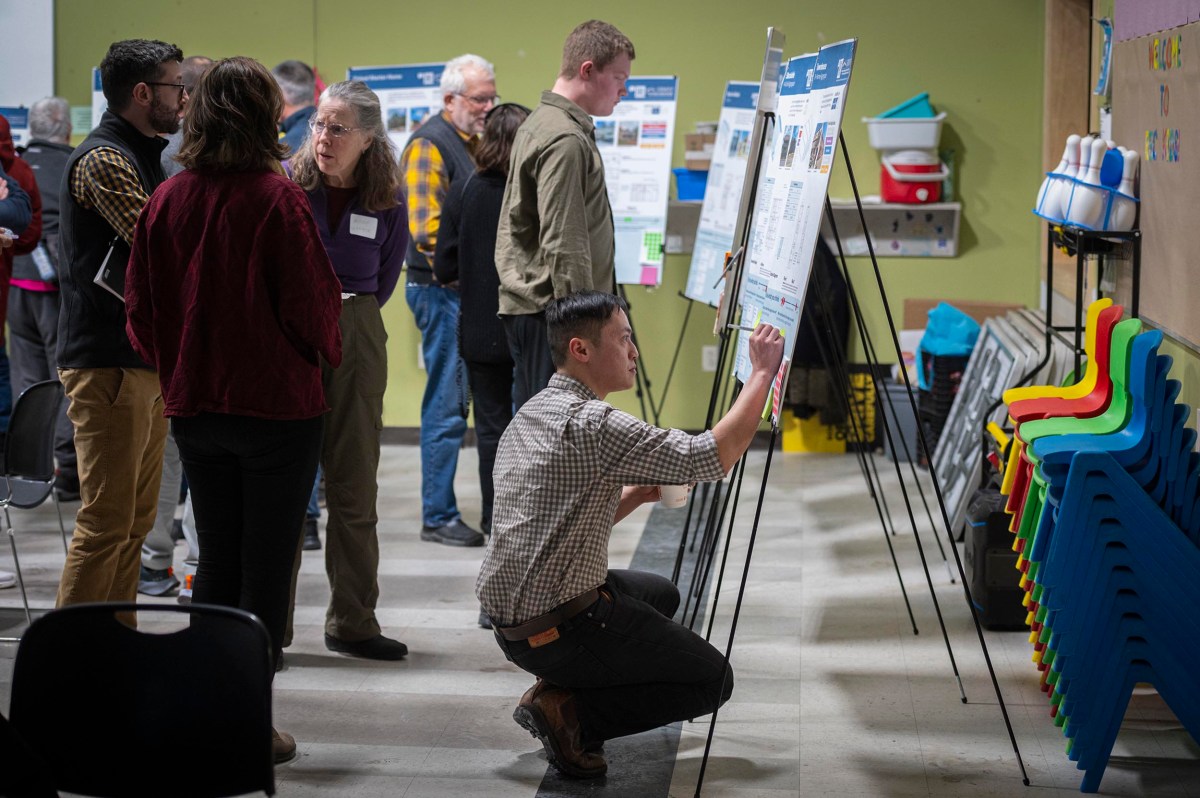
At a public workshop on Saturday in Essex Junction, planners, developers and property owners perused a series of posters to give their input. A local planning commission member wondered if one of the plans could feature an elevator for older residents seeking to age in their homes. A regional transportation planner wondered about adding kids’ play spaces for young families. And a builder who specializes in rehabbing older buildings gravitated toward plans for small starter homes.
In this small Chittenden County city, state reforms and local zoning overhauls have encouraged denser housing development in recent years. But here and elsewhere, the changes haven’t done enough on their own to get shovels in the ground. Any developer – or simply any property owner who wants to add another unit of housing on their land – still needs to solicit plans from an architect, line up financing and make it through layers of local approvals.
Essex Junction Community Development Director Chris Yuen hopes access to the 802 Homes catalog could help lift those burdens.
“These designs could just be plopped onto their properties a little more easily,” Yuen said.


Farrell, the housing commissioner, envisions that someone looking to build one of these prevetted designs would go straight to a local zoning administrator for the green light – rather than make a stopover at local review boards, which can add conditions, and time, to a project.
Lawmakers are considering creating more pathways to hasten local approvals like this by giving towns model zoning bylaws to adopt. Meanwhile, Gov. Phil Scott has asked legislators to expand the 802 Homes program statewide, effectively giving these designs state-preemption in local codes.
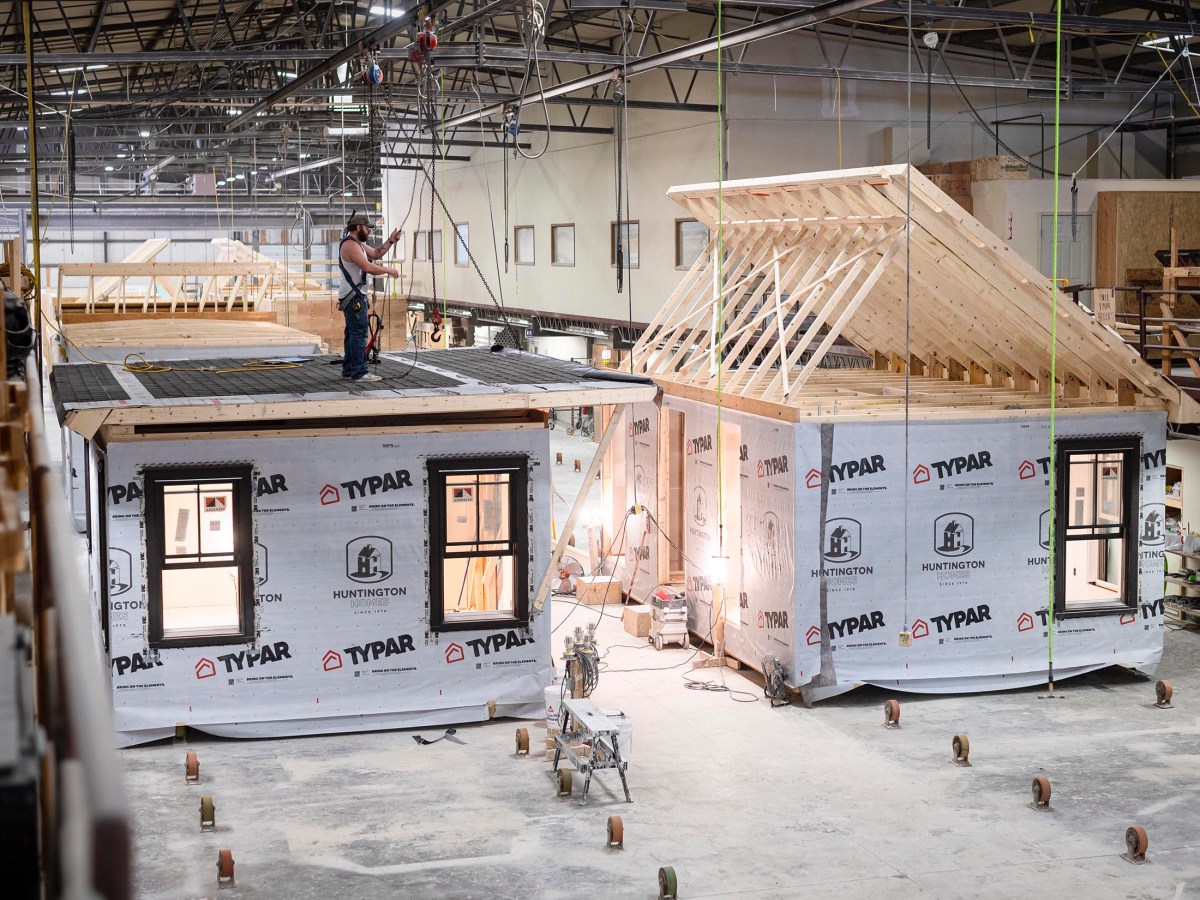
The homes in the catalog are designed to be built either onsite or in factories, using modular building techniques. Legislators are also eyeing the potential promises of building more housing on the factory floor and allowing the state to make bulk purchases of homes.
The state does not have a target for how much the home designs will cost to construct, but officials are trying to make them “as efficient and affordable as possible,” Farrell said.

“If these can be designs that a builder could produce at a competitive rate – you know, closer to $450,000 per unit – that’s really … as good as we’re seeing in the marketplace right now,” he added.
In 2024, the median sale price of a newly-built home in Vermont was nearly $625,000.
For many would-be builders, the challenges of developing new housing represent a wall many choose not to scale. But Bill Drunsic, a Manchester business owner and developer, is working with the state to sketch out what a cluster of new catalog homes could look like on a plot of land he owns.
He hopes to help set an example.
“This hopefully will tear down that wall and just make the field a lot more attractive and interesting for people to participate.”
Correction: A previous photo caption included an incorrect name for Alex Davis.
