

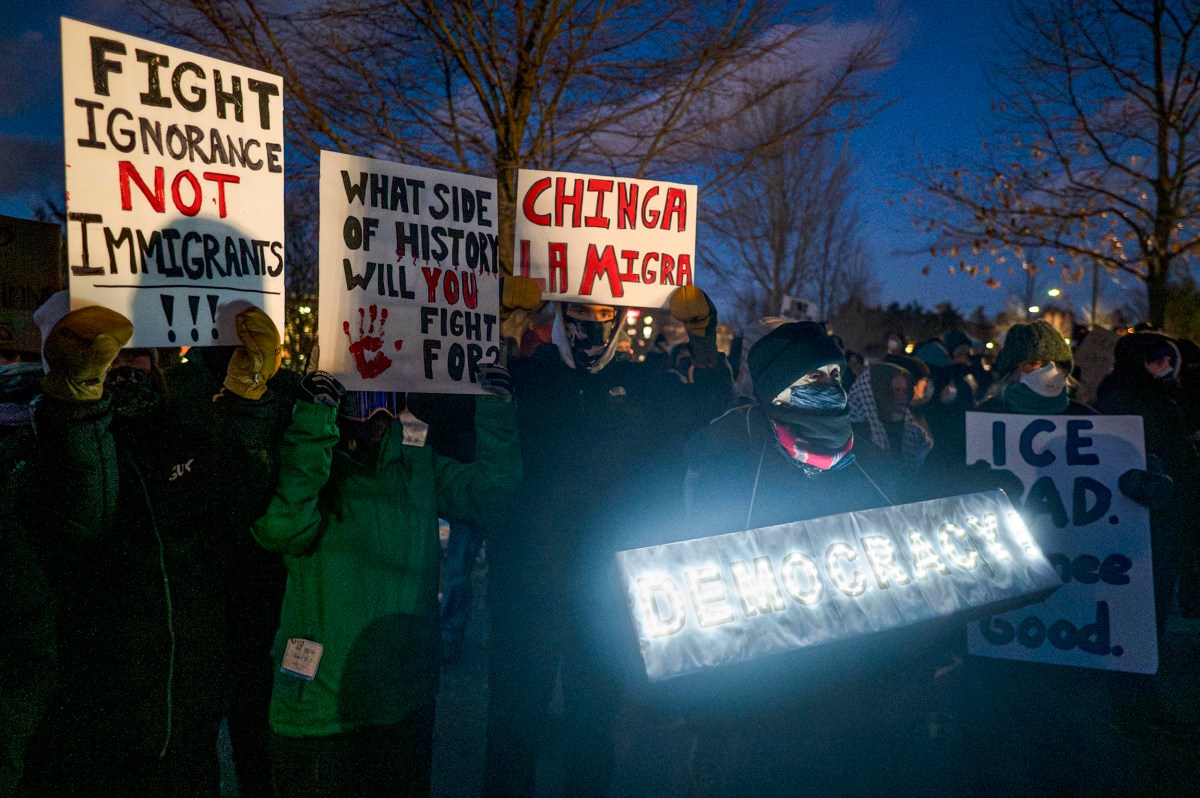
“I’m assuming you’re not all here for the budget,” Ted Kenney, chair of the Williston Selectboard, told the crowd of people attending the Tuesday night meeting. “I’m assuming you’re here to talk about ICE.”
Soon after, the five-member town board unanimously passed the first known resolution in the state condemning the surveillance and enforcement actions of U.S. Immigration and Customs Enforcement, which operates two large facilities off Route 2.
“Of course, it doesn’t have any legal binding,” said Christine Hallquist, who wrote the resolution. A former Democratic candidate for governor who now runs the Vermont Community Broadband Board, Hallquist said she wrote the resolution independent of her state role. “The whole idea of stopping ICE and stopping the federal government has to be grassroots.”
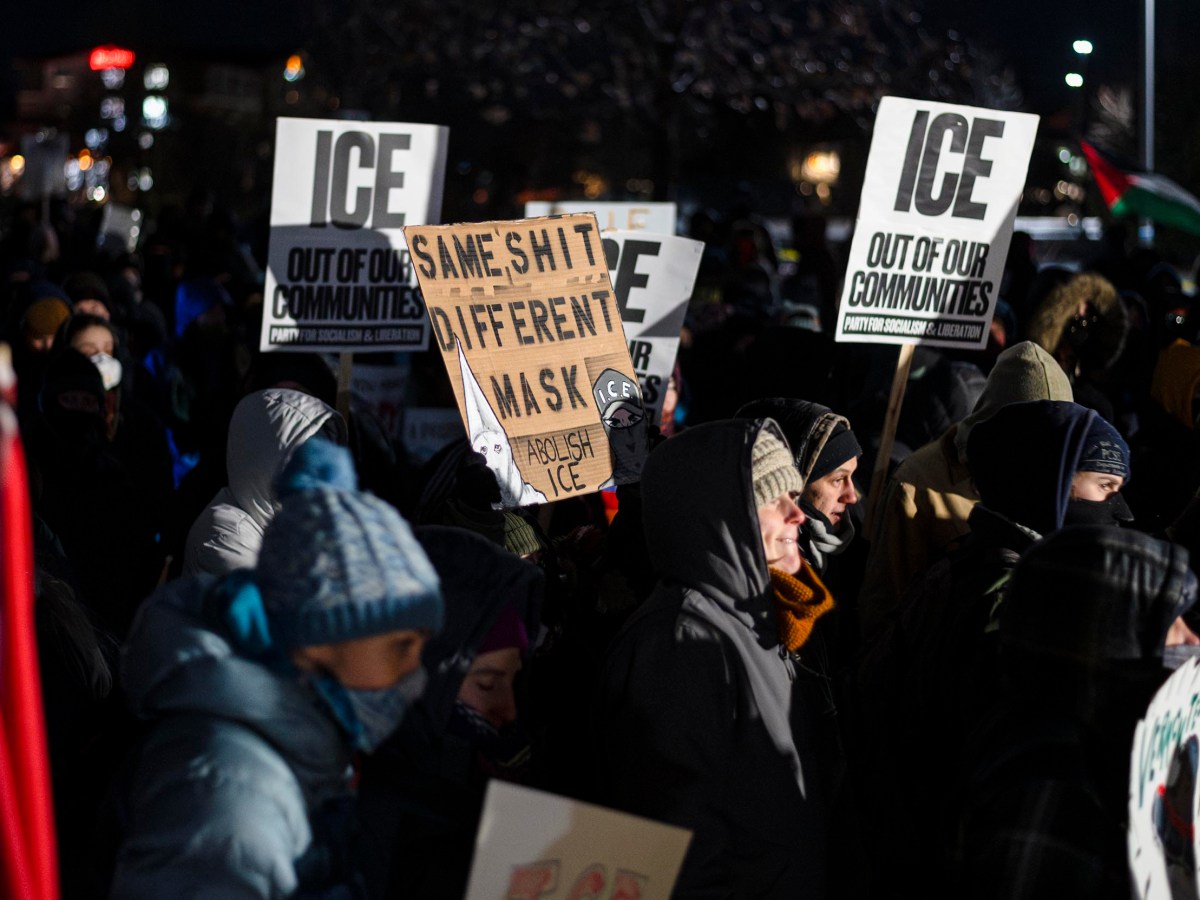
Greta D’Agostino, the vice chair who proposed the resolution during last week’s meeting, said that while passage would be primarily symbolic, “it does send a strong message that this is not what we as a town uphold as our values and our beliefs.”
The town’s decision came after about 10 anti-ICE protesters spoke and dozens more took up two rows of chairs, lined the back walls of the Beckett/McGuire Meeting Room at the Williston Town Hall and spilled out into the narrow hall and down the staircase.
“This feels like a milestone moment that signals that maybe our mantra of ‘ICE OUT OF VERMONT’ is not just rhetoric, but an actual possibility,” said Blaine Paxton, a resident of Burlington who was there for the second time in two weeks.
People cheered and thanked the board when the resolution passed, banging wooden spoons on the backs of metal pots. As Kenney predicted, they filed back out before the budget discussion began.
The resolution is tied to a pair of ICE facilities in Williston that host digital surveillance and national tip lines. Less than two miles apart, they’ve been for months a target for local activists, who have protested ICE activities with noise demonstrations, banner drops and marches, including one with about 300 demonstrators who blocked traffic in the bitter cold Tuesday. The protest ended minutes before the board meeting.
The surveillance activities out of the Williston facilities include investigations by the National Criminal Analysis and Targeting Center on Industrial Avenue, which runs probes of U.S. residents based on social media and communication platforms like Facebook, Instagram and WhatsApp, along with long-forgotten networks like MySpace and Tumblr, according to an October work order.
The resolution states Williston “strongly objects” to having any Vermont facility used “for the warrantless surveillance of online activities, and other monitoring of Vermonters.” It is unclear whether the resolution will have an impact on ICE activity in the state.
Hallquist said she wrote the resolution because she fears the rise of ICE’s surveillance strategies – especially when combined with artificial intelligence – “threatens the First Amendment rights of Vermonters to engage in political dissent and peaceful protest.”
She circulated the resolution through activist networks like Vermont’s Indivisible group to towns across the state, hoping the generic language meant other communities could follow Williston’s lead.
She compared the mobilization across the country to other historic actions like the Civil Rights Movement or ongoing protests in major cities facing a sudden influx of federal law enforcement agents like Minneapolis. The resolution mentions the death of Renee Good, a mother killed by an ICE agent in Minneapolis on January 7, as a reason to oppose ICE.
Kenney, the board chair, said that while he favored the concept, the state constitution could not legally impact federal law enforcement agencies like ICE.
“I think what they’re doing is immoral and illegal, but it doesn’t violate state law because state law doesn’t apply to them,” Kenney said.
Not all those in attendance at Tuesday’s meeting supported the resolution. Shawn Handy, a landlord in Essex, told the board that the resolution could put Williston in dangerous territory.
“I’m not here to oppose ICE or be for ICE or anything else, but what I am here as is a property owner,” Handy said. “If we were to pass something that says whoever owns the property ICE wants to occupy, you can’t rent that space to them, that’s the same as a landlord discriminating against somebody because of their particular beliefs or anything else.”
He cautioned it could open the town up to lawsuits from the federal government or owners of the property ICE wants to occupy.
Even a board member pointed out the resolution was imperfect.
The resolution’s first line states that the “Town of Williston is founded upon the principles of the United States Declaration of Independence, which holds that all persons are created equal and endowed with unalienable rights to Life, Liberty, and the pursuit of Happiness.”
But the resolution’s flaw could be seen on a quilt, bordered with wildflowers, that hung behind the select board. Below a pair of cardinals, an apple tree, a bell, and the town’s historic red meeting house, the year of the town’s charter, 1763, was stitched in black thread. Williston was founded 13 years before the declaration.
“We weren’t founded on the principles of the U.S. Declaration of Independence,” Kenney said. “If anything, they were probably founded on us.”
ICE did not respond to a request for comment by time of publication.

