


MONTPELIER — The two candidates vying to be the next leader of the Vermont National Guard both told lawmakers this week they would resign that post rather than carry out an unlawful order from their superiors in the state or federal government.
Vermont’s Legislature elects an adjutant general, which is the top military officer in the state, every two years. The current office-holder, Maj. Gen. Gregory Knight, is stepping down after seven years, creating an open race. The Vermont National Guard includes both the state’s Army National Guard and Air National Guard.
Two current guard members are vying to succeed Knight: Deputy Adjutant General Henry “Hank” Harder, who’s a retired Air National Guard general, as well as Army National Guard Col. Roger “Brent” Zeigler. Gov. Phil Scott is the commander-in-chief of the Guard, while the adjutant general is responsible for managing the force’s 2,700 members and keeping state military records.
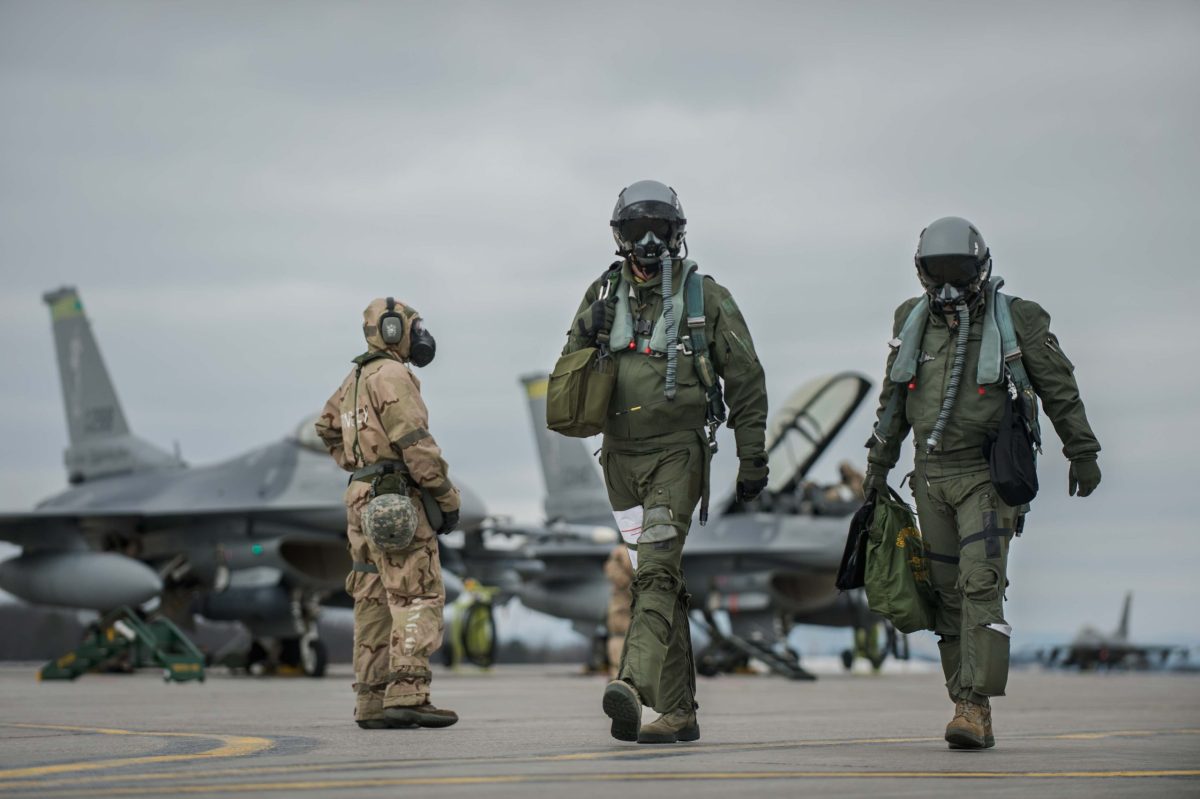
This year’s adjutant general election is notable because it comes as members of the Vermont Air National Guard have been deployed under controversial federal orders. According to the office of U.S. Sen. Peter Welch, D-Vt., President Donald Trump’s administration has directed the Air Guard to take part in Operation Southern Spear, the U.S. military campaign that resulted in the capture of Venezuelan President Nicolás Maduro and his wife, Cilia Flores.
Democratic members of Congress, including those in Vermont’s delegation, have condemned the operation, which has more broadly targeted alleged drug smuggling boats and killed dozens of people. Some Democrats and experts in international law have said the U.S. may have committed war crimes by targeting survivors, while a few Republicans in Congress have pledged to investigate the drone strikes.
Harder and Zeigler faced questions from state legislators during a joint hearing of the Vermont House and Senate government operations committees on Tuesday. The full state House and Senate will elect one of the two candidates on Feb. 19. Vermont is the only state in the country where the head of its National Guard is elected, rather than appointed by the governor.
Harder was first to testify during the hearing. In response to a question from Sen. Tanya Vyhovsky, P/D-Chittenden Central, he said he would do everything he could to gather information about whether an order from a superior was legal or not. However, after that fact-gathering, “if it was still clear to me that I had a question whether it was a lawful or legal order, I wouldn’t do it,” Harder said.
“(It’s) not what I would want to do. But, if I was forced into that, I would resign before I would ask my soldiers and airmen to do things like that, or go down that path,” he said.
During his turn testifying, Zeigler faced a similar question from Vyhovsky and said that provided he knew “all of the details to the situation” and had consulted legal counsel, he would also be willing to step down in the face of an illegal order.
“I would agree with Gen. Harder — I would resign,” Zeigler said. He added that he “would not want to be the person” to lead guard members in a state- or federally-ordered response to a city if that response “could violate certain laws, human rights.”
No legislators asked specifically for the candidates’ opinions on the legality of the recent military actions in and around Venezuela.
While each state’s National Guard troops typically are commanded by their respective governors, the president has authority to mobilize the guard in specific circumstances. Trump has pushed that power to its judicial breaking point since beginning his second term, including deploying states’ National Guard troops to major U.S. cities.
Gov. Scott, a Republican, has at least twice over the past year chosen not to deputize the state’s National Guard for federal initiatives: first a request to help with clerical immigration enforcement work and later as part of Trump’s efforts to crack down on crime in Washington, D.C.
Details about the guard’s role in Operation Southern Spear have been scant. In written testimony to legislators on Tuesday, Knight called the force’s recent deployment “an involuntary federal mobilization.” He wrote that he did not know at that point how long the Vermont guard would be deployed.
Harder, in pitching himself to legislators Tuesday, emphasized his role since January 2024 as Deputy Adjutant General, which is the guard’s No. 2 below Knight. He said his priorities would be improving care for veterans in the state and bolstering the guard’s recruitment. Both the army and air units have numerous vacancies, he said.
Zeigler told lawmakers he would focus on empowering guard members to speak about mental health and other issues they are struggling with. He also pointed to his role as president of the Vermont National Guard Charitable Foundation, which provides emergency financial aid to guard members and their families, among other roles.
Knight told lawmakers that he was not endorsing one candidate over the other at this point.
