
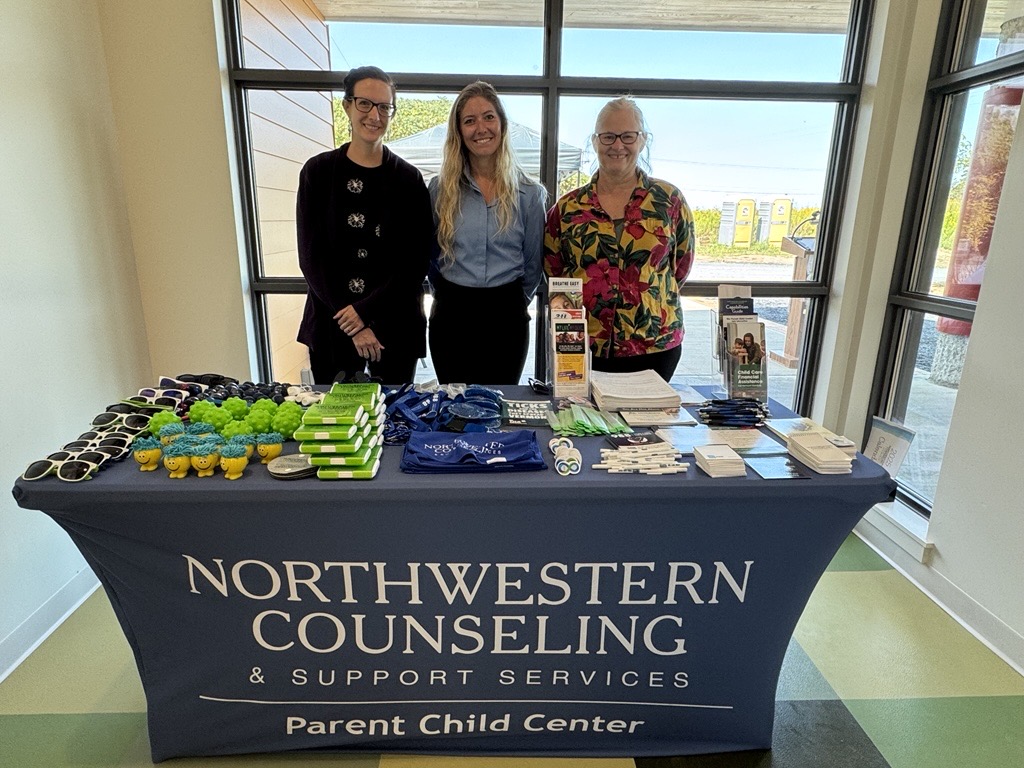
It is increasingly common for staff at the Parent Child Center of NCSS to receive daily requests from families seeking support to meet their basic needs. Many are facing impossible choices between buying groceries, diapers, or paying their heating bill. Inquiries regarding these necessities have steadily increased across the community, and both Parent Child Centers and VCP network agencies are providing the resources to meet these needs.
The Role of Parent Child Centers in Supporting Vermont’s Most Vulnerable Families
NCSS provides support to families from the prenatal period through age six, one of Vermont’s most vulnerable populations, as it holds the unique position as a Parent Child Center embedded within a designated mental health agency. Parent Child Centers are part of a statewide coordinated network written into Vermont statute to provide home and community-based services to families with young children through eight core services. One of those services is providing access to concrete supports, defined in statute as “community services and resources to address the immediate needs of the family or contribute to the long-term well-being of the family, or both.”
Parent Child Centers operate from the belief that families should receive support before a crisis occurs, from trusted people within their own communities. NCSS is well known locally, and its ability to support families from pregnancy through adulthood is a critical component of that trust. Establishing trust and building relationships with families early is foundational to this work. When families are supported early and able to thrive, the communities in which they live are stronger, healthier, and more resilient.
“Families with young children were showing up at the emergency room with nothing. Working with trusted community partners, such as libraries, hospitals and pediatric offices, is how we meet families where they are, and we felt compelled to respond with the same approach in this situation.”
Lindsay Hunn, Parent Child Center Supervisor

Currently, Parent Child Centers receive federal Community Based Child Abuse Prevention (CBCAP) funds through a Parent Child Center Integrated Grant, which is intended to prevent child maltreatment and improve outcomes for children and families. At NCSS, these funds, alongside annual grant funding from the United Way, are allocated based on community needs. Funds are most often used to prevent evictions and utility shutoffs, purchase warm clothing for children during the winter months, assist with transportation for children with complex medical needs, and in general, reduce the risk of families falling into severe economic hardship. This combination of funding allows NCSS to provide a multifaceted approach to supporting a wide range of families, regardless of income or insurance status.
Community Partnerships and Concrete Supports in Action
NCSS does not work alone to address community needs. Just last month, NCSS’s Parent Child Center and Emergency Services programs partnered with Northwestern Medical Center after identifying families arriving at the emergency department in need of food and basic supplies. Addressing the needs is a core function of NCSS’s Early Childhood Resource Team, which routinely responds to requests for concrete supports. Parent Child Center Supervisor Lindsay Hunn highlighted the urgency of the situation, noting, “Families with young children were showing up at the emergency room with nothing. Working with trusted community partners, such as libraries, hospitals and pediatric offices, is how we meet families where they are, and we felt compelled to respond with the same approach in this situation.”

The need for this support is clear. One in six children in Vermont access SNAP benefits, and in Franklin and Grand Isle counties alone, more than 3,700 households rely on 3Squares. Even with state and federal resources in place, demand for food assistance and other basic needs continues to grow.
In FY25, NCSS’s Parent Child Center provided more than 250 families with supports, such as diapers, grocery and gas cards, infant formula, and perinatal supplies. These families, and hundreds more, are embedded within a broader system of care, including evidence-based home visits and on-site support at pediatric practices, OBGYN offices, and other local family hubs. Most families requesting financial support receive ongoing case management designed to build family resilience, promote critical social emotional development, bridge connections to community resources, and create a sustainable path to success for every family.
Parent Child Centers are well known for their ability to respond creatively to the specific needs of their communities, and our services are more essential now than ever.”
Margaret Walsh, Parent Child Center Program Manager at NCSS.
Helping families apply for and remain enrolled in benefits is a critical role of Parent Child Centers and are preparing to expand. Staff are trained to assist in multiple application processes, including Medicaid enrollment, childcare financial assistance and referral support, housing applications, and more.
In the spring of 2025, in collaboration with Attune2Food, who are a team of nutritionists, the Parent Child Center applied for and received a $20,000 grant to address food insecurity and nutrition equity for children with medical and feeding challenges. The project provided medically tailored meals and snacks to pediatric patients with food allergies, gastrointestinal conditions, and complex feeding needs.
“Parent Child Centers are well known for their ability to respond creatively to the specific needs of their communities, and our services are more essential now than ever.” says Margaret Walsh, Parent Child Center Program Manager at NCSS.
Why Sustainable Investment in Concrete Supports Matters
While these efforts reflect the dedication of staff, community partners and our strong network of agencies that support families across Vermont, piecing together short-term grants and limited resources is not a sustainable solution. Concrete supports are essential for families. They reduce economic stress, address immediate needs, and prevent situations from escalating. Hunger and lack of access to basic needs are not the result of poor choices or moral failure. They are driven by systemic barriers such as lack of transportation, housing instability, limited access to childcare, rising health care costs, and generational trauma.
“Parents who lack reliable access to food or warm clothing for their children cannot focus on their mental or physical health, nor are children able to fully engage and thrive across environments. Prevention is the key to maximizing long term positive outcomes for families” says Walsh, and NCSS is working to ensure those benefits are actualized.
More about NCSS

Northwestern Counseling and Support Services (NCSS) is the designated mental health agency responsible for serving children, birth through adulthood, in the Franklin and Grand Isle regions. The agency, which has operated for over 50 years and currently employs over 500 individuals, has three service delivery divisions: Community Mental Health Services, Developmental Services, and Early Childhood and School Based Services, under which the Parent Child Center is housed.
VT Parent Child Center Network
This article is part of a series, collaboratively produced by members of Vermont Care Partners, a statewide network of sixteen non-profit, community-based agencies providing mental health, substance use, and intellectual and developmental disability supports.

