

‘A bastion of fairness’
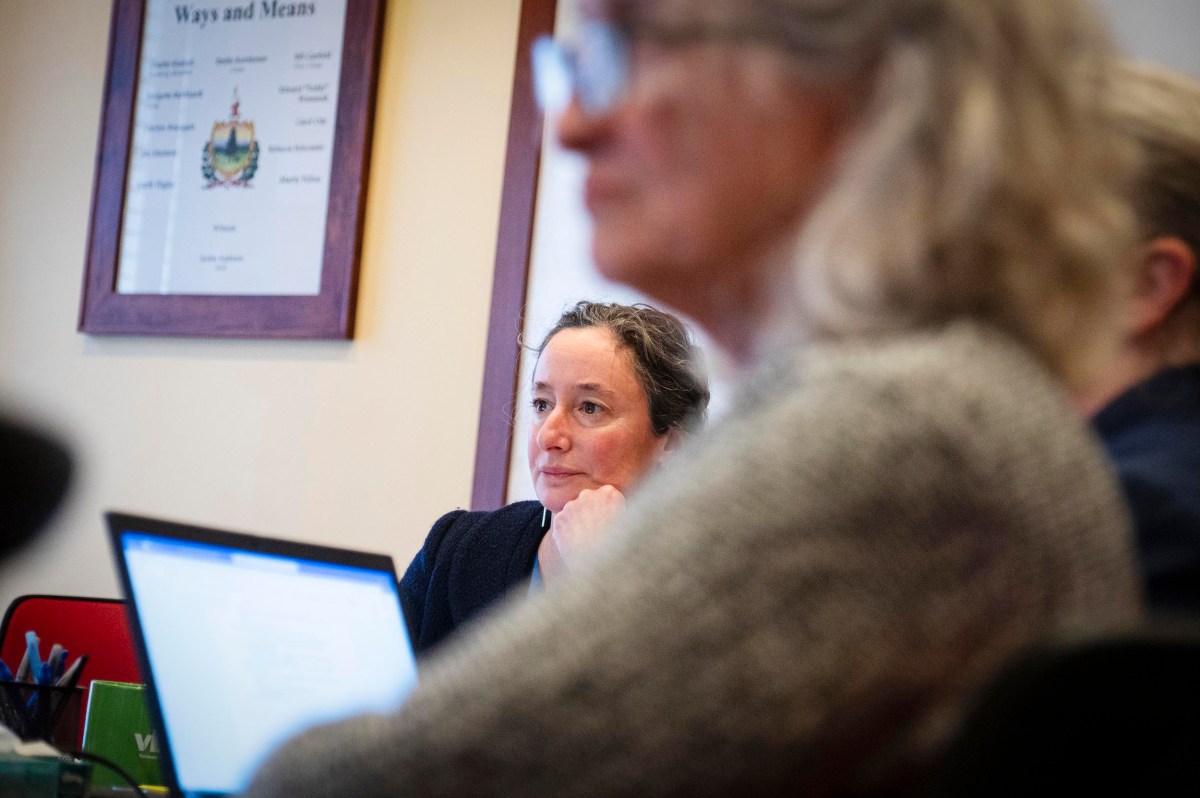
That’s what Rep. Emilie Kornheiser, D-Brattleboro, wants the Vermont tax system to be, she said Thursday morning. But following the passage of federal tax law changes in the One Big Beautiful Bill Act, she said, that lofty goal may have become harder to ensure. And she worries the changes could threaten the state’s tax revenue, too.
The House Committee on Ways and Means, which Kornheiser chairs, has lost no time this week diving into the weeds of new federal tax law as it weighs what state-level changes might be necessary or feasible. In lieu of regaling each other with news from the summer, Kornheiser asked lawmakers to name their favorite thing about working on tax policy while introducing themselves on Tuesday.
“This year marks the 50th year I’ve been married to a CPA,” offered Rep. Carolyn Branagan, R-Georgia.
A number of the federal changes, particularly to corporate taxes, will flow through to Vermont’s tax calculation processes. Like many other states, Vermont uses parts of the federal tax system as a baseline for levying its own fees on taxpayers.
Patrick Titterton, an analyst in the state’s Legislative Joint Fiscal Office, told the committee Tuesday that changes to tax policy in the new federal budget are complex, with some likely to decrease revenue and some expected to increase it. In summary, small $1.3 million and $4.9 million decreases are projected in each of the next two fiscal years, Titterton said, while other impacts will be less immediate as some new measures take effect over the course of up to 10 years.
Corporate income tax, a notably fickle revenue source, Titterton said Thursday, is projected to provide roughly 10% of Vermont’s General Fund revenue in the 2026 fiscal year.
State lawmakers have decided before that federal tax changes are not in Vermont’s interest. In a 2018 special session, lawmakers “uncoupled” Vermont’s tax code from certain federal provisions around personal income tax. For now, Kornheiser said the state remains much more bound to Washington, D.C., when it comes to corporate taxes.
For Kornheiser, it’s potentially an equity issue.
“Our wealth divide has done nothing but grown,” she said. “The Trump administration’s tax work just did even more to exacerbate that.”
— Theo Wells-Spackman
In the know
Flanked by a real who’s-who of health care advocates today, State Treasurer Mike Pieciak held a press conference championing H.577, a bill that his office has steered that aims to bring down the price of prescription drugs.
The bill, sponsored by House Health Care Committee chair Rep. Alyssa Black, D-Essex Town, and Rep. Daisy Berbeco, D-Winooski, proposes Vermont join a coalition of states — Oregon, Washington, Arizona, Nevada and Connecticut — to pool drug purchasing power, negotiate lower costs and secure bulk discounts. Joining the group would come at no cost to the state, but the bill would allocate $50,000 for the Treasurer’s Office to develop and promote the program.
If the state were to join, anyone in Vermont could receive a free drug discount card and use it instead of insurance when buying a medication. Pieciak said he especially hopes this helps those whose prescriptions may not be covered by Medicare, individuals who have dropped their commercial insurance or those who opted for a less-comprehensive plan.
Still to come as the bill works its way through the House Health Care Committee: more discussion on whether paying out-of-pocket can count toward one’s deductible.
— Olivia Gieger
On the move
The Senate voted to send a bill that would require disclosures on certain AI-generated media back to its Government Operations Committee on Thursday. The committee will review the changes the House made to the bill, S.23, before that chamber passed the measure last year. The Senate never took up the House’s changes before adjourning for 2025.
Sen. Brian Collamore, R-Rutland, the gov ops chair, said in an interview his committee would take testimony on the House’s revisions next week. He said he did not expect the changes would be controversial and that the bill would likely make it back to the floor.
Both the House and Senate versions of S.23 would require certain publishers of images created using AI — and that depict political candidates — to also attach a message stating that the content is fake. The disclosure requirement would apply to these “deepfakes,” as they’re often called, only when they are published within 90 days of an election.
— Shaun Robinson
Too hot to handle
Statehouse regulars who opt to bring their own lunch have probably noticed a change in the building this week — there is no longer a microwave available for public use in the cafeteria. Safe to say, the appliance’s sudden disappearance has been a cause of consternation, if not at least several cold meals of leftover takeout.
Sitting in its place is a rather ominous sign from the Sergeant-at-Arms’ Office:
“The microwave in this location was destroyed,” it reads. “At this time, there are no plans to replace the microwave due to continued maintenance and fire-related issues. Thank you.”
Turns out, “fire-related issues” is a polite way of saying that food-reheaters have been responsible for two of the three total fires in the Statehouse over the past year, Sergeant-at-Arms Agatha Kessler said Thursday. The latter of those two conflagrations, she said, caused the appliance’s untimely demise.
Kessler said the fires had taken up a significant amount of emergency responders’ time and resources, which for her outweighed the benefits of keeping the microwave in use. She noted, too, that there are other microwaves located around the building that people can use.
The extent to which those other microwaves are publicly accessible is, sort of, a matter of perspective. It is The People’s House, after all. My advice: Use the one a short walk from the cafeteria in the alcove past the House Commerce and House Corrections rooms.
But maybe follow the advice on the appliance’s door: Use a lid!
— Shaun Robinson
Overheard
“We should be able to hold the Snoop Dogg and the Cheech and Chong’s products to the same standards,” said James Pepper, chair of Vermont’s Cannabis Control Board, speaking to the Senate agriculture committee about regulating out-of-state cannabis and hemp products.
— Austyn Gaffney
