

MONTPELIER—Vermont lawmakers in the early days of the 2026 legislative session are trying to keep the education reforms started last session on track.
But the efforts appear on shaky ground after the state’s school redistricting task force refused to deliver a map of proposed consolidated school districts in November. Without a map of consolidated school districts, uncertainty has only grown in the six months since Gov. Phil Scott signed Act 73, the law setting the state on a course to radically transform how public schools are paid for and governed.
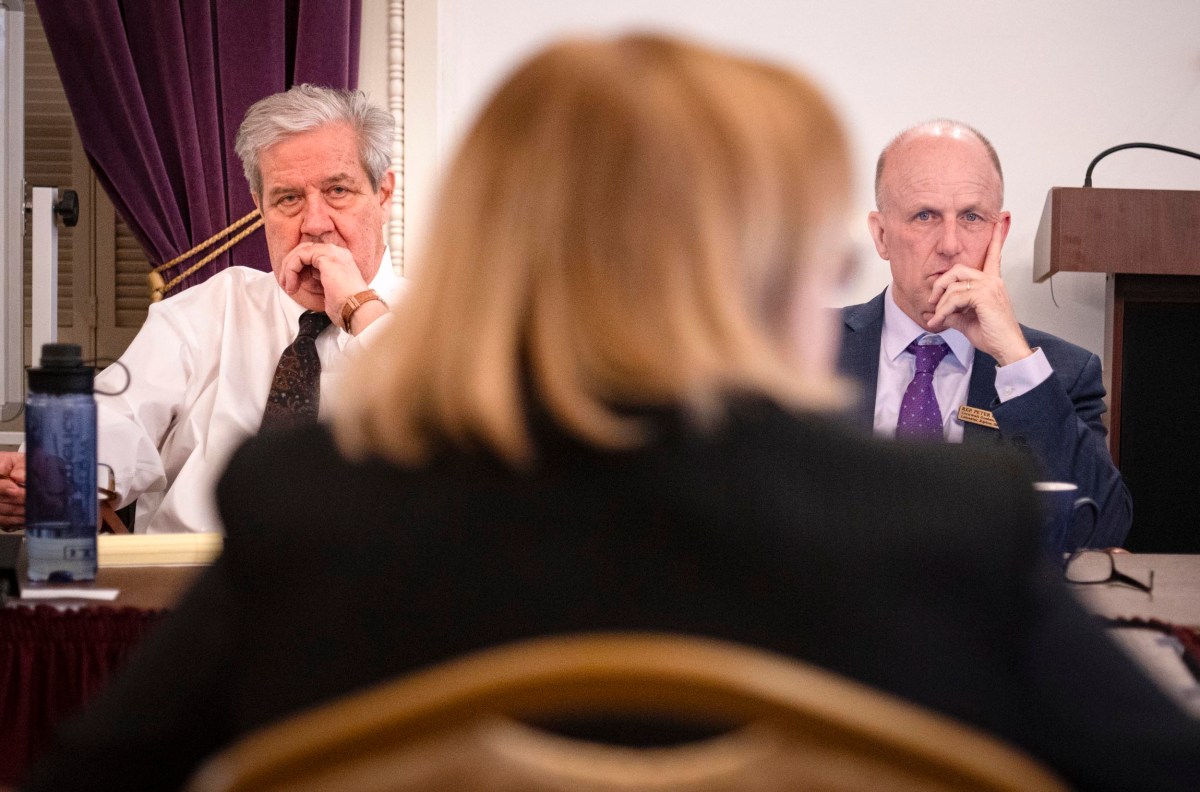
“I think that it is going to be very hard to get broad agreement on mandated consolidation,” said Rep. Peter Conlon, D-Cornwall, the chair of the House Education Committee. “This is a pretty difficult situation.”
Scott devoted his State of the State address on Wednesday to rallying support for Act 73 and further education reforms, telling House and Senate members that the issue remains Vermont’s “most critical challenge.”
“Education transformation is not optional, it’s essential,” he said.
Legislative leaders, Conlon included, said they are intent on working toward reform. Other lawmakers say there is a path forward to create a new education finance formula, even if lawmakers cannot agree on consolidation.
Conlon’s counterpart in the Senate agrees.
“We have a system now (where) really nobody’s responsible, and it’s resulting in people not being able to pay their property taxes,” said Sen. Seth Bongartz, D-Bennington, the chair of the Senate Education Committee. “We must fix the system.”
And while legislators try to push forward with long-term changes, Senate President Pro Tempore Phil Baruth, D/P-Chittenden Central, says he plans on introducing legislation Thursday to cap spending in Vermont’s school districts in the near term.
“If we’re going to get ourselves out of this situation where the General Fund is being eaten by the (Education) Fund, we have to have some hard stop on this kind of explosive growth,” Baruth said.
‘Everything’s on the table’
Lawmakers in the Senate and House education committees have spent their first two days brushing up on the intricacies of Act 73, as well as reviewing various reports from groups trying to map the future of public education.
“This is going to be a hard session for us,” Conlon told committee members Tuesday. “We are going to enter it with a philosophy of everything’s on the table.”
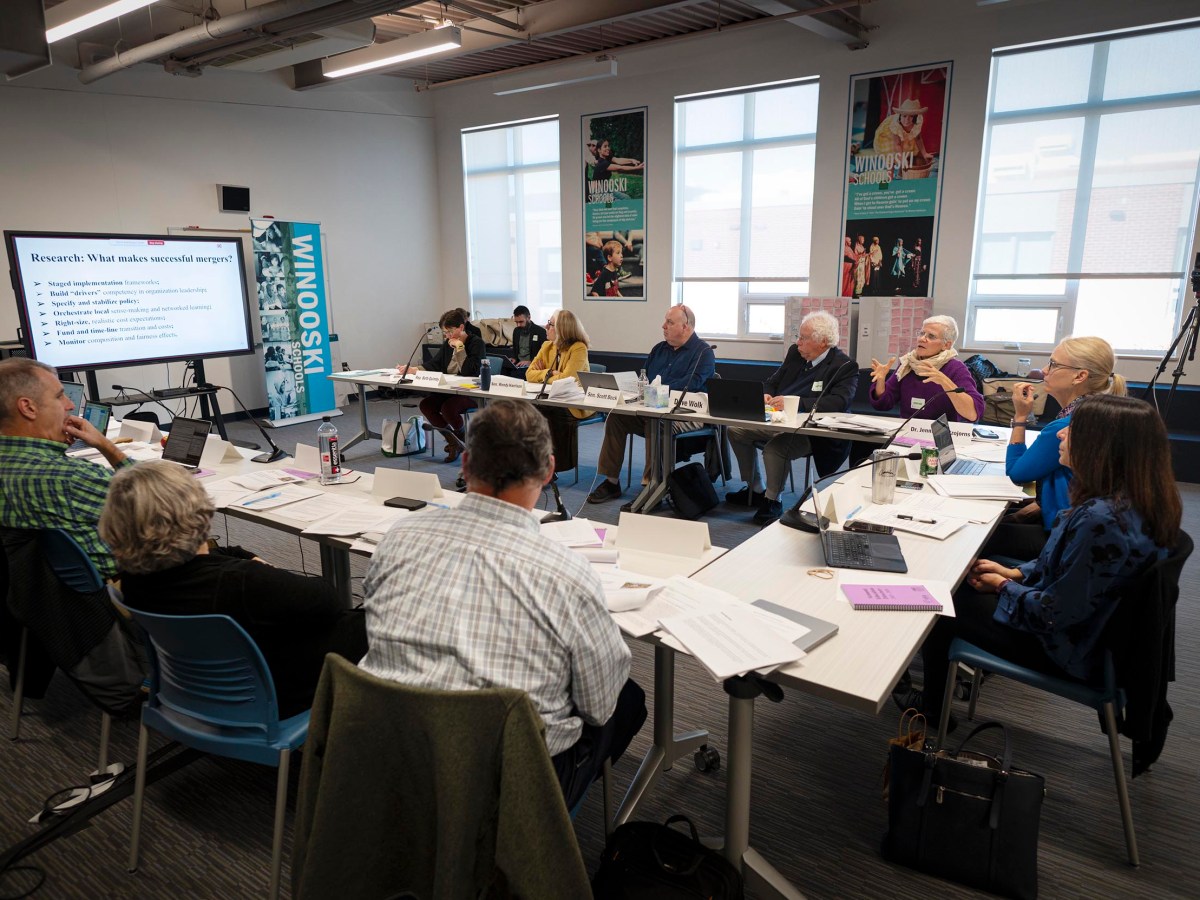
A joint meeting of the House and Senate education committees is scheduled for Thursday to discuss the redistricting task force’s final report.
Task force members called for lawmakers to instead create five cooperative education service regions, regional entities that would allow the 119 existing school districts to share resources for things such as special education and transportation.
Scott panned the task force’s proposal, and in his address Wednesday said their failure to produce a map proposal was “a political strategy to preserve the old system.”
Still, some lawmakers feel the task force’s proposal should be considered as lawmakers forge ahead in the coming weeks.
“They lay out a very different path forward, and it’s something that we’re going to need to take a very hard look at, given Vermonters’ very mixed reaction to the idea of mandated consolidation,” Conlon said in an interview.

‘This is a pretty difficult situation’
The heart of Act 73 is a planned shift to a foundation formula, a funding model used by most states in the country that would realign authority over school district budgets away from school districts and to the state.
Currently, school districts are allowed broad latitude in deciding how much to spend. With a foundation formula, the state would set a base funding amount per student and adjust for students requiring more support, shifting significant decision-making authority from local districts to the state.
The new formula would help contain growing education costs, and consolidating districts is key to shifting to the new formula, Agency of Education officials have said previously.
But without a proposed map in front of them, lawmakers said consolidating school districts is a tall task.
During his speech, Scott said drawing new district lines “should be the first order of business for the committees of jurisdiction.”
Bongartz, meanwhile, said that while the task force “obviously set the process back,” lawmakers will have to find a new starting point.
“It’s just going to take letting the committee gel a little bit around this, taking a lot of testimony early, and trying to figure out the vehicle for getting to that repair or rewrite of the funding formula that we know has to happen,” Bongartz said.
In the meantime, lawmakers are at work figuring out how to keep rising property taxes under control.
Scott, in his initial budget proposal, said he plans on using $75 million in unused funds from this year’s state budget to dampen an expected 12% average property tax increase. That spike is driven in part by a projected $115 million increase in education spending next year.
“While it goes against the grain and doesn’t actually fix the problem we’re trying to solve, I’ll be asking you to provide some property tax relief with another band-aid,” Scott said during his State of the State address.
Buying down property taxes has become commonplace in recent years. Scott and lawmakers last year allocated more than $100 million to keep the average property tax bill nearly flat.
Even with the cash injections, average education property taxes have risen more than 40% across the state in the last five years, according to the Vermont Tax Department.
Baruth, the Senate’s leader, said he’s generally supportive of Scott’s plan to use money to buy down the education fund this year, but said it must be contingent on efforts to cap school districts’ spending.
To that end, Baruth said he plans on introducing legislation on Thursday that would set a cap on school districts budgets beginning in 2028 and 2029, based on a district’s previous year’s spending.
Scott has signalled some support for the idea. But other Democratic lawmakers have expressed skepticism over the plan.
