

This story by Lukas Dunford was first published in the Valley News on Dec. 27, 2025.
BARNARD — U.S.-China trade relations have been roiled this year by a tariff fight, and agriculture is one of the sectors of the economy that was thrown into disarray.
But revenue from agricultural exports to China has boomed this year in Vermont. In the first eight months of 2025, the value of Vermont’s exports have increased by 78.3% compared with the same time frame in 2024, according to a report from Farm Flavor, an agriculture company based in Franklin, Tenn.
But this doesn’t mean Green Mountain maple syrup and CSA shares are be shipped to Beijing.
Almost all of the $2.7 million increase came from dairy products, more specifically whey, according to Farm Flavor content director Hannah Hill. Whey is a byproduct of cheese used for protein powder, baby formula, as a food-additive and in animal feed.
And Vermont is “on track to break all records for whey exports to China of anything in the last five years,” said Brendan Wilson, the CEO of Food Export Northeast, a Chicago-based nonprofit trade association.
On average, agricultural exports to China from the United States have fallen 54% compared to last year, according to Farm Flavor’s report.
Vermont is bucking that trend.
The largest Vermont exporter of whey to China is Agri-Mark, the largest dairy co-op in Vermont and owner of Cabot Cheese, said Scott Waterman, a spokesman for the Vermont Agency of Agriculture, Food, and Markets.
The 78.3% increase could be attributed to increased whey prices in the international market, rather than an actual increase of product being shipped.

“A lot of the number of fluctuations around value are based on the value of the commodity, not necessarily the export volume,” Waterman said.
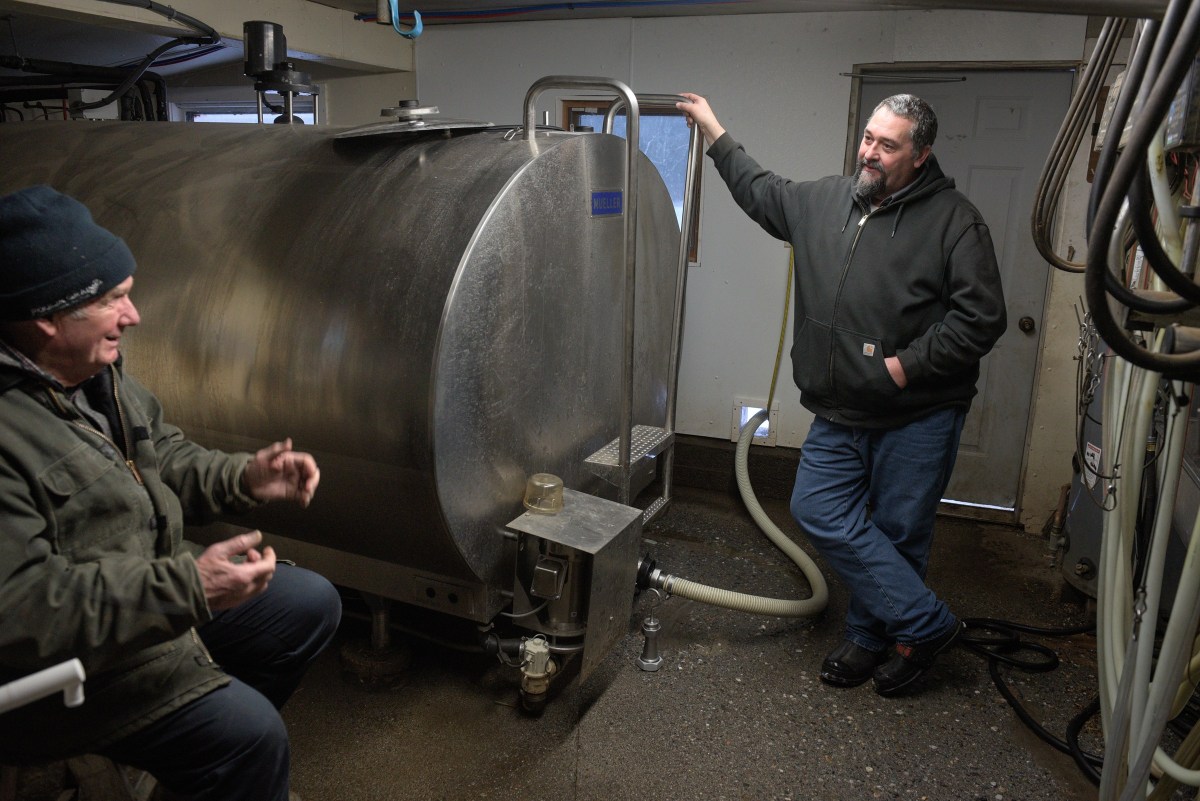
The increased revenue isn’t through any particular concerted effort as the co-op hasn’t been aiming to increase its whey production, said Paul Doton, a Barnard dairy farmer who also serves on the board of Agri-Mark.
The state’s small scale relative to the market means that price changes can make a big difference, percentage-wise.
“The amount of actual pounds of product in Vermont are minuscule compared to the rest of the country,” Doton said.
Smaller dairy farmers who are more focused on the price of milk still can benefit from the increase, even if indirectly.
“We want (the large milk companies) to be profitable so they keep buying our milk,” said Keith Sprague, co-owner of the 800 Holsteins at Sprague Farm in Brookfield. “So whatever they can do to get rid of a byproduct and get their profit up is good by me.”
Vermont makes up just about 3% of the country’s whey exports, Wilson said. The nonprofit he oversees has 12 “members” that are state departments of agriculture, including those of Vermont and New Hampshire.
The average price of dry whey has increased from $0.322 per pound at the beginning of 2024 to $0.558 at the beginning of this year. Vermont’s export revenue from whey has fluctuated over the past few years, increasing especially this year. This is largely due to changing prices in whey, Wilson said.
In 2022, Vermont’s whey exports to China were $3.6 million, the next year $2.1 million, and in 2024 were $3.6 million. Through just the first nine months of this year, Vermont has exported $4.8 million worth of whey to China.
