

This story by Aaron Calvin was first published in News & Citizen on Nov. 26, 2025.
Hyde Park Electric ratepayers are bracing for a 20% increase in their electric bills following the revelation that their municipal utility is struggling under a mountain of debt. Meanwhile, a neighboring utility manager has stepped in to try to right the ship as every option is on the table — even the potential dissolution of the utility.
The double-digit increase will take effect in the new year. It was imposed as the first part of a two-phase rate case approved by the Vermont Public Utility Commission to allow Hyde Park to keep the lights on as the state and the Vermont Public Power Supply Authority attempt to untangle its knotted finances amid significant financial distress.

In October, Hyde Park Electric’s long-simmering financial crisis came to a boil as its inability to cover expenses became known to the state. It was originally estimated that the small municipal utility, with 1,400 customers, was carrying $1.5 million in debt. After a few weeks of forensic accounting by the Vermont Public Power Supply Authority, that number has climbed to $4.5 million.
Shortly after news of Hyde Park Electric’s financial crisis broke, former village manager Brian Evans-Mongeon resigned. Evans-Mongeon bore the brunt of the Vermont Department of Public Service, which advocates for ratepayers, and its attempts to push the village of Hyde Park to face the seriousness of the situation. Even though village trustees had discussed the future of his position with the town, Evans-Mongeon resigned on his own volition, according to Fredericka French, chair of the Hyde Park Village Board of Trustees.
With a VPPSA employee now installed in the Hyde Park office, Morrisville Water & Light manager Scott Johnstone has been tapped to step in to take the helm in Hyde Park village. A former secretary of the Agency of Natural Resources, Johnstone has led the neighboring municipal utility since 2022.
Last Thursday, Johnstone held a public question and answer session prior to the trustees’ regular meeting. Frustrated ratepayers crowded into the village’s low-slung office building situated across from the imposing brick facade of the Lamoille County Courthouse.
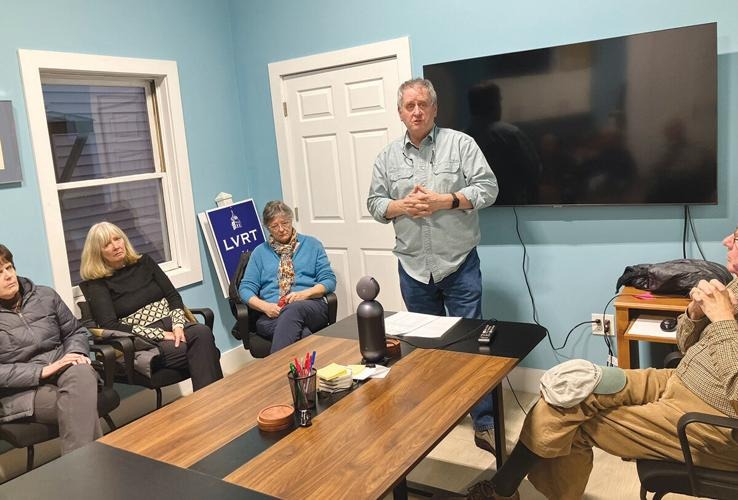
Johnstone told village electricity customers that this phase-one rate increase is only the beginning — he said a 20% percent increase is what it will take to keep Hyde Park Electric’s and its customers’ lights on. How much ratepayers will have to pay to keep the utility solvent will be determined next spring, following completion of phase two of the rate case.
Johnstone said this increase catapulted Hyde Park into the top five for the most expensive electricity among the state’s 17 electric utilities.
Customers were also eager to learn how the utility could go about addressing the $4.5 million debt. Johnstone said most of the debt seems to have been accrued through operational costs and taking on more debt to cover other expenses.
Johnstone and the trustees are already working to determine what parts of the debt can be refinanced. The solar arrays the town has also invested in, which now contribute significantly to its debt load, could potentially be offloaded.
The village might also look at some of its other assets, including the French family home. It was donated to the village in 2013 by the nine French family siblings, including Fredericka French’s husband, Ed, with the intent of seeing it become the village offices, but the small municipality was never able to secure the funds for its renovation.
Johnstone warned ratepayers that the process of determining what was prudent for Hyde Park ratepayers by the Public Utility Commissions could become a contested one.
Some in attendance at last week’s meeting wondered who to blame. Prior village managers have managed the water, wastewater and power operations, but the publicly elected, volunteer board of trustees ultimately made the decisions.
Johnstone said that, at this point in the financial analysis, he could say with a certain amount of confidence that there had been no embezzlement that contributed to the insolvency. He said it was, rather, a general mishandling of funding.
French pointed out that, prior to 2016, the village was debt-free. It was only after state-mandated upgrades to the water and wastewater system, and new investment in renewable energy, that the debt began to mount. She said she was waiting to learn more about how exactly the village found itself in financial disarray before passing full judgement, but acknowledged that everyone in a leadership position bore some fault.
“I’d say there’s plenty of blame to go around,” she said. “I don’t really have any full answers to that at this point, and I think I will once we get all the information.”
Consolidation question
Hyde Park Electric’s insolvency has raised new questions about the long-term viability of the small municipal utility.
In a report updating the Public Utility Commission on the investigation into the utility and efforts to stabilize it — filed by Hyde Park Electric and the Department for Public Service — a “potential future steps and discussions” provides the two options on the table: Hyde Park Electric returns to solvency under new leadership and continues to exist, or it “merges with or is jointly managed with another municipal entity or utilities.”
Such discussions won’t take place until well into next year at the earliest, and Hyde Park Electric could consider other neighbors like Vermont Electric Co-Op or Green Mountain Power, or another municipal utility, for partnership or consolidations. However, Johnstone’s arrival in Hyde Park emphasizes the closeness in proximity of Morrisville Water & Light as a potential partner.
Johnstone is also currently interim director at the Hardwick Electric Department and, he said, if only because managing a public utility is difficult, the town of Hardwick is considering a merger with Morrisville Water & Light.
Should it come to pass that both Hardwick and Hyde Park consolidate under Morrisville Water & Light, the utility would serve over 11,000 customers, rivaling Washington Electric Co-op in the size of its customer-base. Johnstone, though, took care to emphasize that such discussions were a long way off, and that his focus was on the crisis at hand.
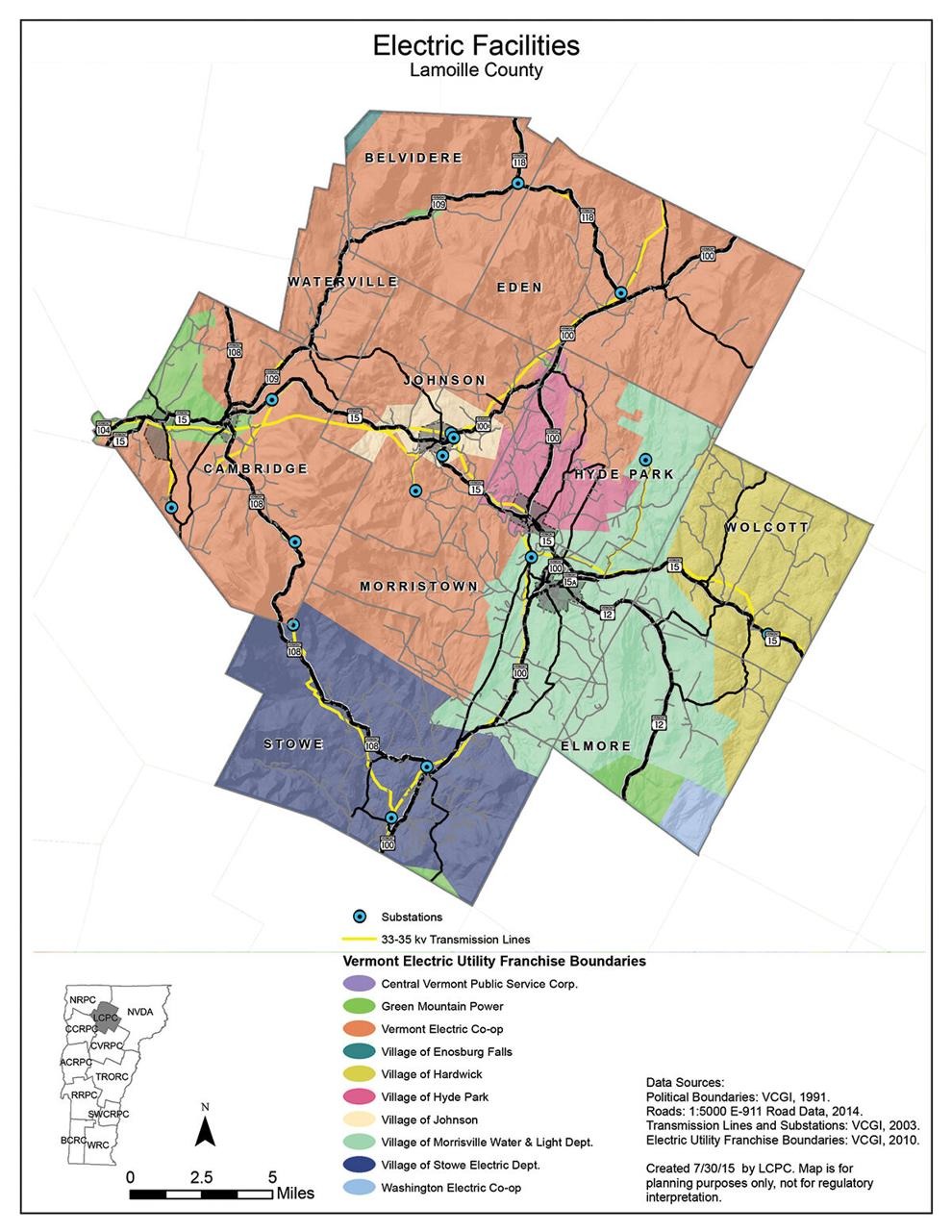
Through a confluence of geography and the history of electric infrastructure in Vermont — which grew out of densely populated village centers — Lamoille County is served by ten different utilities.
Johnstone was also careful to emphasize that a possible consolidation was not his purpose for taking over administrative duties in the village in this troubled time.
“Our intention is to help neighbors and, if they want to, they can get back on their feet and find their way forward,” Johnstone said. “That’s entirely good for us. We’re doing this because we want to help other communities.”
