


The state’s third major political party, the Vermont Progressive Party, voted in an almost entirely new bench of statewide leaders at its biennial convention earlier this month.
Among them is a new party chair: Bill Hunsinger of Ripton, who serves as one of two Progressive-endorsed members of that Addison County town’s selectboard. He is the party’s first new chair in close to a decade. Anthony Pollina, a longtime state senator from Middlesex, stepped down this month from the job, which he had held since 2017.
The Progs also elected Cindy Weed, a former state representative from Enosburgh, as vice chair, along with a slate of other officials who oversee the party’s finances and direct its electoral strategy. Ahead of the convention, the party also hired a new executive director: Heather Thomas. Josh Wronski, the party’s former director, left the job in July after nine years.
In all, just four members of the party’s 17-person leadership committee are returning to their posts after the party’s convention, held Nov. 9 at the Old Labor Hall in Barre. A press release called the changes “a new era for the Vermont Progressive Party.”
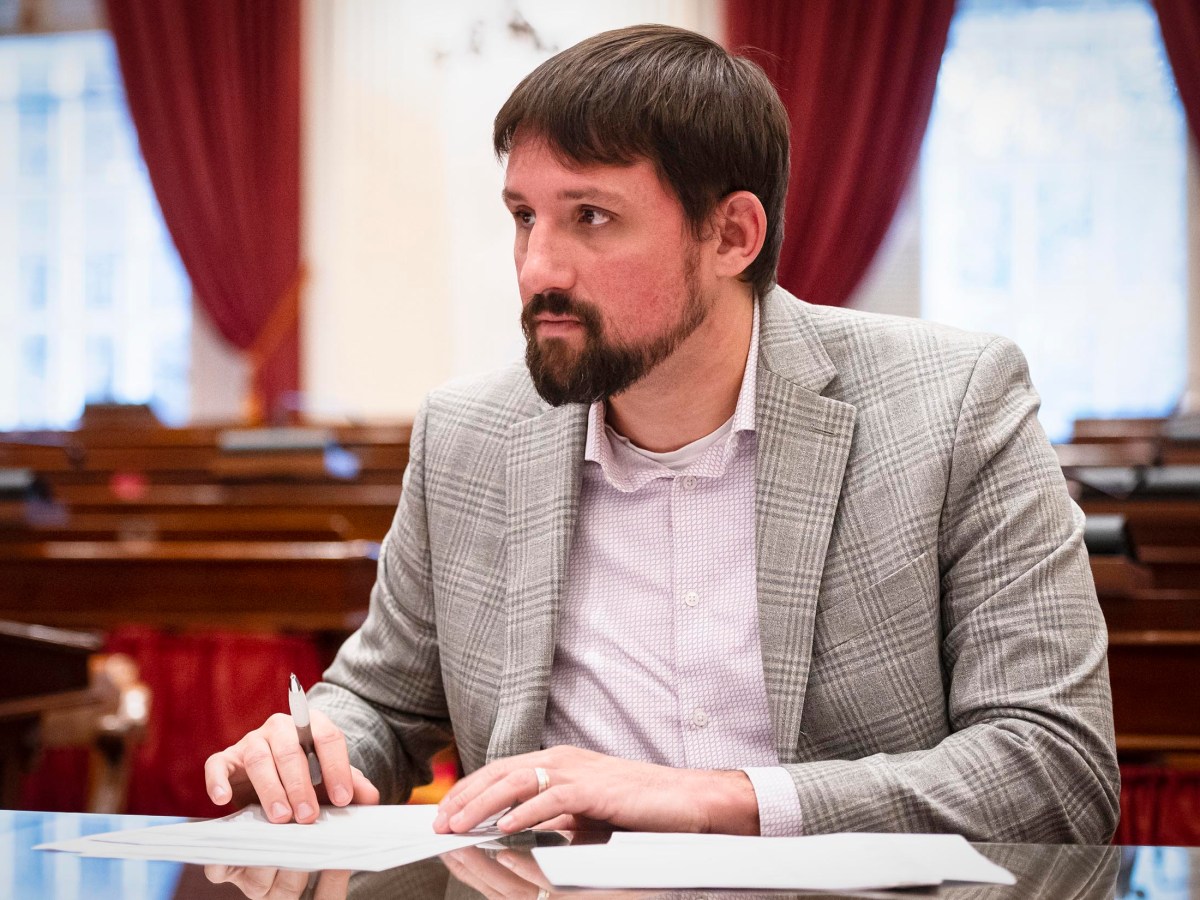
Hunsinger said he wants that new era to include a stronger party presence at the most local levels of government. That means giving more candidates for selectboard and school board races a Progressive Party endorsement, he said in an interview, even though few of those seats, anywhere in the state, are filled in party-based elections.
In Burlington — where candidates for city office do run under a party label — Progs control the mayor’s office and have a slim minority of five of 12 seats on the City Council.
According to the party’s website, there are also Prog-backed officials in nonpartisan selectboard seats in Ripton, Brattleboro and Dummerston, as well as in nonpartisan school board seats in Burlington and the Windham Southeast Supervisory Union.
“We’re not trying to make these races partisan,” Hunsinger said Wednesday. “Just, you know — there are Progressives. We’re here. We’re reducing speed limits, and helping organize food drives and clothing drives. It’s that sort of a mentality.”
At the state level, there are three members of the Vermont House and one state senator who primarily identify with the party’s label. A number of other members of both chambers, and State Auditor Doug Hoffer, identify as Democrat/Progressives. The party often caucuses with Democrats and its platform aligns with Democrats on many issues.
However, the Progressive caucus disagreed with many Democrats, who control both chambers of the Legislature, on this year’s marquee legislation — Act 73. That’s the law that lays out sweeping changes to how Vermont’s schools are funded and governed. To be sure, Republican Gov. Phil Scott had also insisted legislators advance the law in a form he was amenable to.
Hunsinger said he wants Progs to continue taking a stand against Act 73 in the upcoming legislative session, which starts in early January. Burlington Rep. Kate Logan, the House Progressive leader, agreed in an interview Thursday that would be a priority for her caucus next year.
At its recent convention, the Progs passed a resolution “to petition the VT Legislature to rescind Act 73, and instead explore options to make the education portion of the Property Tax more fair and equitable in order to ensure that every owner of property in Vermont is contributing proportionally to funding Vermont Schools,” the party’s release said.
Hunsinger described his opposition to the education reform plan, which seeks to consolidate the state’s 119 school districts, as a desire to preserve local control. He charged that the Legislature has been making “broad, almost power-grabby decisions.”
“Our party is going to keep fighting for making sure that our schools are kept in our communities — and our communities are given autonomy over their own schools,” he said.
The party also passed two resolutions at its convention this month focused on major national issues. The party does not run candidates for federal offices, though it counts Vermont’s independent U.S. Sen. Bernie Sanders among its ranks.
One of those measures “condemns the apartheid and ethnic cleansing by the Israeli State” against people in Gaza and calls for an immediate end to all U.S. government funding for the Israeli military, according to the press release. It also states “that Israeli settlers in the West Bank be expelled and the land returned to Palestinians.”
Sanders has been among the most vocal critics of the Israeli government in the U.S. Senate and, along with the other two members of Vermont’s congressional delegation, has called the country’s military campaign in Gaza a “genocide.”
Another resolution “recognizes the critical need for public resistance to and non-compliance with unlawful and unconstitutional actions” by President Donald Trump’s administration.
Hunsinger said he hopes the party can be a home for Democrats who feel that their party, at the national level, isn’t doing enough to resist Trump’s many controversial actions over the first year of his second term.
“The Vermont Progressive Party endorses all facets of resistance, including political action, protests, strikes, boycotts and other acts of non-compliance,” the resolution states, per the release. “We will work in every capacity afforded to us.”
