


This story by Liz Sauchelli was first published in the Valley News on Nov. 17, 2025.
WOODSTOCK VILLAGE — All five members of the Woodstock Village Design Advisory Committee resigned in protest earlier this month after they said the committee’s role has been “marginalized” by recent steps taken by town leaders.
For years, committee members had been working “with the understanding that any project in the design review district that affected the exterior would come before us,” former Chairman Phil Neuberg said in a phone interview earlier this month.
That changed this fall, when town leaders announced that applicants were no longer required to appear before the advisory committee.
Woodstock Municipal Manager Eric Duffy said the town learned from the Two Rivers Ottauquechee Regional Commission and town legal counsel that Woodstock was “breaking State law by compelling applicants to go in front of advisory boards,” Duffy wrote in an email.
Neuberg disputed the town’s interpretation of 24 V.S.A. § 4433, which states that the advisory commission and committees “may advise appropriate municipal panels, applicants, and interested parties.”
In their resignation letter, members wrote that “the Town has effectively stripped this (committee) of any meaningful role” by removing the requirement that applicants had to appear before it.
The committee’s role for decades has been to offer advice to applicants proposing changes to properties in Woodstock Village’s design review district, Duffy said. Woodstock Village’s historic district has been on the National Register of Historic Places for more than 50 years.
Property owners were required to appear before the committee to discuss changes they wanted to make to the exterior of their properties, from additions to rebuilding a stone wall.
Committee members would vote and pass along their recommendation to the Village Development Review Board, which is legally tasked with approving projects.
The Woodstock Village Board of Trustees has not replaced the committee members who resigned.
“Instead of rushing to fill the vacancies in the committee, we are going to have conversations with residents, businesses, the Planning Commission and the former VDAC members on their ideas for how to move forward,” Seton McIlroy, chair of the Village Trustees, wrote in an email.
Given that the Planning Commission “is in the process of updating Village zoning bylaws, this is the perfect time for Woodstock to discuss how we want our Village to look on the future,” McIlroy wrote.
Town says design review still part of process
In spite of no longer requiring applicants to go before the committee, members are still welcome to offer recommendations on projects presented to the Development Review Board, Duffy said. “There is a misconception that this means that design review no longer exists,” Duffy wrote.
Proposed developments in the design review district are “beholden to the standards set forth in the zoning bylaws, and the Development Review Board has always been responsible for reviewing them for compliance,” he wrote.
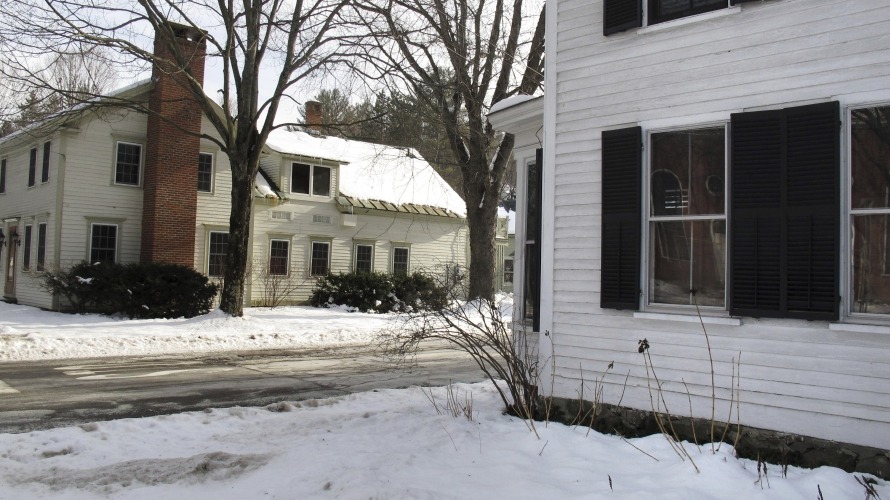
To some extent, the issue came to a head during recent discussions about the Woodstock Resort Corp.’s proposal to demolish two historic homes it owns in Woodstock Village. The Woodstock Resort Corp. voluntarily presented its plans before the Village Design Advisory Committee this fall and its members voted against the demolition.
In spite of the advisory committee’s position, the Village Development Review Board approved the demolition in October. The project now must go through the state’s Act 250 review process. “Until the demolitions, it wasn’t clear to us that our work was optional,” Neuberg said.
Several other Vermont communities, including Manchester, Stowe and Winooski, have committees similar to the one in Woodstock Village. Those committees also provide opinions to development review boards about potential projects.
Often, they are made up of people with backgrounds in architecture, design or other related fields, State Historic Preservation Officer Laura V. Trieschmann said.
“Those commissions and boards do not have as much expertise as they need so they create advisory committees to assist them,” Trieschmann said in a phone interview. “They don’t have to take their advice.”
In Woodstock, Neuberg is an architect, while other members included a landscape architect and interior designer. For now, that type of expertise will be missing from the town’s review process.
In their resignation letter, the advisory committee members noted Woodstock’s Development Review Board is responsible “for interpreting design standards, despite the fact that its members are not required to have specialized expertise in historic preservation, architecture, or design.”
“The result is a process that places one of Vermont’s most architecturally significant villages at risk of incremental erosion of its historic character.”
Neuberg encouraged town and village leadership to continue to take historic preservation seriously. He noted that downtown’s appearance is “critical in a village like Woodstock that depends upon the tourist economy because it appears like the perfect historical village.”
“There has been a lot of effort to maintain that, and hopefully there will continue to be,” he said.
Neuberg also chairs the Village Historic Preservation Commission, which is focused on applying for grant funding to improve the historic district. That commission does not give formal recommendations to the Development Review Board.
