

This story by Phil Dodd was first published in The Bridge on Oct. 14, 2025.
In hopes of securing a state flood grant to help rebuild the one road into Montpelier’s Country Club Road — an estimated $7.2 million project — the city is rushing to recruit developers to buy some or all of the property. To that end, city council has once again hired consultant White + Burke to help.
It remains uncertain whether the city will be able to recruit a developer in time — even if, as suggested by White + Burke, it offers to sell the property for $1. Nor is it clear whether the state will have any grant money left to fund a tentatively planned second round of grants this winter.
Planning Director Mike Miller said that originally the city planned to file the application by the grant’s Sept. 30 first round deadline, but paused after the state said it wanted “shovel-ready” projects. With the ultimate goal of bringing housing to the site, the city council formed a subcommittee to find a developer before the unconfirmed second round of grant funding.
Under the grant terms, a developer should focus on building lower income housing, likely rentals or shared-equity homes. To meet federal requirements, a total of 70% of the state’s flood grants have to benefit low- and moderate-income households, which have 80% or less of the county’s area median income. In Washington County, that amounts to $70,240 or less.
The state has $64.7 million to award in grants, but requests in the first round of funding are about double that amount. This has raised the question of whether there will be any money left for a second round. “We are very confident that there will be a second round [of funding],” Miller noted in an Oct. 3 email. “We have had more than one state official confirm that they expect a second round.”
But Housing and Community Development Deputy Commissioner Nate Formalarie told The Bridge that since the first round was “oversubscribed,” the state will have to analyze the first round of applications before reaching any conclusions. “We have decided to push back determination on if there will be a round two,” he said. “We will make a determination on round two and announce that decision and application timelines in early 2026.”
In the meantime, the city is pushing ahead. In order to recruit a developer and apply for the grant, it has signed another contract with consultants White + Burke. Montpelier has already paid White + Burke about $500,000 for prior planning on the same project, and the firm has also consulted on Montpelier’s downtown TIF district, now disbanded, and a public parking garage project, since failed.
The motion to sign the new one-year contract narrowly passed at the city council’s Oct. 8 meeting, with Mayor Jack McCullough voting in favor: Cary Brown, Sal Alfano and Ben Doyle also voted in favor; Pelin Kohn abstained; Jim Sheridan had left the meeting prior to the vote; Adrienne Gil voted against it. The vote came after an extended executive session about the contract that contributed to the meeting going until almost midnight.
Steve Whitaker, a city critic who believes Montpelier needs to do more of its own planning, said the contract had not been made public before the vote and that the work had not been put out to bid to anyone other than White + Burke. The now-public contract — titled “Exclusive Right to Market Agreement” — states that White + Burke have “exclusive right, power and authority to act as Owner’s real estate agent for the listing, marketing, sale or exchange of the Property.”
The city will pay White + Burke for listing and selling the property in two ways, first in an amount “not to exceed $50,000 without prior Owner authorization.” And second, if within 10 years of a closing Country Club Road is developed such that its taxable value reaches $5 million or more, White + Burke gets 3% of that value, not to exceed $300,000. A cover memo from White + Burke notes the contract does not include detailed project planning, including how to negotiate a purchase and sale agreement and prepare a financing strategy.
Earlier this fall, White + Burke principal David White warned city councilors that Country Club Road is “not an easy project” and it was possible that no developer would come forward. But he also said, “this can work,” and cited significant increases in the grand list his firm helped achieve in downtown St. Albans.
Even before the contract was signed, White + Burke employee Stephanie Clarke had been working with the council’s Country Club Road subcommittee at a rate of $250 per hour. The current timeline, which Clarke called “ambitious,” has the subcommittee developing a Request for Qualifications by Oct. 16.
Later, in December, the city would issue a final Request for Proposal (RFP), which would lead to choosing one developer or a team of developers. Miller has recommended the RFP focus on the “lower ten acres” of the total 30 acres of developable land. Clarke suggested that to attract developers, the city should “strongly consider” offering to sell the property for $1 and possibly waive city permit fees and sewer and water hook-up fees.
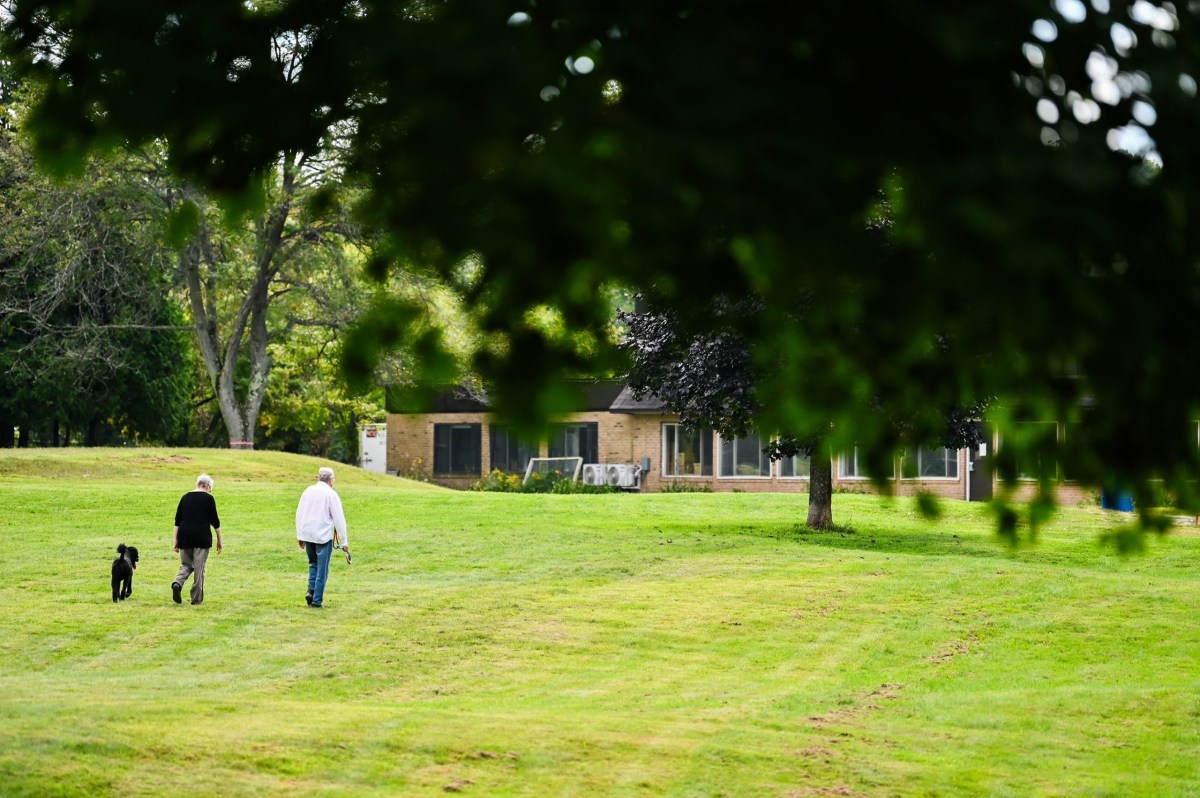
The city purchased the land for $3 million for recreation and housing purposes about three years ago after voters approved the idea by a 54% to 46% margin. As the project has dragged on, some councilors and residents have called for selling the property, but for now the council is trying to facilitate housing development.
Earlier this year, the councilors settled on the infrastructure work they hope will be funded by grants and allow development to take place. The infrastructure plan was based on work by Vanasse Hangen Brustlin, Inc., which the city hired under a $110,000 design contract.
The $7.2 million infrastructure project includes installing new water and sewer pipes from the nearby roundabout to the top of Country Club Road, raising a section of U.S. Route 2 as much as three feet to allow a better connection with the road, relocating the road to align with the right-of-way, and reducing the grade of the road to 12%, still steeper than the current city standard for new roads.
The city is applying this month for a $3 million “Catalyst” grant from the Northern Border Regional Commission to pay for a portion of the work. If that grant is successful, the city will apply for $4.2 million in the tentatively planned second round of the state flood grant funding. If not, it will apply for the full $7.2 million from the state in the second round, if there is one, according to officials.
