



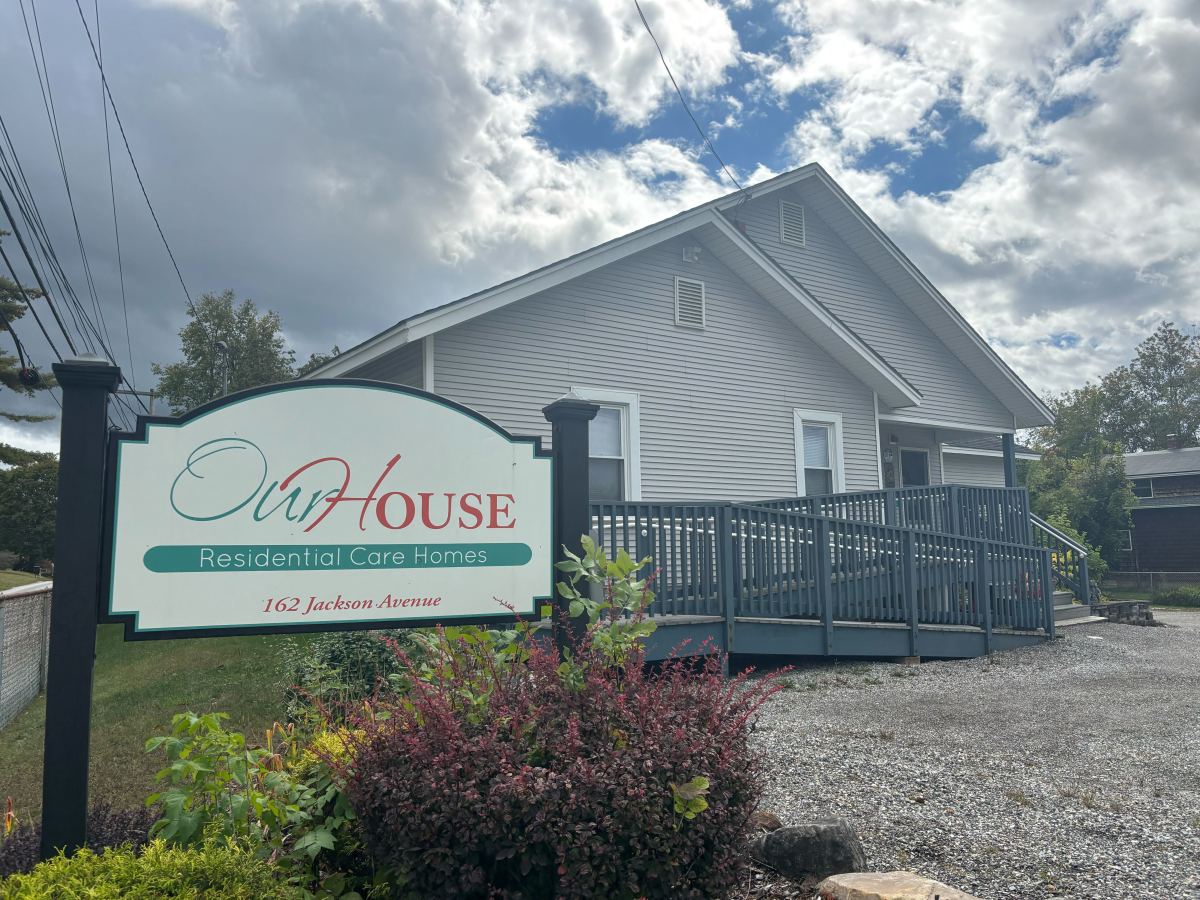
A Superior Court judge appointed an independent manager to oversee the operations of three Rutland City elder care facilities earlier this month, after approving the state’s request for receivership in July.
The decision, which cited reported abuse, neglect and chronic staffing shortages, marks the second time in less than five years that a court has appointed a receiver for those facilities. The violations that prompted the appointment also led the Vermont Attorney General’s Office to resume seeking $40,000 in earlier fines from the residential care homes’ owners. Those fines had been previously suspended under a 2022 settlement agreement.
The three facilities —- Our House, Our House Too and Our House Outback —- are operated by Inn-One Home LLC, which does business under the name Our House Residential Care Homes. Together the facilities located east of Route 7 in Rutland are licensed to provide 35 beds, according to the Department of Disability, Aging and Independent Living.
The three facilities are designated as Level III residential care group-living homes. That means they serve people who cannot live independently and require as-needed help with daily activities but who do not require full-time nursing care.
Owned by Paula and Pasquale Patorti, the company has a history of health, safety and care violations at its facilities stretching back to 2016, according to the original civil complaint filed May 23. Department Commissioner Jill Bowen brought the case with legal counsel by the Vermont Attorney General’s Office.
The department levied two counts against Our House under state statute on the regulation of long-term care facilities, due to substantial, habitual violations detrimental to resident welfare and situations that caused “imminent danger of death or serious physical or mental harm to residents.”
Washington County Superior Court Judge Benjamin Battles appointed Judy Morton on Sept. 9 as the independent manager — or receiver — of the three Our House long-term care facilities in Rutland City.
Morton is the administrator of the Thompson House Nursing Home in Brattleboro, and was selected due to her relatively reasonable hourly rate and “extensive experience working the long-term residential care industry in Vermont generally” and with the department, according to the receiver appointment order signed by Battles. Morton was not immediately available for comment.
“The primary concern that led the court to appoint a receiver in this case is a pattern of regulatory violations, primarily related to staffing and training, that posed risk to the welfare of defendants’ residents,” Battles wrote.

Verbal and physical abuse
According to the state’s lawsuit, first reported on by Seven Days, the Department of Disability, Aging and Independent Living substantiated evidence that the on-site facility manager for Our House Too allegedly verbally and physically abused a resident in April.
Two teen staff members observed the manager, Dexter Agasi, yelling profanity like “Shut the fuck up,” throwing a chair and pressing his fingers into the neck of a resident who refused nail care, according to court documents. Agasi then wheeled the resident — who had cognitive impairment and earlier experiences of being abused — into their room and closed the door, and the staff members heard the resident crying “help” and “no,” court documents stated. The staff members reported the situation to Paula Patorti, who told the staff members Agasi knew how to calm residents through “pressure points,” according to court documents.
After other staff members reported the incident to the state, Agasi was still working on-site when department representatives visited Our House Too on Allen Street in Rutland. During the visit, Patorti told the state inspectors that she did not think the situation rose to the level of abuse warranting a state report, according to court documents.
The department banned admissions to the elder care home until the facility manager was removed and requested an immediate corrective action plan, department spokesperson Rebecca Silbernagel wrote in an email.
Agasi currently faces two criminal charges related to assault and abuse of a vulnerable adult, to which he pleaded not guilty in June.
At Our House Outback on Mussey Street, the department found residents to be in “immediate jeopardy” due to repeated staffing scarcity, with only one staff member being regularly present at the facility overnight, according to court documents.
Lack of staffing led to residents not having physical assistance and movement aid for personal care needs including going to the bathroom, causing residents to be “‘double-briefed’ overnight in lieu of being provided more regular toileting,” according to the Battle’s ruling granting the state’s request for a receiver in July.
The department found “actual harm” to Our House Outback residents in March as a result of the “continued pattern of understaffing resulting in violations of resident dignity and skin breakdown due to neglect,” according to the May complaint. The home’s operator disputed the accusation of chronic understaffing causing residents skin impairment, according to the July ruling.
At the third facility, Our House, on Jackson Avenue, the department found the home had previous regulatory deficiencies related to lack of staff, adequate training, written policies and facility maintenance.
Our House’s fourth facility, Our House Park Terrace, was shut down due to a dearth of staffing in November of last year and residents were moved to the other three Our House facilities. The lack of adequate warning for resident input on the relocation violated state regulations and caused confusion for the department, residents and residents’ representatives, according to court documents.
Our House’s attorney Antonietta Girardi Dutil was not immediately available for comment.
Silbernagel, of the Department of Disability, Aging and Independent Living, wrote that receivership will remain in place until ended by the court, and the three facilities are still subject to the state’s regulatory requirements during the receivership.
Settlement reopened
This is not the first time Our House elder care homes landed in hot water with the state due to care concerns in recent years.
The Our House facilities were placed under court-ordered short-term receivership in 2021, and entered a three-year settlement with the Vermont Attorney General’s Office’s Medicaid Fraud and Residential Abuse Unit in 2022 due to persistent problems with abuse and neglect. Our House was required to rectify these concerns, or pay $40,000 in damages and penalties.
Amerlia Vath, a spokesperson for the Office of the Attorney General, wrote in a statement Thursday that the office’s Medicaid Fraud and Residential Care Abuse Unit is now seeking the total $40,000 from Our House due to the violations found by the state in recent months, even though the settlement had expired and the office had previously not sought to collect any fines.
In May, Our House paid $10,000, but failed to pay the remaining $30,000 by the Aug. 29 deadline, Vath wrote. Patorti then paid $3,000 and asked for a yearlong payment plan, but stopped responding to the Attorney General’s Office after its counter request for a six-month payment plan. Since then, the office has contacted the receiver for the outstanding $27,000 owed, Vath wrote.
Kaili Kuiper, the state’s long-term care ombudsman with Vermont Legal Aid, said her office was not directly involved in the case, but that ombudsmen will continue to have a presence in the facilities to monitor resident care. Receivership is an important tool for the state to take over managerial and financial control of a facility to ensure the necessary services are being provided to residents at Vermont’s long-term care facilities, Kuiper said.
“I really think this is an example of the state regulatory process working as it should,” Kuiper said. “It was clearly an issue, and the state stepped in.”
