

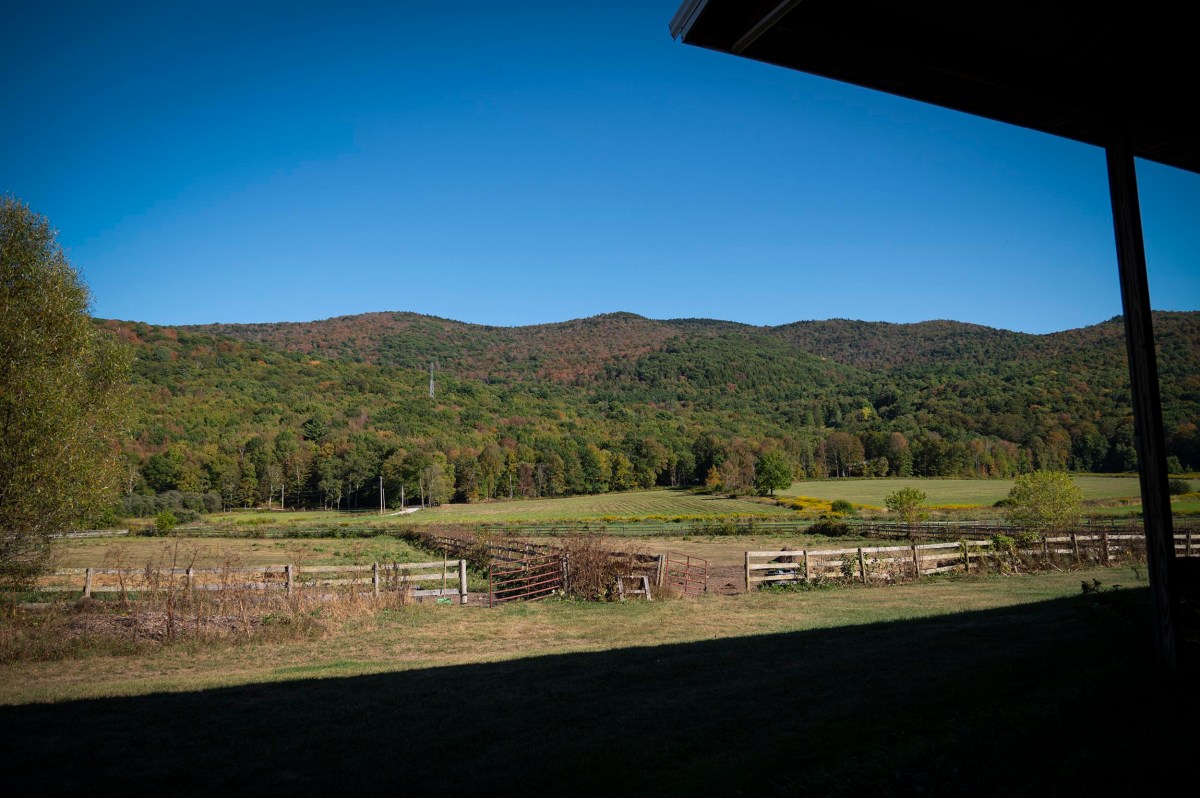
Near the serene, scenic landscape along Route 140 and the state-protected Tinmouth Channel wetland, a Massachusetts-based company wants to erect a 160-foot radio tower, drawing local pushback.
Public comments have poured in to the Public Utility Commission from Tinmouth residents opposing the project proposed by Industrial Tower and Wireless. The comments say the project would violate local zoning and Tinmouth’s town plan, negatively impact wildlife habitat and would interfere with the scenic views, among other qualms. There were no statements of support for the project submitted to the commission before the deadline last Tuesday.
Tinmouth residents, along with Industrial Tower and Wireless, now await further process determinations by the Public Utility Commission on whether to hold an evidentiary hearing and eventually to approve or deny Industrial Tower and Wireless’ request.
When Industrial Tower and Wireless proposed the tower in February, Tinmouth Town Clerk Fallar said she told the company to not go forward with the project on the behalf of the town.
“We don’t want this here,” Fallar said. “It doesn’t comply.”
Fallar said the company initially proposed to place the tower in a protected zone solely designated for agriculture and forestry. Industrial Tower and Wireless then moved the planned site across the town’s zoning line in a conservation district where towers are allowed a conditional use, Fallar said.
But, Fallar said, the current Industrial Tower and Wireless proposal does not meet the conditions for use, as telecommunications towers cannot be built higher than 130 feet, or 20 feet above the average tree height. A 160-foot spire with mounted antennas would stand far above what is allowed by the local zoning regulations, she said.
Kevin Delaney, a vice president for Industrial Tower and Wireless, wrote in prefiled testimony dated Aug 8 that the project will allow the company’s customers “living in, working in or passing through the Tinmouth area” to use the company network, “something that is impossible at present.” The project would enhance remote work access and be available for colocation of telecommunications technology by other providers, Delaney wrote.

“As such, the project will promote a balanced, diverse economic base, with a focus on locally owned businesses, including home-based ones,” Delaney wrote. “This type of project also brings with it the opportunity to attract the major wireless communications carriers to the area to improve upon their wireless communications networks.”
Burlington attorney for Industrial Tower and Wireless, Cooper Hayes, declined to comment on the ongoing matter.
Both the local select board and planning commission unanimously voted against supporting the radio tower, Fallar said. On behalf of the town, Fallar submitted an intervention to the Public Utility Commission to become a party to Industrial Tower and Wireless’ Aug. 8 application for a certificate of public good. On Sept. 9, Fallar asked on behalf of the town that the Public Utility Commission deny the request or schedule an evidentiary hearing on the tower company’s request if an initial denial is not possible.
“We are disappointed that ITW is choosing to ignore the clear written community standards and recommendation to deny this tower which is required by statute to be given substantial deference,” Fallar wrote. “The proposed tower in this location will not promote the general good of the state.”

In March, the Rutland Regional Planning Commission also voiced concern to the Public Utility Commission due the project violating the town plan and the potential impact on the natural resources of the Tinmouth Channel, a state-protected wetland area, according to a letter signed by Board of Commissioners Chair Erika Berner and submitted by Executive Director Devon Neary.
“Ensuring this project does not adversely affect such an environmentally sensitive area is critical,” Berner wrote. “Local planning efforts are essential to land use decisions, and the Commission believes that the Town’s determination should be given significant weight.”
Annette Smith, executive director of the nonprofit Vermonters for a Clean Environment, said requests for radio and cell towers have cropped up across the state in recent years, including in Manchester, Chelsea and Hardwick, and Vermonters’ resistance to cell towers goes back decades. A proposed radio tower by Industrial Tower and Wireless in Enosburg has been caught up in contentious debate and litigation for several years.

Smith is concerned that once the aesthetics of a site is degraded with a tower “that opens the door to more degradation — you can’t say it’s free of industrial development.”
Smith, of nearby Danby, said she helps local communities navigate the Public Utility Commission’s opaque public participation process and fight radio and cell towers from “cluttering up the landscape.”
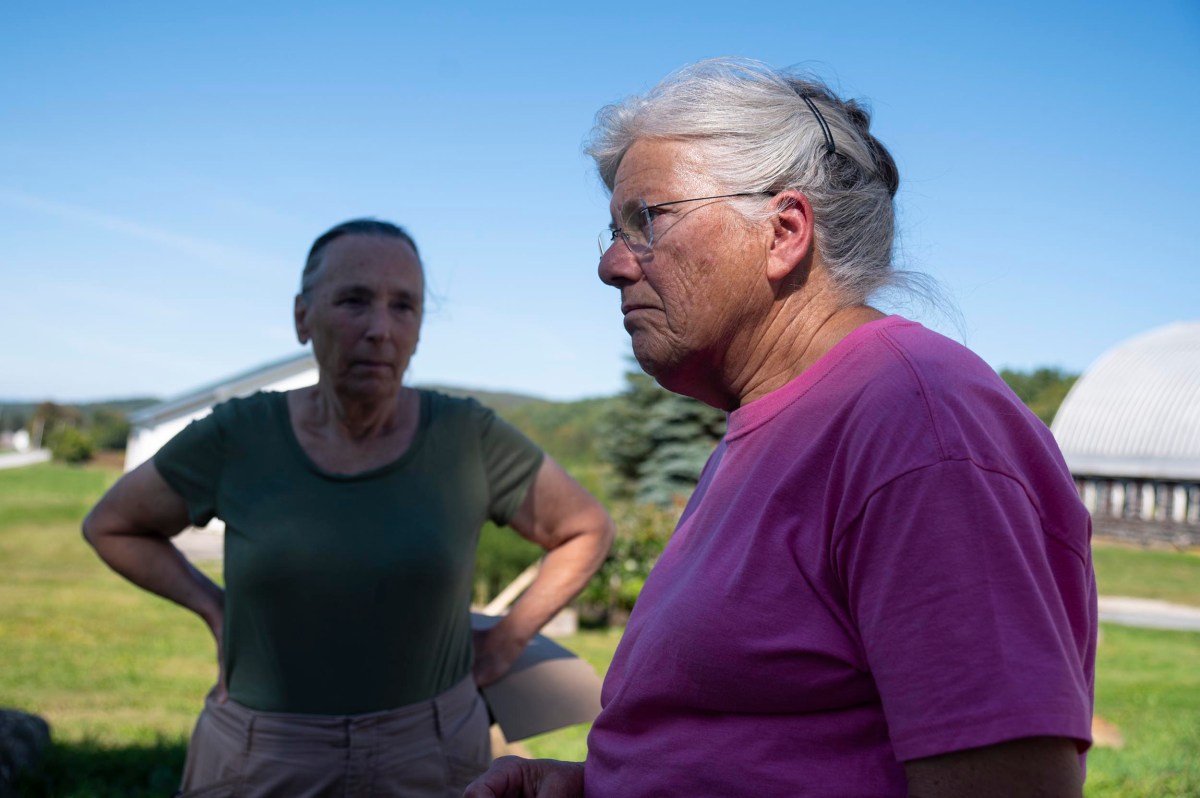
Cris Carabeau, a Tinmouth resident who lives near the proposed project, also filed an intervention and request for a hearing to the Public Utility Commission. Cris and her husband Larry, who serves on the local planning commission, said the scenic view of the Tinmouth mountain valley across from their farm has brought joy over the years, and they are worried about the impact of the tower on their property value.
Carabeau added that the town has sufficient communication signals for law enforcement and emergency services, so she does not think the tower will ultimately serve the public good.
Adam Guettel, another neighbor to the proposed project, voiced concerns over the health impacts of wireless telecommunications technology if the Industrial Tower and Wireless colocates a cell antenna on the radio tower. Guettel said he intervened in the Public Utility Commission so that residents have more access to the decision-making process.
“I feel betrayed that this should be going on so quickly and without our intervention,” Guettel said “We have to slow the process down.”
The “top two issues” Smith hears from residents are the negative impacts on property values and concerns that cell towers cause cancer or other detrimental health effects, yet those are not concerns that the Public Utility Commission considers in their determinations.
There is not strong evidence that radiofrequency waves cause negative health outcomes, according to the American Cancer Society. But the group also acknowledges that more research is needed to understand long term impacts of new cell technology.
According to the prefiled testimony of professional engineer and project manager Louis Hodgetts, employed by DuBois & King, the project also expands the range for emergency service calls, and would not have adverse impacts on the conservation area and conforms with the local town plan.
While recognizing the presence of rare species like the long-headed thimbleweed and calcareous red maple, Hodgetts wrote, “the area of proposed disturbance generally lacks high-quality or irreplaceable natural communities.”
Tinmouth Tree Warden, forester and fire department worker David Birdsall said the town does not need additional radio or cell tower services. He is worried about the impact to the view and harm to the rare, threatened and endangered species within the Tinmouth Channel.
The Tinmouth Channel, a state wildlife management area, contains a large deer wintering area, habitat for migratory birds and the northern long-eared bat, a wetland complex and the state’s biggest open intermediate fen, Birdsall wrote in his comments to the Public Utility Commission.
“There’s very few places in Vermont that are this exquisite,” Birdsall said. “It’s ridiculous to think about putting something like this this close to that gem.”
