


In just three months, state employees will be required to work in person three days a week, a major shift for many in the state’s 8,000-plus workforce.
This week, a team of top officials across Vermont agencies have started to think through the logistics of that transition.
The state’s plan has materialized quickly. In early August, Gov. Phil Scott first mentioned his intention to bring employees back to their offices on a more regular basis. Last week, Administration Secretary Sarah Clark announced the broad sketches of that proposal in a message to all state employees.
The Vermont State Employees’ Association, the union representing state workers, has strongly opposed the plan. State data indicates that remote flexibility is hugely popular. In a 2024 survey, more than 80% of employees who worked at least partially remotely said it benefited their individual performance, and more than 90% said the arrangement positively benefited their work-life balance.
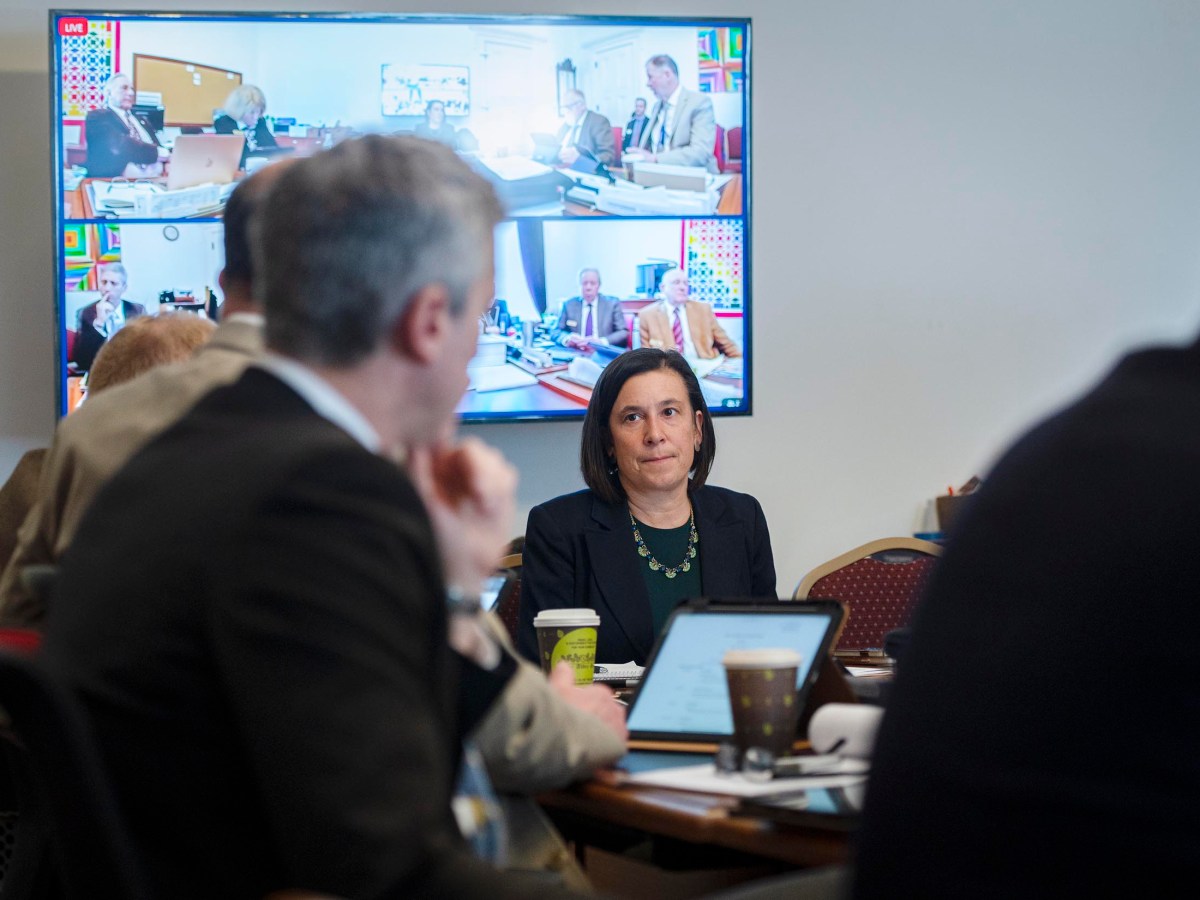
Amid the looming challenges of the return to office, Douglas Farnham, Vermont’s chief recovery officer and head of a new group of state leaders providing recommendations on the transition, highlighted the goal of the policy shift — a benefit the state risks losing otherwise.
“When I came to work at the state 14 years ago, I had people that were sitting two, three desks down that had 30 years of experience,” he said in an interview Tuesday. “I could just easily pop questions to them, or if they noticed I was doing something silly, they would let me know. And that isn’t possible in the remote environment.”
While some departments in state government have long required an in-person work approach, thousands of workers have grown accustomed to some amount of telework since the Covid-19 pandemic upended how almost every industry operates.
Not everyone working for the state will be impacted. Vermont’s constitutional offices, with independently elected leaders, set their own workplace plans. A spokesperson for Attorney General Charity Clark said the office intends to stick with a two-day-per-week in-office schedule that began in 2024. The Treasurer’s Office would also continue a hybrid approach that runs the gamut from completely in-person to fully remote depending on the job, according to a spokesperson for Treasurer Mike Pieciak.
The cross-agency advisory group Farnham is leading has just begun its work, meaning they have more questions than answers, but they have started by addressing the highest-priority topics raised in both official and unofficial staff feedback.
“The farther away from the office you live, the more anxiety that causes,” Farnahm said.
The state’s bargaining agreement with employees requires two weeks’ notice for a cancellation of a telework agreement, and the governor’s plan is providing 90 days, he said.
It’s likely the state will develop a plan using its existing office footprint, according to state leaders.
“They fit in the space pre-Covid,” Wanda Minoli, commissioner of the Vermont Department of Buildings and General Services, said. “I don’t see any reason why we would need to be leasing more space.”
Little space remains uninhabitable from the previous summers’ flooding, according to Minoli, though workers have not returned to some Montpelier properties.
In 2023, the state announced its plan to sell its 108 Cherry St. office in Burlington, where more than 400 employees were assigned. A real estate listing for the state property refers to the building as under contract, and a purchase and sale agreement has been signed, but the details aren’t yet public, according to Minoli. The property’s assessed value is more than $29 million.
Space constraints will be addressed by scheduling, according to Minoli. Employees may not all be in the office on the same day.
“It’s a recommendation that you could have your own workstation, but that doesn’t mean you need to have it,” she said.
While the state may have the space for its employees, the home addresses of some of those employees have changed. Though a relatively small group, a growing number of out-of-state employees have joined Vermont’s state government, according to Farnham, another logistical complexity for state leaders to address.
