

This commentary is by Jack Pitblado, of Burlington. He is the climate action coordinator for the Vermont Natural Resources Council.

When I started my new job at the Vermont Natural Resources Council this spring, I stepped into the middle of a legislative session unlike any other. President Donald Trump was hacking his way through our government institutions and slashing investments in climate and energy programs.
We saw the trickle-down effects of these actions. In the weeks after Trump signed an executive order aimed at Vermont’s Climate Superfund Law, our opponents in the House and Senate called to repeal fundamental provisions of the Global Warming Solutions Act and to strip funding to implement the superfund. These are two backbone climate laws that put Vermont on a path to climate resilience and lay the groundwork to reduce fossil fuels and electrify our communities.
To help fight against these attacks on critical climate policy, I urged Vermonters through countless calls and emails to reach out to their representatives and senators to ask that they vote against these proposed rollbacks.
One of the people I spoke to was Henry Bonges, a resident of Milton, 10-year community volunteer on Milton’s Energy Committee and former Democratic candidate for state representative.
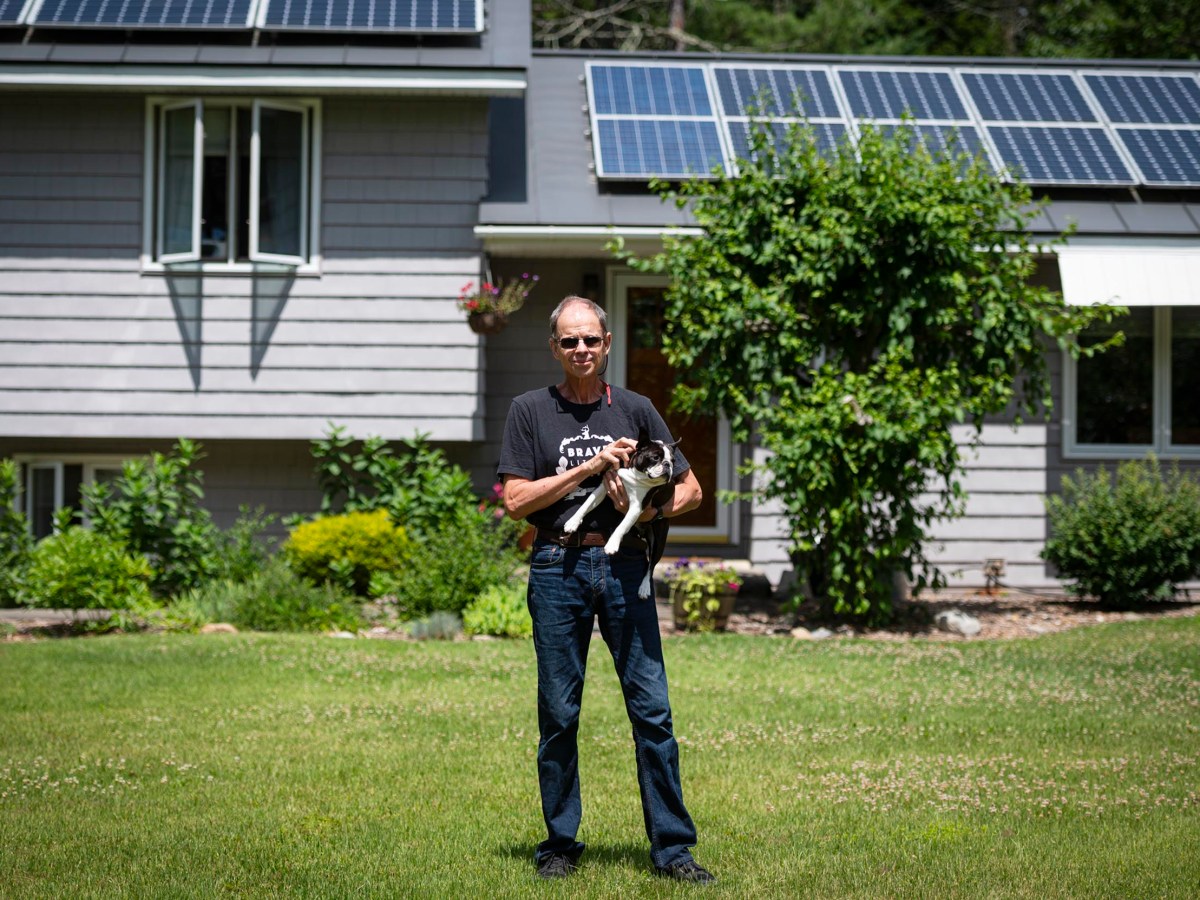
Bonges’ email to the Milton delegation, to which I was also a recipient, was not so different from most communications between legislators and concerned constituents. He asked them to support meaningful climate action and to embrace the scientific evidence that forebodes existential threats.
In doing so, he appealed to his representatives to stand against this wave of attacks, and to think independently and clearly, unlike their peers in Congress and the White House.
His appeal did not move his representatives into action. Instead, Bonges was ousted from his board and commission posts by the Milton Selectboard for speaking out.
Some of the members who voted him out happened to be on the receiving end of that email: Reps. Leland Morgan, R-Milton, and Brenda Steady, R-Milton. These two also co-sponsored H.518, the bill to repeal Vermont’s landmark Climate Superfund Law.
Bonges’s removal was a shock. But, when looking at it closely, it is clear that many Vermont elected officials are willing to follow Trump’s lead in pushing for major climate rollbacks. It was only a matter of time before our local leaders adopted Trump’s framework for shutting down the opposition.
Trump’s approach to handling dissent is relatively new (or perhaps resurgent) in American politics — shutting up the opposition. It is a simple three-step playbook: consecrate power into the hands of friends, bend the rules to your will and make your doubters pay.
He deployed Marines to tamp down protests on the streets of Los Angeles. He fired General Charles Q. Brown from his position as chair of the Joint Chiefs of Staff in February for producing a video five years earlier that Trump deemed too focused on diversity. He has unlawfully detained Palestinian rights activists and pursued deportation for those who speak out.
The resounding message of the administration? Free speech comes with a steep price.
The parallels between Trump’s actions and those of the Milton Selectboard are clear.
I believe the Milton Selectboard has become a social club for the town’s Republican caucus, with Rep. Michael Morgan, Leland Morgan and Steady serving as members, and Rep. Chris Taylor, in a paid capacity as town manager after leaving the selectboard for the position in May.
With the state delegation taking a majority on the selectboard, decisions to hire and fire, commission and decommission are up to their majority votes.
Since power is so consolidated, the rules are subject to their administrators. There is nothing unethical about an engaged community member pleading to his representatives on how they should vote in Montpelier, even if Steady and Leland Morgan did not like his terse choice of words.
There are, however, serious ethical concerns with local elected officials mixing their duties to be responsive to community input with their political apprehensions about the necessity of climate action — and personal disputes with a former Democratic legislative candidate in Milton.
They may disagree with Bonges, and that’s their prerogative. But disagreement doesn’t warrant retribution. Just because the president does it, doesn’t mean they should.
The primary consequence of Bonges’ removal is intimidation.
So many of the most politically active members of our communities serve on several town boards and commissions. They truly care about their neighbors and they want to live out their values, not just pay lip service to them.
Removing a committed public servant for his views only sends a message to others that they should get in line or get out. It’s undemocratic and unacceptable.
This kind of vindictive behavior is not fitting for the peoples’ representatives. For the sake of Milton, I hope all residents concerned with the state of our democracy and freedom of speech speak up for Henry to be reinstated to his posts.
