




Partizanfilm, a new nonprofit art house movie theater, is set to open this fall in downtown Burlington — just around the corner from the former location of Merrill’s Roxy Cinema, which closed in November.
Five Burlington residents purchased a commercial condominium located at 230 College St., which has been vacant since the Restock Shop, a low-waste store selling refillable personal care items, closed two years ago. The owners hope to renovate the space to make it a two-screen “microcinema” that shows first-run independent and foreign films seven days a week, in addition to the occasional older film.
Partizanfilms announced construction plans for the theater June 15. More than 130 people have joined the cooperative through paid memberships, and an additional 120 volunteers offered to assist with its opening, according to Brett Yates, the nonprofit’s president and one of its five founding board members.
“People are really eager to see it, to see another movie theater get going,” he said.
Yates and the four other board members have been planning to launch Partizanfilm since the Roxy’s owner announced its closure, he said.
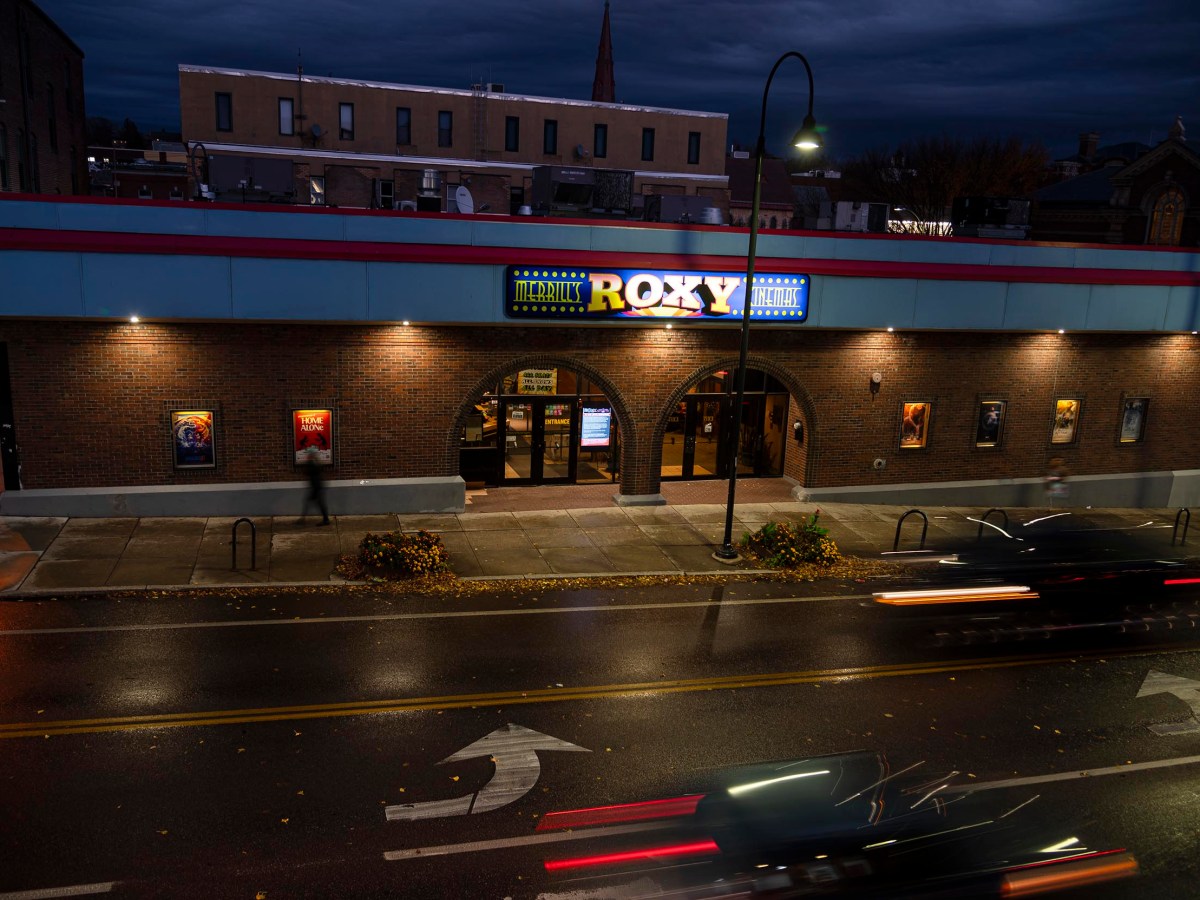
As Vermont’s biggest city and cultural center, Burlington felt incomplete without a movie theater, and the closure of its only cinema “felt like a slight” to the city, Yates said.
Yates spent part of his 20s working in movie theaters and now works as a ski lift operator and freelance journalist. His wife, Michelle Sagalchik, a high school U.S. history and civics teacher; Antonio Golán, a communications lecturer at the University of Vermont; Gretchen Schissel, a curricular program specialist at the university; and Ali Hamedani, a physical therapist round out the founding board members.
None of the five founders have run a business before. But when they learned that no existing business planned to reopen a downtown theater, they decided to take matters into their own hands by launching a grassroots effort to create a member-operated nonprofit cinema.
“I don’t think any of us feel qualified,” Yates said. “We just wanted to do it, and I guess that’s our qualification, is that we wanted to do it.”
Merrill Jarvis III, the third-generation owner of the Roxy, previously told Seven Days he would place a deed restriction on the building if he sold it, preventing future owners from operating a movie theater there.
That restriction ended Sagalchik and her peers’ hopes that someone might step in to renovate and reopen a modernized cinema where the Roxy once stood.


“Had it seemed more certain that the Roxy would be up for sale with the possibility of being renovated into a movie theater, we would have trusted and hoped that someone would take on that project,” said Sagalchik. “But we sort of doubt that is going to happen.”
When asked in an interview for his response to the new theater’s plans to open, Jarvis declined to comment.
Yates and Sagalchik said they are not attempting to recreate the Roxy. Instead, their independent project aims to keep movie theaters alive by embracing a nonprofit model that solicits arts grants and tax deductible donations, which they said mirrors a broader trend in recent years of nonprofit art house theaters.
Community-centered cinema initiatives are also popping up elsewhere in Vermont, such as the reopening of The Bigger Picture in Waitsfield as a nonprofit, according to the Valley Reporter.
Partizanfilm plans to rely primarily on donations, grant funding and membership sales to stay in business. For an annual membership fee of $60, patrons get to pay $2.50 less per ticket than non-members. For non-members, tickets are slated to cost $12 in the evening, $8.50 for a weekend matinee and $7.50 for a weekday matinee.
The owners expect members to play a significant role in the theater’s direction and oversight through electing board members and weighing in on issues at annual meetings. The theater’s democratic governance structure is modeled after a consumer cooperative, according to Yates.
However, Partizanfilm does not plan to issue patronage dividends. Instead, the owners expect to reinvest all revenue into the theater’s operations and programming, he said.
“We didn’t want to do it any other way,” Yates said. “We’re hoping that it will be an example that a business can be run democratically, and it can be run to serve a community’s needs.”
“Nobody is doing this to make money,” he added. “We’re all doing this together. We’re going to make decisions together, and we think it’s going to work.”
Outside of the film screening rooms, current plans are to put the lobby to use as a social area with a small bookstore and cafe serving beer, wine, coffee and snacks. Yates said he encourages the use of the space for post-viewing conversation or to simply to hang out.
The founders envision the future theater functioning as a third space to foster connection not only among moviegoers, but also all who enter its doors, according to Yates.
“This will be a place where the energy will be right,” he said. “And I hope people will enjoy it as a place beyond just going to the movies.”
Sagalchik said the five-person team, all of whom reside in Burlington, has a natural affinity for mobilizing public support for grassroots efforts.
“This is sort of an extension of that kind of organizing energy,” she said.
Despite major renovations still pending, the theater’s owners are hopeful to be up and running by Nov. 1, Sagalchik said.
