


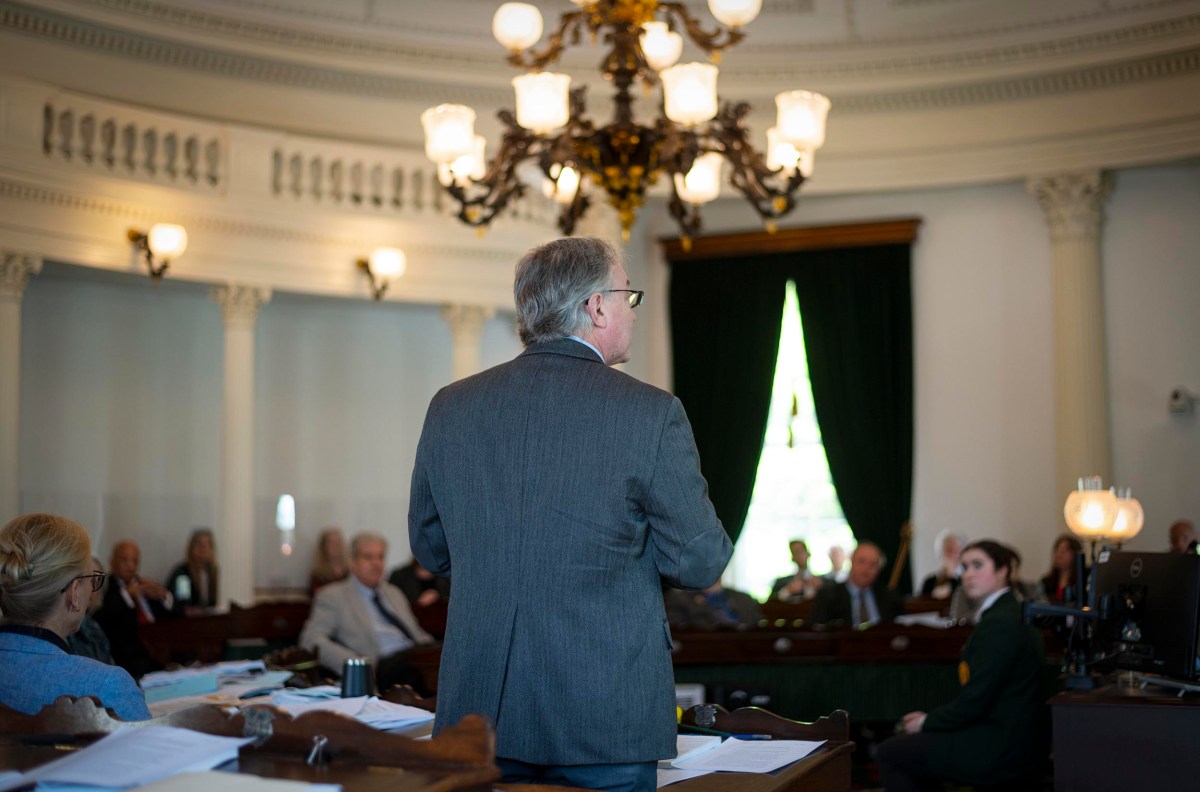
Vermont legislators are struggling with what to do next with a major education reform bill, which Gov. Phil Scott is pushing them to pass this year.
Sharp disagreements among lawmakers have emerged in the Vermont Senate over the past week, as education leaders publicly lobby against the chamber’s latest version of legislation.
Both chambers of the Legislature and the governor see education reform as a key issue in response to last year’s double-digit average property tax increases. All three have put forward different versions of wide-ranging reforms.
The proposal, H.454, was originally slated for a vote on the Senate floor Wednesday after passing out of a key committee last week. But at a tense caucus meeting of the Senate’s Democratic majority Tuesday evening, Senate President Pro Tempore Phil Baruth, D/P-Chittenden Central, pulled the plug on those plans and conceded that a majority of the caucus was not willing to support the current version of the bill, even after taking weeks of testimony.
“I made a promise to people in the caucus that I wouldn’t bring a bill that had a little bit of Democratic support and a lot of Republican support,” Baruth said Tuesday. “Currently, that’s the only way that (H.454) would make it through the process — would be for, you know, a handful, at best, of Democrats to support it, and then a majority of Republicans to support it.”
Plans were for the education bill to come up for action on the floor Thursday, said Ashley Moore, who is Baruth’s chief of staff, on Wednesday afternoon.
Both chambers, and Scott’s administration, have broadly agreed that the state should transition to a new education funding formula and move toward consolidating school districts. But disagreements have developed over the details and the timeline.
Moreover, the Senate’s version of the landmark legislation has faced sustained opposition from superintendents across Vermont, who have spoken out en masse against the bill over the last week, either in open letters to community members or in direct communications with lawmakers.
At Tuesday’s caucus meeting, one Democratic senator described getting a rash of emails from school officials in her district in recent days condemning legislators’ recent work on the bill. Sen. Ann Cummings, D-Washington, characterized their criticism as almost overwhelming.
“I stopped doing emails when I didn’t feel I could bleed anymore,” she said.
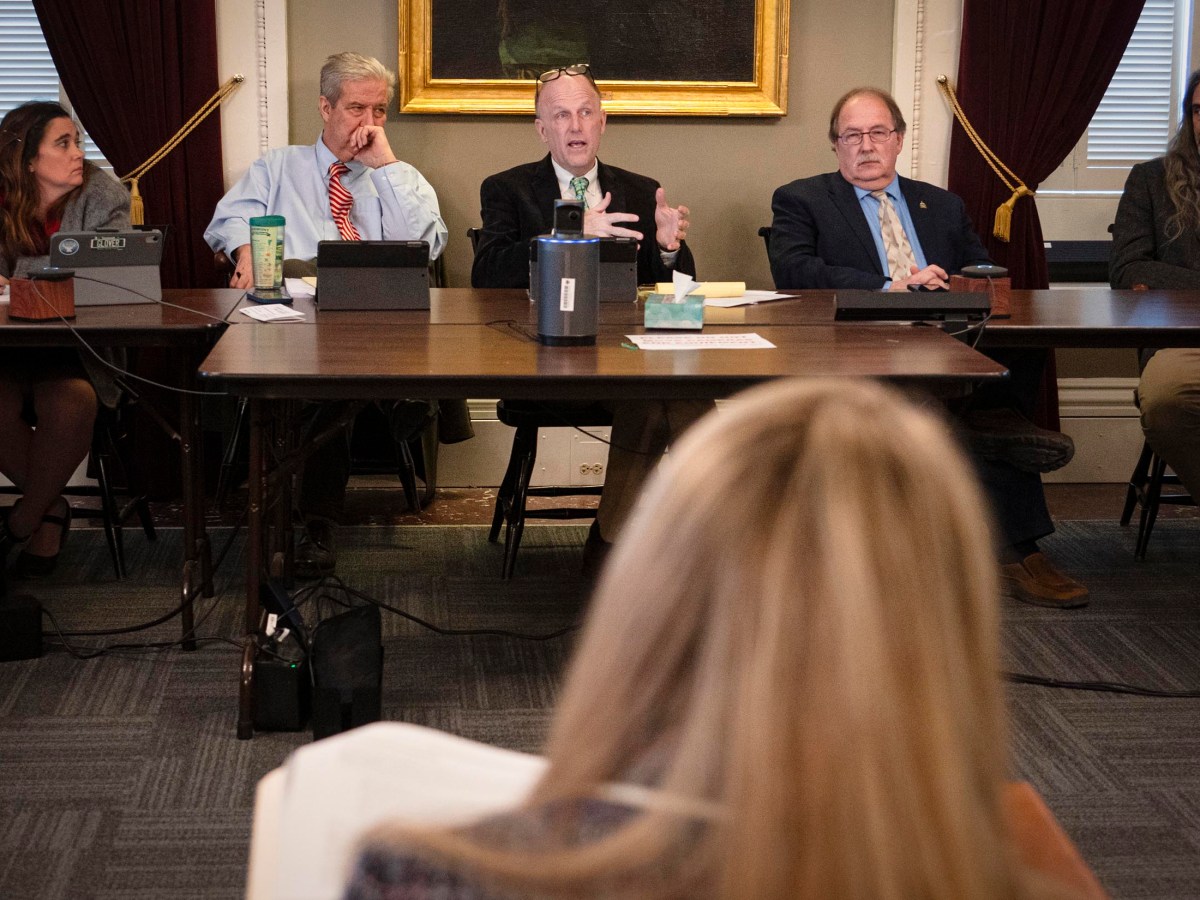
‘Our children deserve better than this political charade’
School leaders have argued that the Senate’s proposed funding model could upend operations at schools across the state, slashing budgets unsustainably for some districts while spiking tax rates in others.
“There’s something for everyone to dislike in the legislation,” John Castle, the executive director of the Vermont Rural Education Collaborative, a nonprofit advocacy group representing districts in the Northeast Kingdom, said in an interview.
Castle said lawmakers were laboring under a “false narrative” that school consolidation could solve all of the state’s education woes while failing to tackle the root causes of education spending increases, like skyrocketing health care premiums and deferred facility maintenance costs.
In a letter sent to members of the Senate Finance Committee last week, Brooke Olsen-Farrell, superintendent of the Slate Valley Unified School District in Rutland County, similarly expressed her concern about the “lack of long-term vision for education in Vermont” included in the Senate’s version of the bill.
Although Slate Valley schools would receive an increase in education funding from the proposed spending model, Olsen-Farrell wrote that homeowners in the district could see property tax increases of up to 22%.
“The Senate’s version of H.454 does not reflect the values or needs of our students, families, and communities,” Olsen-Farell wrote. “It jeopardizes our ability to deliver equitable educational opportunities and modernize our education system, while placing an untenable financial strain on Vermonters.”
Olsen-Farrell’s sentiments were largely shared by superintendents in Franklin County, who collectively panned the Senate proposal in a scathing open letter to community members sent earlier this week.
“The latest attempts at school funding reform are a stark reminder of how disconnected the current legislative process is from the realities facing our local districts,” wrote Maple Run superintendent Bill Kimball, Missisquoi Valley superintendent Julie Regimbal, Franklin Northeast superintendent Lynn Cota and Franklin West superintendent John Tague.
Noting that the proposed model could yield tax increases of up to 30 percent for some homeowners in Franklin County, the superintendents wrote that the bill would do little to address the “core drivers” of increased education costs.
“Until our elected officials demonstrate the courage to confront these fundamental cost drivers and craft equitable solutions, we’re simply rearranging the deck chairs on a sinking ship,” the superintendents wrote. “Our children deserve better than this political charade.”
In a letter sent last week to Senate and House leadership, Burlington School District superintendent Tom Flanagan similarly wrote that the Senate version of H.454 would have “deeply harmful impacts” on the district, potentially costing it “many millions of dollars.”
In an interview, Flanagan said that, rather than try to rush out a bill this year based on either the Senate or House proposals, legislators should now “take a step back” and consider delivering a more comprehensive, measured plan in the next legislative cycle.
“It’s just clear to me that we’re not ready now,” he said. “There are some ideas there, and there is the need for change, but we need the right people at the table to determine what that change looks like and map out a responsible timeline to enact it.”
‘Regardless of what bill we vote on, we lose’
It’s unclear, though, whether lawmakers will heed that advice, especially with pressure from Gov. Scott to move forward.
Baruth said Tuesday there appeared to be more support within the caucus for the House-passed version of H.454, and he proposed making a series of procedural moves on the floor Wednesday that would instead bring up the House language on the Senate floor, and allow senators to amend the language, also on the floor, from that point.
Another option, he said, would be for the Senate to take up and pass its own version of the bill — with senators essentially holding their noses — so that the bill could go to a conference committee of House and Senate leaders to work out their differences. Amending the bill on the floor, per Baruth’s other suggestion, could lead to a conference committee being formed, as well.
Senators were discussing both of those options on Wednesday, after Baruth postponed the vote, and it wasn’t clear that afternoon which, if either, they would take.
Several senators pushed back during Tuesday’s caucus meeting on Baruth’s proposal to rely on floor amendments to alter the bill, saying that wouldn’t give them enough time to thoroughly vet the language being considered.
“I get cold chills thinking about making floor amendments to address the biggest change that we can get to the entire education tax system,” said Sen. Nader Hashim, D-Windham.
“To do a floor amendment on something that complicated — where we don’t have the time to really think about all the implications — is kind of scary to me,” added Sen. Ruth Hardy, D-Addison. She called the Senate’s work on the bill “infuriating.”
It wasn’t clear at the end of Tuesday’s hour-and-a-half meeting whether the caucus would come to any agreement on the proposal. Hardy suggested the Senate send H.454 back to a committee for further consideration and, potentially, not pass an education reform bill at all this year.
“It sounds like regardless of what bill we vote on, we lose,” said Sen. Ginny Lyons, D-Chittenden Southeast. “We put the House bill up, we lose. We put the Senate bill up, we lose.”
But it’s possible Scott won’t let that happen. At his weekly press conference Wednesday, he urged legislators to get a version of the bill to the point of a conference committee to work out the House and Senate’s disagreements. He added, too, that he would use his power to call legislators back into session after they’ve adjourned for the year if they do not pass an education reform bill first.
Baruth had indicated at Tuesday’s caucus meeting Scott would do that.
“I’ll call them back — and we’ll keep calling them back — until we get something accomplished,” Scott said. “We can’t go home without this transformation.”
Correction: An earlier version of this story misspelled Tom Flanagan’s name.
