

WINOOSKI— A tax preparer who is worried about a recently deported Nepalese family, a parent who doubts the education reform bill will benefit her children, a student who wondered how state leaders hold themselves accountable for making big decisions that impact everyone in Vermont.
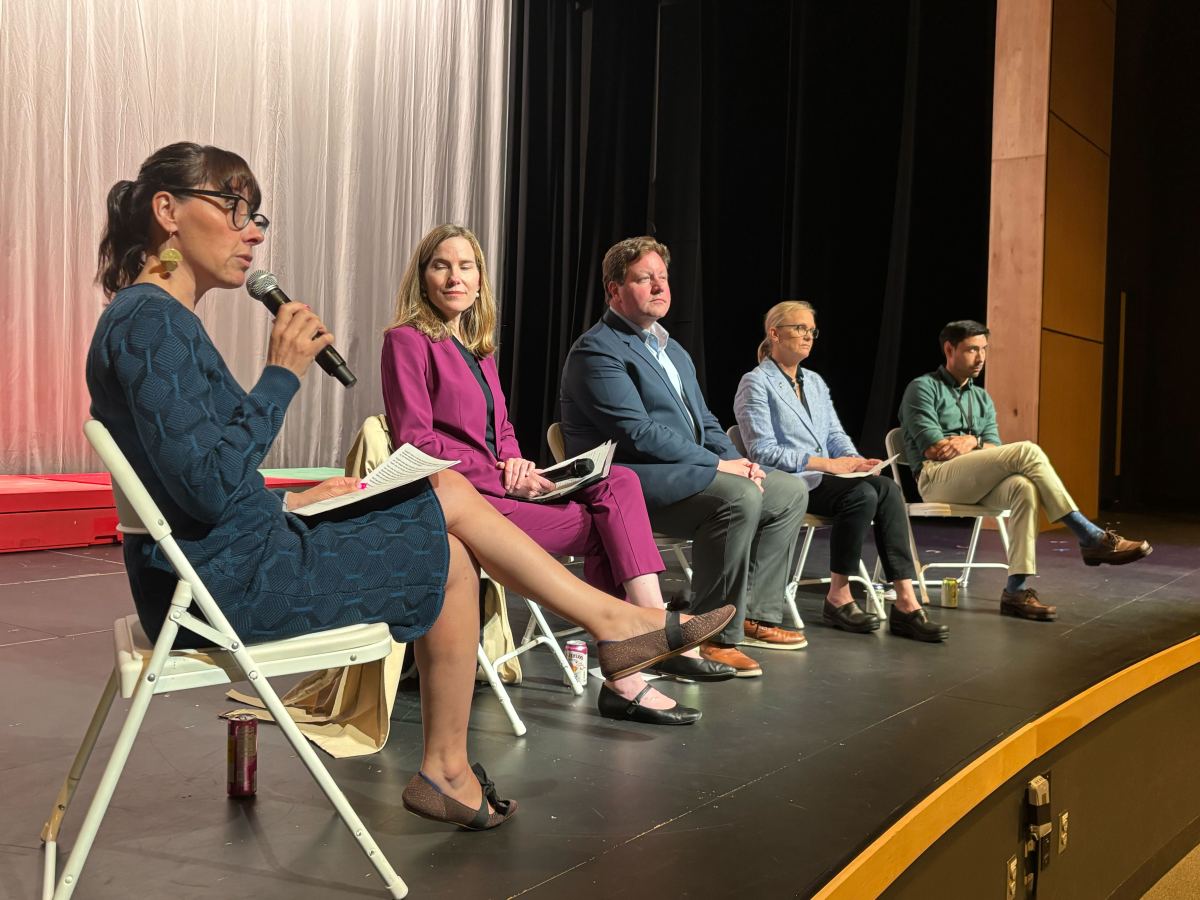
These were among the concerns community members raised during a panel discussion Monday night in the Winooski School Performing Arts Center, organized by state Rep. Daisy Berbeco, D-Winooski.
Questions and comments spanned a gamut of issues faced by Winooski residents, from immigration enforcement to federal budget cuts and tariffs imposed by President Donald Trump’s administration.
More than 60 people attended, with several parents, students and residents sharing their thoughts and questioning state leaders on matters ranging from schools and health care to property tax and flood response.
Attendees and panelists roundly criticized H.454, an education reform bill first introduced by Republican Gov. Phil Scott and the Agency of Education that aims to overhaul Vermont’s education funding and governance model over several years.
“It’s a really hard time right now because we are taking on a massive reform that will likely result in our students not getting what they need,” said Sen. Martine Gulick, D-Chittenden Central, one of the panelists.
The reform proposal “is being used as a political tool to achieve specific agendas” to benefit the interests of the people with the most means to maintain power, said panelist and Winooski School District Superintendent Wilmer Chavarria, who oversees one of Vermont’s most diverse school districts.
He was not consulted on the matter and neither was the state Office of Racial Equity, he said.
Panelists expressed frustration that big decisions seem to be made based on gut feelings rather than data.
“Nobody, except for our delegation – two senators out of three – have asked me what this will do for Winooski,” Chavarria said. “But Winooski has done the modeling and none of the scenarios they’re looking at is going to do anything good for the taxes in Winooski. If anything, there’s a potential for substantial increases, and a substantial decrease in the quality of education our students will be receiving.”
Gulick agreed, adding that the bill the Senate is considering “doesn’t address cost drivers” like health care, inflation or the deferred maintenance of school buildings.
“If we do save money, it’s just because we are slashing, we are cutting and not in a thoughtful way. So that is problematic,” she said.
That led residents to raise concerns about escalating property taxes in a city with many immigrants and young families.
While it may be too early to predict the bill’s impacts, State Treasurer and Winooski resident Mike Pieciak, another panelist, said the overarching goal of the bill is to provide “a really exceptional education at a price that Vermonters can afford.”
That was the hope when a previous education reform law, Act 60, was enacted, he said, but the state did not adequately track “clear, articulable, measurable goals for what they were trying to achieve from a financial savings standpoint.” Pieciak said he hoped the state could learn from that as it considers new legislation.
Enacted in 1997, Act 60 significantly changed how public education is funded in Vermont with the intent to allow towns to pay equal tax rates for equal spending, regardless of local property wealth.
A Yale University student who last year analyzed the effect of Vermont’s education finance system to see if school district mergers, like the ones prompted by the passage of Act 46 in 2015, saved money. Her analysis did not find any significant savings in spending per pupil between the merged and the non-merged districts.
George Cross, who formerly served as superintendent of schools in Winooski and in the Vermont House, recalled participating in “the Act 60 revolution.” The fight then was not just between communities but also between the rich and the poor, he said, a divide he said the Legislature is not addressing in the current bill.
“The Legislature does not represent the people of Vermont and that’s a big problem,” he said. “It might have represented the people of Vermont 100 years ago, but it doesn’t represent them today.”
That divide was evident throughout the public commentary offered during the two-and-a-half-hour forum where many referenced unequal access that marginalized community members face. Some residents spoke of the anxiety immigrants in the city are feeling five months into an administration that often illegally targets them.
A community organizer, who spoke on behalf of Latin American families in the city, said undocumented workers who contribute to the economy are particularly scared and being subject to scams promising legal services.
“They just don’t know who to trust,” said Corali Cotrina. “The reality is, there is a deep disconnection between legislators, representatives, State House and the grassroots, especially the Black, Brown community, who are undocumented, who are the current invisible slaves and are being treated like animals by ICE.”
Nepalese and Bhutanese residents talked about refugee deportations they’ve heard about in the United States and the anxiety and fear that have gripped their communities.
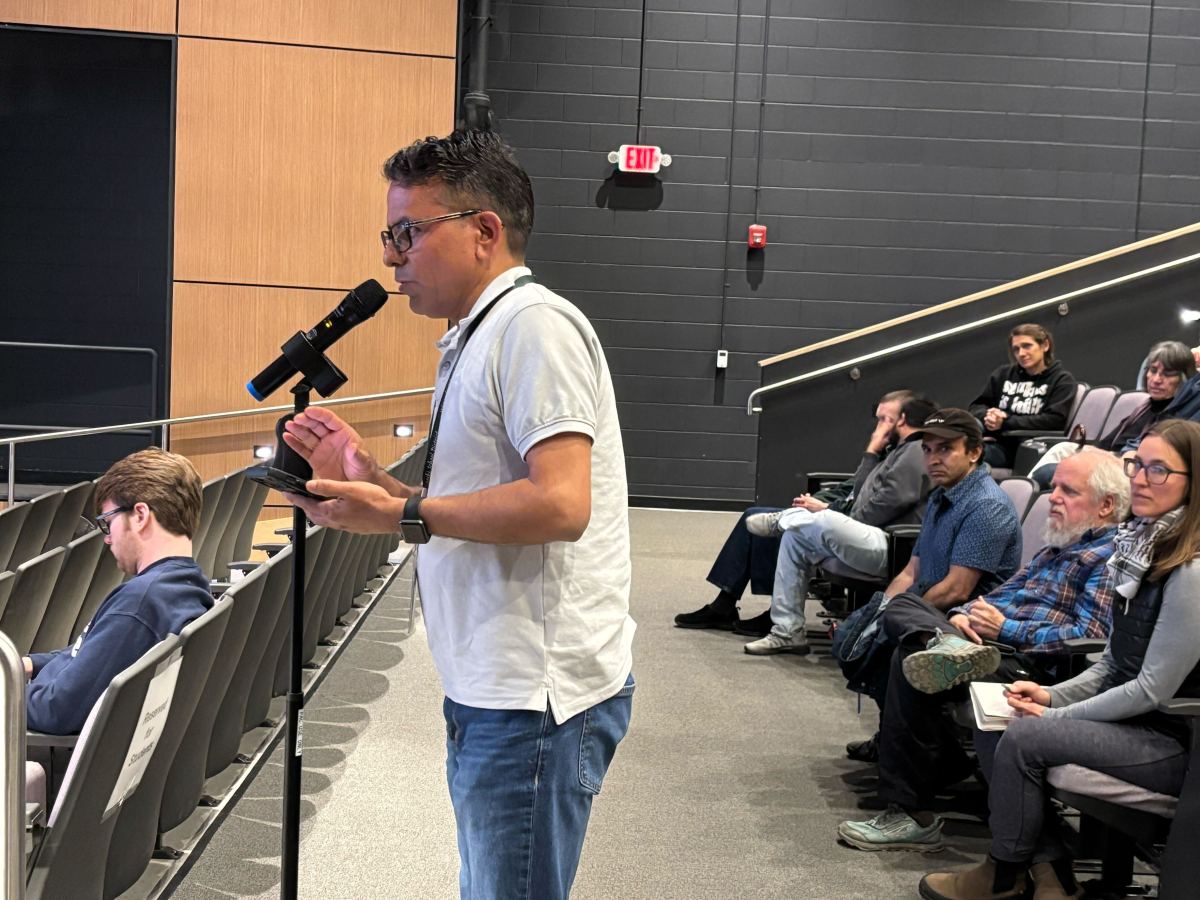
“And what are the processes for those families? What resources can support us?” asked Tika Timsina, a tax preparer for refugees.
Attorney General Charity Clark, also on the panel, said a scam is a crime and her office has a consumer assistance program that can help residents without requiring them to share their background information.
She further assured residents she will continue to take legal action against the Trump administration when it violates the Constitution. Clark said her office is creating a document to alert immigrants of their rights this week, particularly if U.S. Immigration and Customs Enforcement agents come knocking.
President Trump’s approach to immigration “has been offensive, appalling and un-American,” she said. “We are this wonderful melting pot of immigrants. We believe in freedom, and our Constitution is fundamental, and we have no kings.”
Chavarria said the Winooski School District has a 30-member rapid response team that includes a home-visiting program and interpreters that can be used in an emergency.
Panelists directed concerned speakers to resources available in the state, such as Vermont Legal Aid, Vermont Law School clinic, Vermont Asylum Assistance Project and pro bono and low-cost lawyer options available through the Vermont Bar Association.
Berbeco, who moderated the panel, reminded attendees that Winooski has adopted a sanctuary schools policy, meaning students and families are protected from the impact of federal immigration enforcement actions there, reflecting that “schools should be places of trust, not enforcement.”
Pieciak said immigrants have always been part of the American story and immigration is an economic issue and also a moral one.
“The future of Vermont, if it’s going to be successful, is going to require a lot of immigrant labor,” he said.
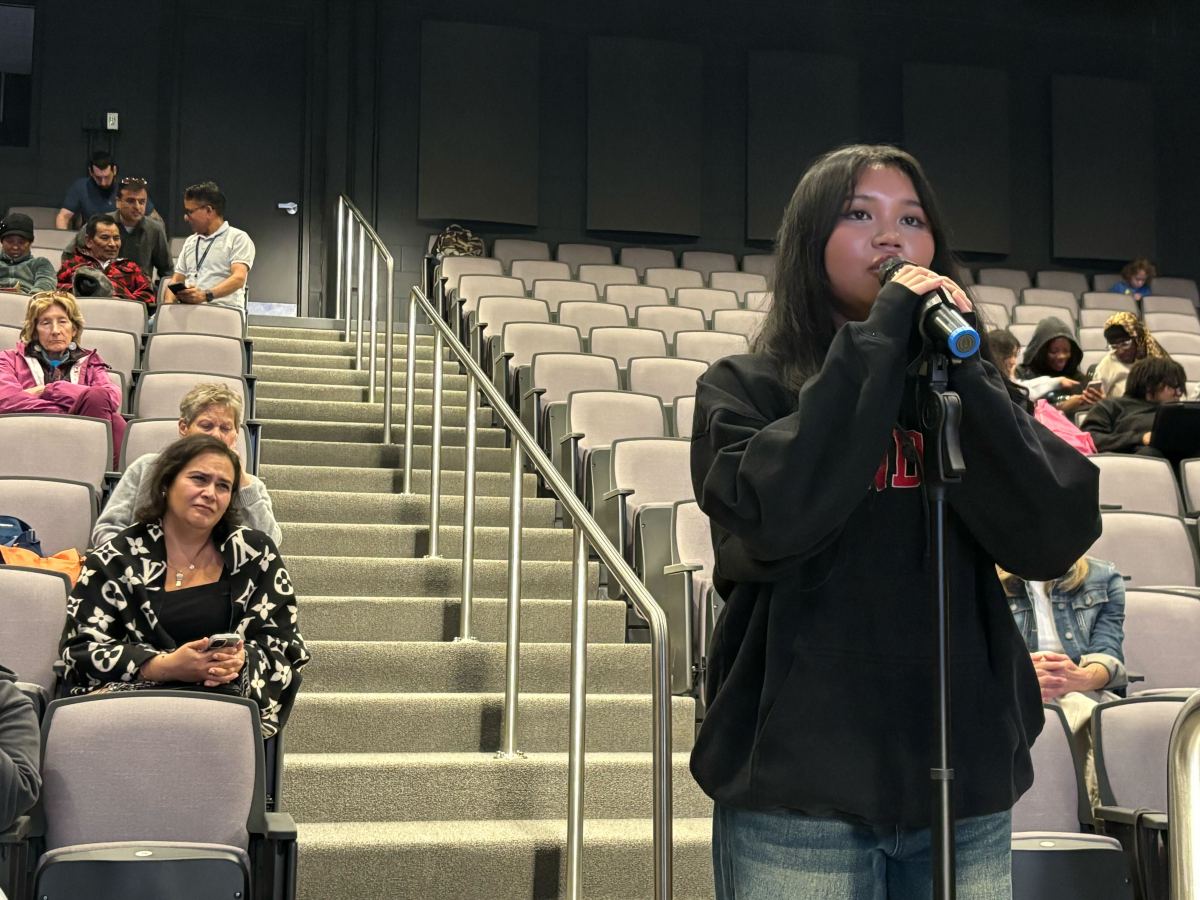
Mea Ree Jan, a senior at Winooski High School, asked panelists how they keep their decisions honest and free of bias when considering bills that have the potential to negatively impact communities of color.
Berbeco said she uses an impact assessment questionnaire created by the state racial equity office to confront biases in committee; Gulick said she tries to listen to her heart and her moral compass to imagine how constituents might react.
