


BURLINGTON — At 9:45 a.m., the bunk beds in the COTS emergency overnight shelter for single adults are empty. Most of the clients had gone to work.
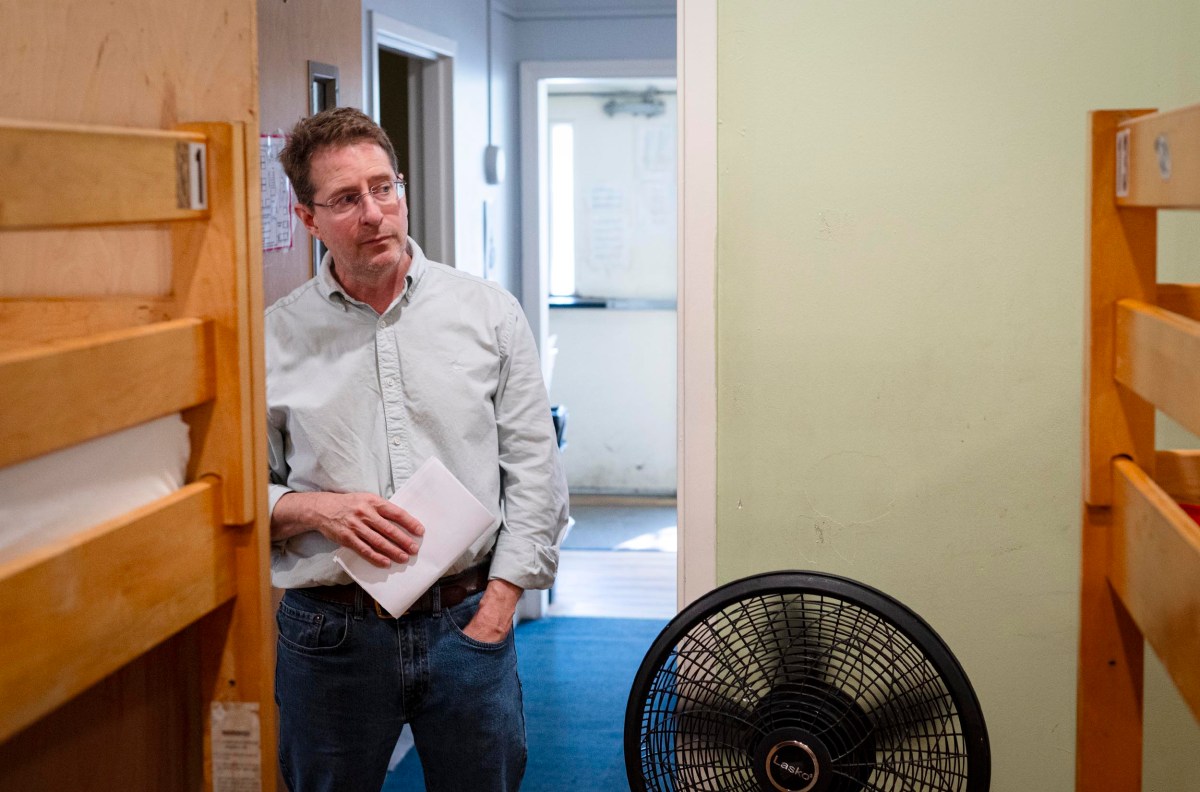
Rows of double bunk beds packed two tight rooms with yellow walls and low ceilings at 187 Church St.
One room provides 28 beds for single male adults and the other has eight beds available for female adults, and there are a couple of bathrooms with showers. Each of the beds has a number that corresponds to a locker in the hallway. There is a common area downstairs with some chairs, tables, two washer-dryers, a TV and a makeshift kitchen.
Makeshift is how the shelter has operated for four decades, while homelessness and the need for safe, temporary housing has only grown.
In the last federal fiscal year (October 2023 – September 2024), the Waystation, as the night shelter is called, served 159 unique individuals. Jonathan Farrell, executive director of the nonprofit that provides a wide array of housing and shelter services and advocates for long-term solutions to end homelessness, said 30 of those individuals were chronically homeless.
“We are seeing unprecedented numbers of folks who are unhoused and sleeping rough in our communities,” he said.
With 2,500 square feet over two floors, the night shelter has long outgrown the space in a city and state that has continued to see more and more people experiencing homelessness.
Vermont’s rate of homelessness ranks fourth in the nation and increased by nearly 5% between early 2023 and early 2024, according to the most recent annual point-in-time count, a federally-mandated tally of unhoused people taken on one night in January. Over the last few years, state leaders have restricted Vermont’s motel voucher program, limiting the back-up shelter option as homelessness has grown. Meanwhile, a bill that could overhaul Vermont’s response to homelessness is making its way through the Legislature.
In Chittenden County alone, there are “a solid 250 to 300” who are unhoused, Farrell estimated.
While the Waystation has been a lifeline for many seeking shelter at night, the aging facility does not meet current needs and has been on COTS’ agenda for improvement.
In January, the organization acquired 58 Pearl St. — the former social security building -– and work has begun to create a more modern, spacious, ADA-compliant night shelter there, Farrell said.


The 7,361 square foot property will triple the space available in the current Waystation and provide beds for up to 56 adults, allowing COTS to expand its shelter services by 55%, according to a recent press release.
“We are really focused on the dignity of the space,” Farrell said.
To do so, COTS needs money.
Renovating the building, in partnership with Duncan Wisniewski Architecture and JA Morrissey Construction, is estimated to cost $2 million, the release states.
COTS’ capital campaign for a new Waystation has raised $500,000 from the State of Vermont Office of Economic Opportunity and $600,000 from anonymous donors. The Hoehl Family Foundation has provided a $200,000 challenge grant and COTS is looking to raise another $200,000 in matching funds to open the new space.
The Hoefl grant has donated the first $100,000 and plans to match it with a second $100,000 once the additional $200,000 has been raised, according to the release.
“It’s not charity, it’s solidarity,” said Katharine Kostin, a Hoehl Family Foundation board member, in the release. “We believe we’re only as strong as our most vulnerable neighbors; therefore, we’re privileged to work with the community toward supporting the dignity of every person.”
Besides providing critically needed beds and space, the new center will provide a better kitchen, more laundry options, six private bathrooms with showers, a break room, common areas, an office and intake space for community partners and service providers.
“It could be a health care provider, a street outreach person, could be an EMT or a nurse to see one of our guests in a private setting for medical, mental health, really anything. So we’re really excited about that and partnering with other folks in the community to provide those services to our guests,” Farrell said.
In addition to providing a safe, supportive environment, Farrell said the new Waystation will have a positive impact on downtown by providing 20 more beds. So “contributing to the Waystation campaign is a direct, tangible way for people in our community who want to be part of the solution to do so,” he said.
“Our downtown is facing a crisis,” states a May 9 letter signed by more than 100 area businesses and sent to Mayor Emma Mulvaney-Stanak. The letter cites “street harassment, visible drug use, and threatening behavior” among the reasons they say have contributed to less foot traffic and staff retention leading to recent closures. Businesses are increasingly having to work on managing overdoses, mental health issues, shoplifting and cleaning up downtown, the letter states, urging the city to do better with communication, security, cleanliness and restorative efforts.
Looking forward
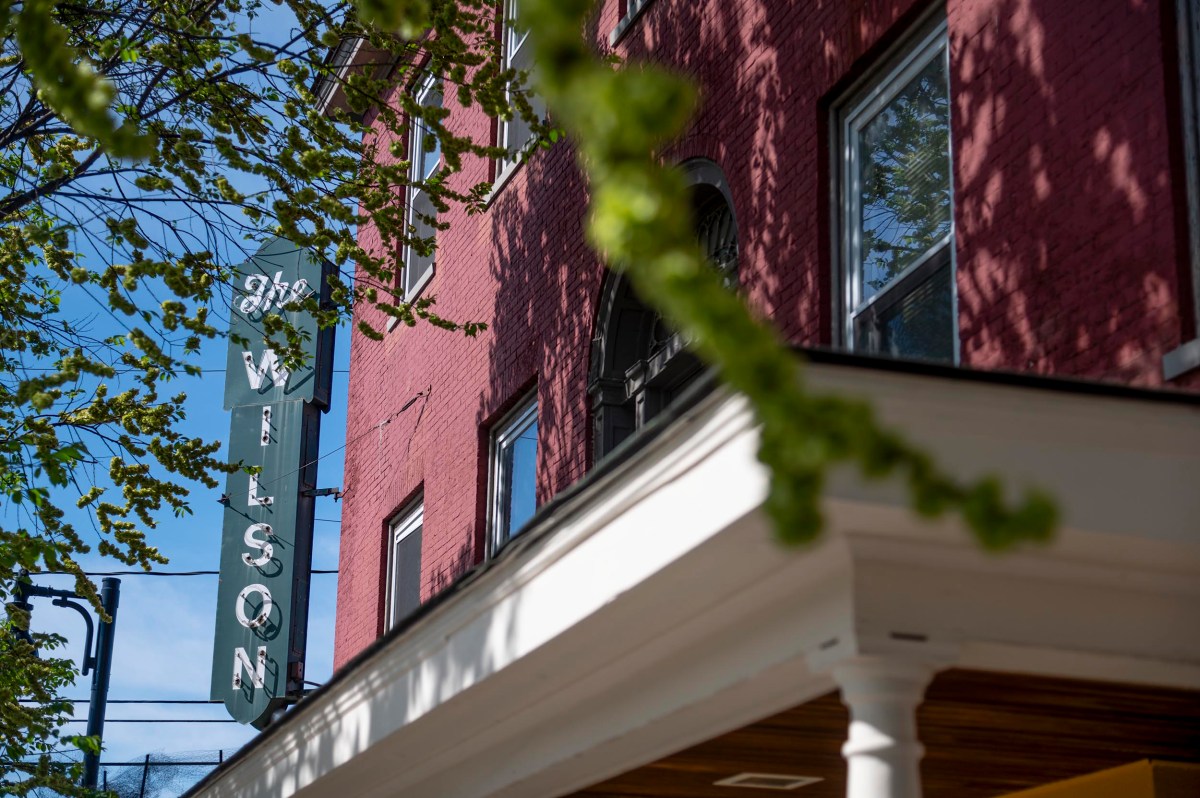
The Church Street space that shares walls with the Wilson apartments will be converted to create more permanent housing available for COTS’ clients to transition into, he said. The red brick building it abuts houses 23 deeply affordable permanent housing rooms for low-income and formerly unhoused individuals. Many of the tenants have been there for more than two decades, although the average turnaround is about 7 years, according to Farrell.
Originally home of the Mills brothers who published Burlington’s first newspaper — The Northern Sentinel -– and dominated the printing and publishing market in the first half of the 19th century, the building later housed a hotel. A faded blue sign -– The Wilson — still hangs off the corner of the red brick building, built around 1820. Inside, there are elaborate textured tin ceilings and exposed copper piping harkening to a bygone era.
Open 5 p.m. to 8 a.m., the Waystation is much older than the organization that was started by volunteers in 1982. COTS acquired it to use as a shelter soon after with two early board members putting their own homes up as collateral, according to Farrell.
On Thursday morning, some of the blankets on the double bunk beds in a cramped room were rumpled; some were neatly folded and set on pillows. And some of the grey-blue lockers in the hallway sported stickers: ‘I (red heart) Jesus’ and ‘Owl forest.’
Most of their temporary owners will return to lay their heads down. Unlike the stereotypes that persist, more than 70% of them have day jobs, Farrell said. And many of them, he said, are looking forward to the new, improved Pearl Street Waystation, which is expected to open in December.
