

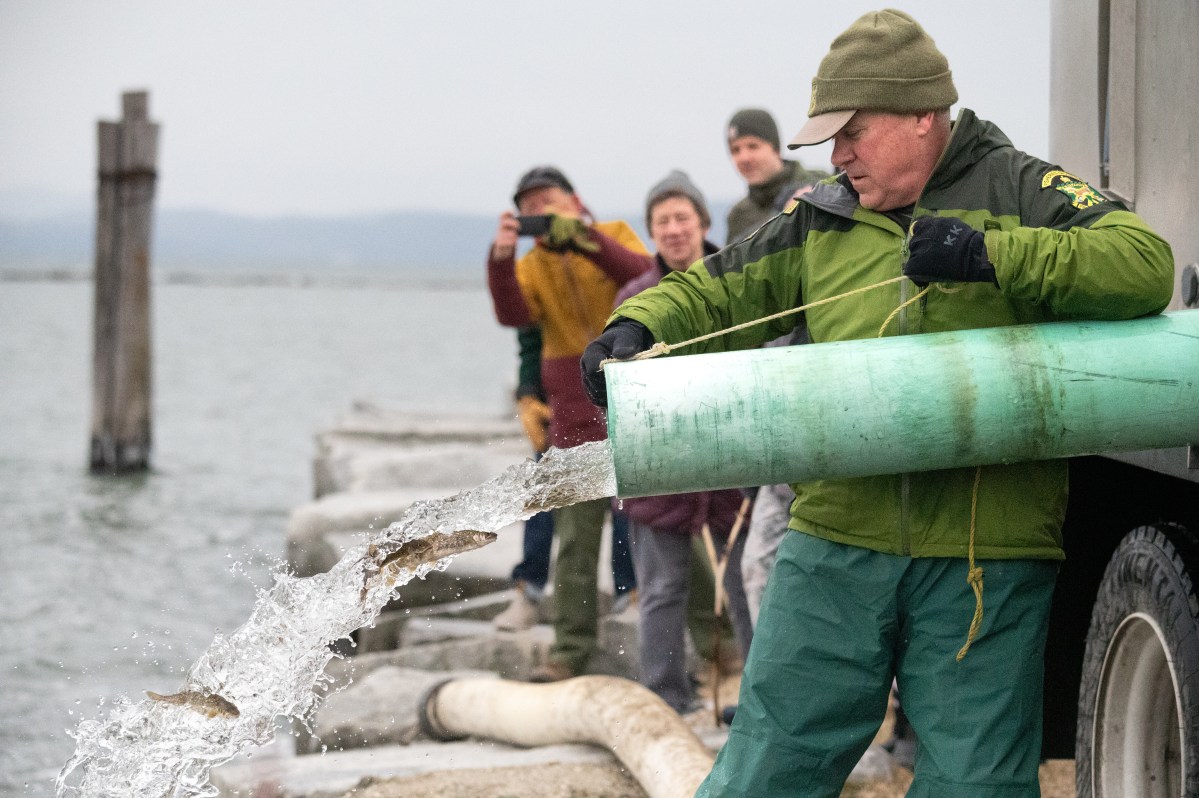
A decades-long effort to increase wild lake trout stock has recorded a rare conservation victory this month: The native species has been restored to Lake Champlain.
The Vermont Fish and Wildlife Department marked its final stocking effort this March and April by releasing more than 20,600 hatchery-raised fish in the Burlington waterfront and off ferries in Charlotte and Grand Isle, department officials said Friday.
When Bernie Pientka started with the department 22 years ago, the fisheries biologist said he could not have imagined they would ever stop stocking lake trout in Lake Champlain.
For decades, he said, the department has released new fish and monitored them closely for signs of spawning, and found viable eggs but never saw fish growing into larger fish.
Over the years, Pientka said, department staff and other observers, in partnership with the University of Vermont, slowly began to see an increase in wild fish in the lake that did not have the fin clips that they typically fasten on hatchery-raised stock.
“We reduced our stocking numbers and the percentage of wild fish kept going up. And now these wild fish are actually starting to reproduce,” he said, adding that it takes about four to six years for a lake trout to spawn for the first time.

Given the latest surveys, the Lake Champlain Fish and Wildlife Management Cooperative — a group consisting of the wildlife agencies of Vermont, New York and the northeast regional U.S. Fish and Wildlife Service — announced the end of the lake trout stocking program on April 10, according to a press release.
It’s quite a rare situation for waters where you want to see more lake trout — and a really big step forward, Pientka said.
Annual stocking involves multiple rounds. Prior to the latest batch this spring, another 20,750 fish were introduced to the lake last fall. That’s much lower than peak stocking efforts when about 80,000 hatchery-raised trout were introduced to the lake waters yearly, said Joshua Morse, a spokesperson for Vermont Fish and Wildlife.
“Bringing back Lake Champlain’s native lake trout to the point that they no longer depend on stocking is an incredible conservation success,” said Andrea Shortsleeve, interim commissioner for Vermont Fish and Wildlife Department, in the press release. She attributed the milestone to partnerships with scientists and conservation groups from across the region.
Severely affected by overfishing and habitat destruction in the 1800s, the lake trout have benefited from a restoration program the cooperating agencies have conducted since the 1950s, followed by efforts in 1990 to curb the invasive sea lamprey that were preying on the stocked trout, according to the press release.
The efforts have paid off as the latest survey indicates that Lake Champlain’s native trout population is self-sustaining, and the agencies will continue to monitor the situation, the release said.
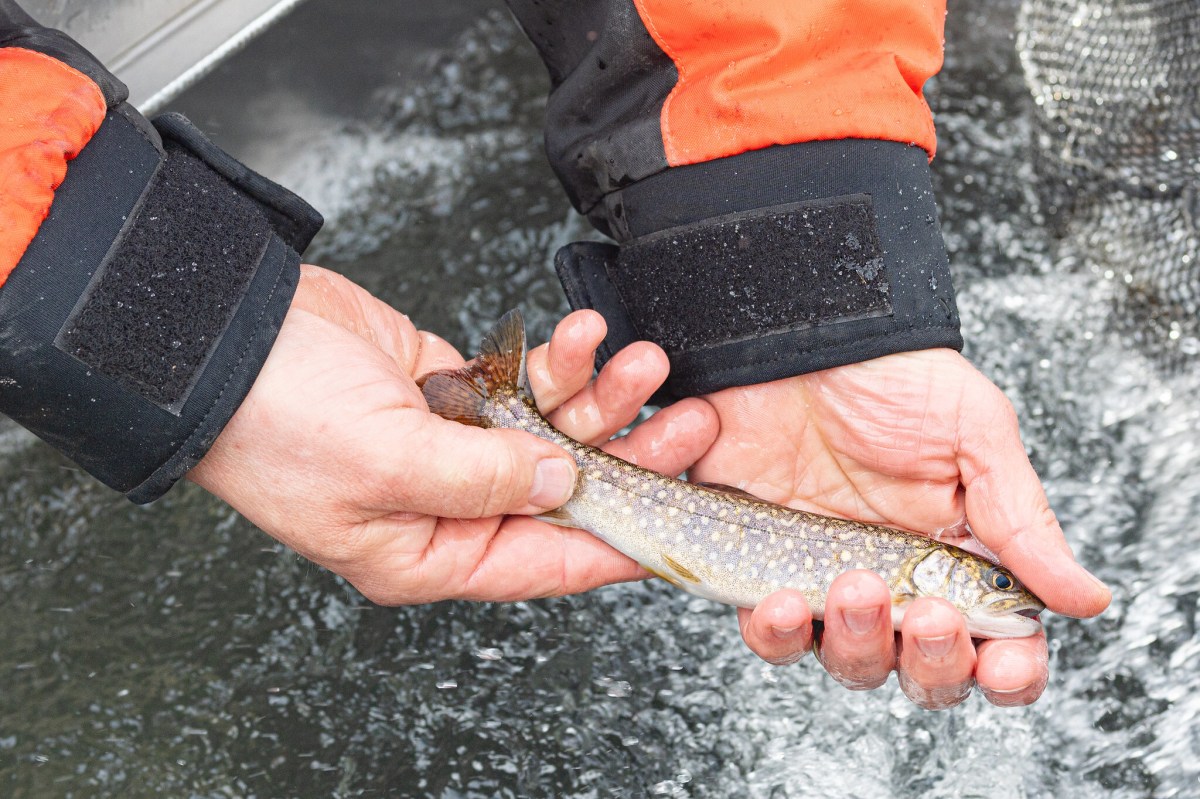
“They did all the steps, and then nature took over and the fish started to survive and recruit since,” said Ellen Marsden, a professor emeritus at UVM who has researched lake trout for decades. “There are still some scientific puzzles, but it’s an incredible success story for a management group.”
“This restoration effort serves as a model for states to effectuate positive and collaborative conservation outcomes,” Amanda Lefton, acting commissioner of the New York State Department of Environmental Conservation, said in the release.
Also known as togue, longe, Mackinaw trout or touladi, lake trout are deep and cold water dwellers that prefer clean, well oxygenated waters with temperatures below 60°F. Its scientific name, salvelinus (meaning char) namaycush, is Native American and refers to it being a dweller of the deep, according to the Fish and Wildlife website.
Its habitat coupled with the lake trout’s giant size is what makes it a “magical and mysterious” fish for Morse, who said he studied the species as an undergraduate near the Great Lakes in Ohio.
The largest of the chars, the species is also prevalent in lakes in the Northeast Kingdom. In Lake Champlain, mature fish can measure 18-24 inches. Prized as game and food, specimens bigger than 10 pounds are considered trophy fish in Vermont, according to the Fish and Wildlife website.
