


Two years ago, an organization of primary care clinics sent a legal memo to the state of Vermont containing a troubling allegation: Vermont Medicaid had effectively been underpaying them for years.
The Bi-State Primary Care Association, which represents federally qualified health centers in Vermont and New Hampshire, had retained the services of a law firm to check whether Vermont’s Medicaid program was following federal laws regarding how the clinics are reimbursed.
The answer, according to the firm’s analysis, was no. Vermont’s Medicaid program had “significant noncompliance” with federal regulations, Washington, D.C.-based firm Feldesman Tucker Leifer Fidell wrote in the memo.
That memo helped kick off months of discussions between the state and health centers — discussions that are still ongoing, but have not yet led to significant reimbursement rate increases for most clinics, leaders there say.
The process “has been frustrating,” Mary Kate Mohlman, the director of Vermont public policy at the Bi-State Primary Care Association, said in an interview earlier this year.
Mohlman expressed gratitude to the Department of Vermont Health Access for working with federally qualified health centers and said that, under new leadership, the department has been responsive and helpful.
But, she said in the interview, “it has been a long process, and it has not prevented our health centers from getting (more) fragile.”

More complex and expensive services
In Vermont, federally qualified health centers provide primary care, mental health care and substance use disorder treatment to roughly a third of the state’s population. Under federal law, the clinics are required to serve all patients, regardless of their ability to pay, and must offer care on a sliding cost scale.
The health centers have unique reimbursement Medicare and Medicaid systems that are supposed to cover the cost of seeing patients. But amid rising costs for labor and supplies, those reimbursement rates are not keeping up — leaving many health centers operating in the red with dwindling cash reserves.
Roughly a quarter of Vermont’s federally qualified health center patients are insured by Medicaid, meaning that Medicaid reimbursement rates are critical to the clinics’ financial health. Federally qualified health centers receive a set reimbursement rate for the vast majority of those patients’ visits, although some services — such as dental care and OB-GYN services — are billed separately.
The reimbursement rate for those standard visits, called the “encounter rate,” can increase via two paths. Rates are increased annually to account for inflation. And, under federal law, health centers can apply to the state Medicaid agency — in Vermont, the Department of Vermont Health Access — for what’s known as a “change in scope.”
That procedure allows a state’s Medicaid agency to hike a clinic’s reimbursement rates to account for “a change in the type, intensity, duration and/or amount of services” offered at that clinic, per Medicaid guidance.
“As (patients) get older, they may have more chronic conditions, and therefore a visit just takes longer, takes more resources,” Mohlman said. “You may have more staff coming in and meeting with that patient in that single visit. So as those change, the federal statute gave a way for FQHCs to work with their Medicaid agency to adjust the rate to meet the need.”
But Vermont’s “unduly restrictive” change of scope procedures did not meet federal requirements, attorneys argued in the 2023 memo. The state required health centers to inform the department before applying for a rate adjustment, limited the instances in which health centers could apply for new reimbursement rates and did not allow for retroactive changes to rates, according to the memo.
And in interviews, health center leaders said that the department did not have a process for clinics to apply for changes in reimbursement rates until 2017 — 17 years after the underlying federal law was implemented.
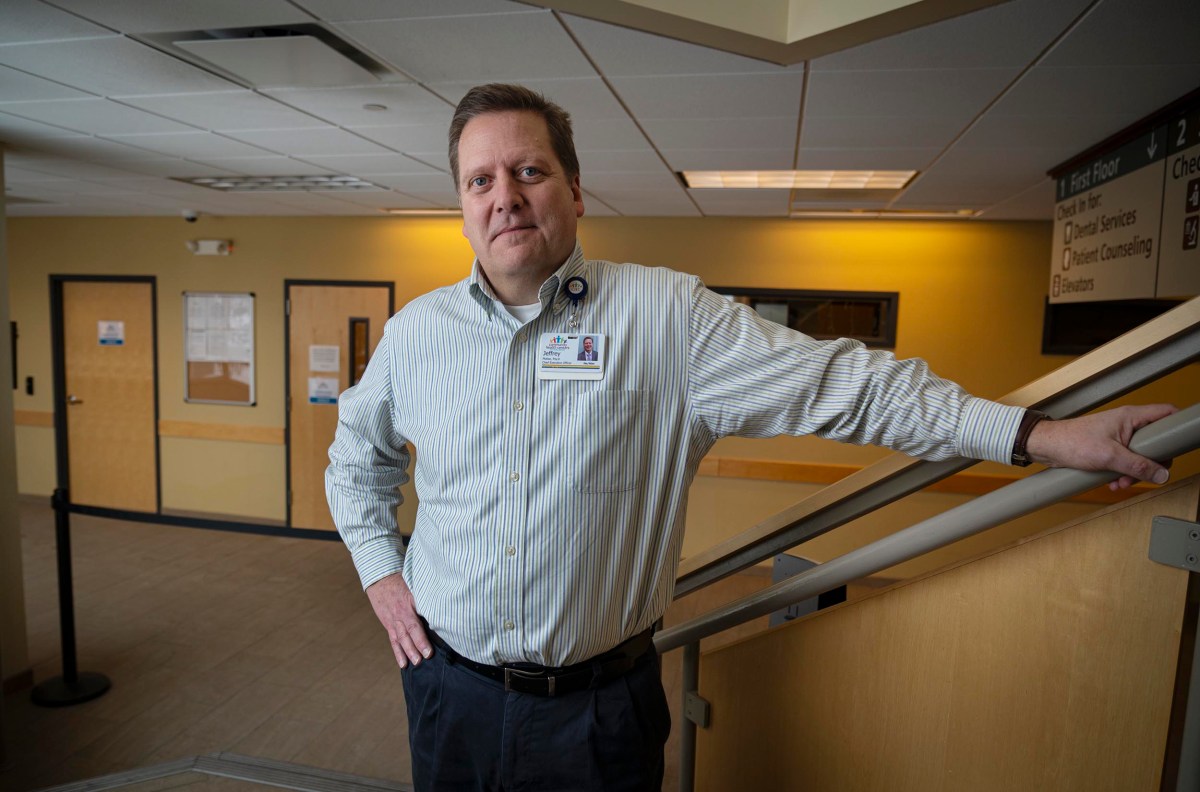
“That process should have been in place going back to 2000,” Jeff McKee, the CEO of Community Health Centers, a federally qualified health center with locations in Chittenden and Grand Isle counties, said in an interview earlier this year. “And it wasn’t there.”
The Department of Vermont Health Access pushed back on that claim. Although the department had no formal procedure prior to 2017, “there was no objection on our end to processing (change in scope) requests, and (change in scope) rate adjustments were still possible,” Alex McCracken, a spokesperson for the department, said in an email. “We simply did not receive a (change in scope) request in that time.”
Community Health Centers applied for a rate increase in 2022, and has still not received one, although that process is “nearing completion,” McCracken said.
‘It almost shut us’
In a 2023 letter responding to the Feldesman Tucker memo, an attorney for the Department of Vermont Health Access denied many of the health centers’ allegations.
Nevertheless, the department’s attorney wrote, when it came to the change in scope procedure, “the Department agrees that there may be changes to this process that could better allow Vermont’s rates to capture the FQHCs’ reasonable, allowable costs per visit.”
Last year, the Department of Vermont Health Access opened up a “one-time opportunity” to process requests for rate changes for all federally qualified health centers in the state, McCracken, the state spokesperson, said. Almost all the state’s health centers applied.
The state has processed requests from eight applicants, and has 10 more to go. So far, the process has resulted in increases for two health centers’ Medicaid reimbursement rates, according to McCracken. It’s not clear when all the facilities’ reviews will be complete.
The department is trying to “be as flexible as possible through this process, and to make sure that the (health centers) are taking advantage of this historic change in scope as best as we can support them,” McCracken said in an interview earlier this year.
Prior to that “one-time opportunity,” according to McCracken, only one health center had been granted increased Medicaid reimbursement rates by the state: Little Rivers Health Care, in Orange County.
Andrew Barter, the CEO of Little Rivers Health Care, said in an interview earlier this year that the federally qualified health center’s spending on behavioral health services — much of which was Medicaid-eligible — had risen by 900% over the past seven years.
The 2023 encounter rate increase — a 48.3% hike, according to the state — was a “fairly significant” step, Barter said, but one that came only after years of losses.
“The fact of the matter is, we have to address this,” he said. “We lost millions for those years we grew. And it almost shut us.”
Federally qualified health centers may have some relief coming. The Vermont House’s 2026 budget includes $4.5 million in state funds — which would draw down an additional $6.3 million in federal dollars — to shore up Medicaid rates for the health centers.
And a recent settlement between the Green Mountain Care Board and the University of Vermont Health Network includes $11 million for primary care practices, although it’s not yet clear how that money will be disbursed.
But clinics also face further complications from federal changes — including proposals from Republicans in Congress to cut Medicaid funding.
Kimberly Anderson, a spokesperson for Community Health Centers, said Wednesday that — despite progress on discussions between her health center and the state on a rate increase — Vermont’s clinics still face a rapidly changing landscape.
At the beginning of the year, “there weren’t Medicaid threats,” she said. “There weren’t threats to other components to our care as well — DEI-related, etc. So it’s been a crazy couple of months.”
