

BURLINGTON — A group of people in a conference room above College Street cheered Thursday afternoon after learning that Alexi, their husband, father, employee and friend would be granted bail and released from the custody of Immigration and Customs Enforcement.
After spending more than a month in a detention center in Plymouth, Mass., Alexi was released Friday, and by the afternoon, was on his way home to Vermont.
In a brief phone interview following his release, Alexi said he felt “very happy now.” He was healthy, and officials treated him well while he was detained, he said, though he didn’t have access to diabetes medicine, which required him to alter his diet. His comments were translated by a volunteer who picked him up from the detention center.
On Thursday, the group of Alexi’s supporters — which included his wife and youngest daughter, his employer, friends and volunteers for a local organization that assists people seeking asylum — had gathered to witness his bond hearing, which took place over the video-conferencing platform WebEx.
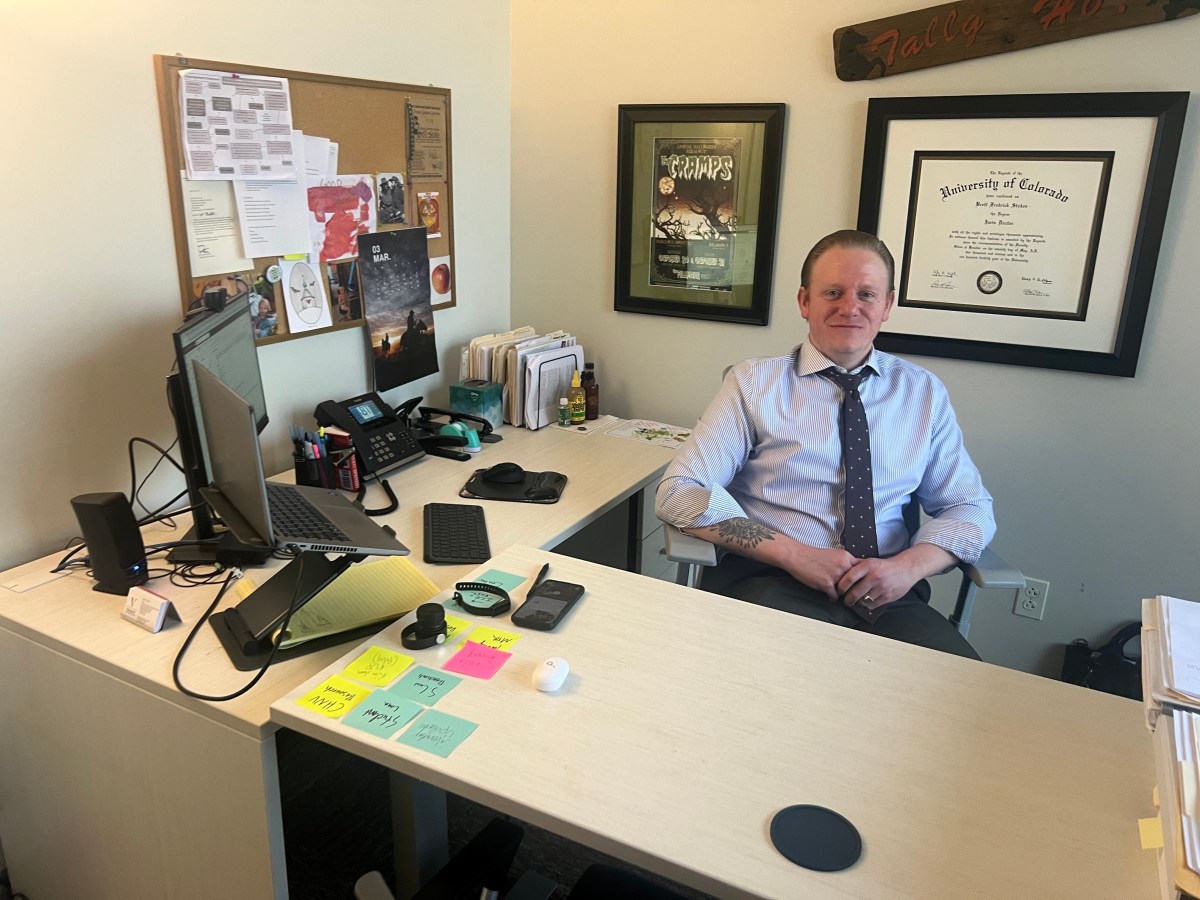
It was the first time Alexi’s case had been put before a judge, according to Brett Stokes, Alexi’s attorney and the director of the Center for Justice Reform Clinic at the Vermont Law and Graduate School.
“A month and a half into detention, we finally get a bond hearing,” Stokes said. “That’s not justice.”
Originally from Venezuela, Alexi and his family first moved to the United States in 2023. His wife and two of his children have Temporary Protected Status and cannot be deported. While Alexi’s case was preliminarily approved, it’s still pending. His youngest child is an American citizen.
On Feb. 8, Alexi and his family were driving to Costco, but they lost cell service and their GPS stopped working, he said in a February interview. They missed the turn, continuing north on I-89. VTDigger is using only Alexi’s nickname due to his fear of retribution.
Alexi was alarmed, he said, to find himself driving toward the Highgate Springs border crossing station with nowhere to turn around. Border Patrol agents detained all five family members for roughly 30 hours, giving them mats to sleep on and only water and crackers.
While the rest of the family was eventually released, agents held Alexi, citing his pending application for Temporary Protected Status.
Alexi said he’s likely to be detained if he returned to his country because he’s considered a defector.

Wrong place, wrong time
On a projector screen, the group watched several other hearings play out before Alexi’s. Judge Donald Ostrum told detainees that the objective of the hearings was to decide whether the detainees could be released from ICE custody while their immigration cases played out. The hearings would not decide anything else about their immigration cases, he said.
An attorney for the Department of Homeland Security, George Baker, argued against each detainee, citing reasons why he believed they should stay in custody. His task was to prove that each person presented either a danger to society or a flight risk.
In one square of the WebEx platform, people in ICE custody, all wearing the same grey v-neck shirts, took turns sitting in a chair in front of a camera to participate in their hearings. Some squares showed their attorneys, and others showed more advocates for Alexi, who watched the hearing remotely. Yet another square showed the room full of community members in Burlington who wanted to see Alexi walk free.
Ostrum denied requests for release in every hearing before Alexi’s. One person had a pending domestic violence case and was considered a danger to the community. Another had a slew of cases against him dismissed, but had evaded police in the past, so was considered a flight risk. Another was absent; he had already been deported.
When Alexi sat before the camera, Rachel Cogbill, president of the Central Vermont Refugee Action Network, who knows his family, held his daughter up to the projector so she could see her father’s face.
Alexi’s wife, who asked VTDigger not to use her name, sat in the front of the room, silent and still while she waited for the hearing to begin.
Baker, the lawyer for the Department of Homeland Security, did not argue that Alexi was a danger to the community. Rather, he argued that Alexi should remain in ICE custody because he was at risk of fleeing — that when he drove to the border, Alexi “was attempting to leave the United States.”
Stokes, Alexi’s attorney, responded that Alexi was not trying to leave the country; that traveling to the border had been a mistake.
“He found himself at the wrong place at the wrong time with a car full of his family,” Stokes told Ostrum.
He asked the judge to consider Alexi’s community in Vermont, referencing the room full of people on the screen, who waved emphatically in response. He cited Alexi’s employment in the state and the fact that he is the primary breadwinner for his family, which includes children ages 6, 4 and 2 years old. Stokes pointed to his pending applications for both asylum and Temporary Protected Status.
By contrast, nothing awaited him or his family in Canada — they had nowhere to live and didn’t know anyone, Stokes said. There wasn’t a reason for Alexi to want to go there.
In addition, Stokes asked that Ostrum consider the amount of time Alexi had waited in detention for an opportunity to have his case considered, and asked for the minimum bond amount of $1,500.
Baker, the immigration agency lawyer, did not counter Stokes’ arguments.
Advocates for Alexi cheered when the judge announced that the Department of Homeland Security had failed to prove that Alexi should be considered a flight risk.
“Sir, the court is issuing a bond in your case today,” the judge told Alexi.
“Okay,” he said. “Muchas gracias.”
Alexi’s wife put her head down on the table, weeping.
‘Mañana’
Later, Stokes said he felt great about the outcome of the case, but also like the “wind’s been taken out of my sails a little bit, too, because so much effort did go into this for someone whose case is so innocuous.”
While Alexi’s release has brought relief to his family, their path forward won’t necessarily be easy. The Trump Administration has attempted to revoke Temporary Protected Status for Venezuelans starting April 1, though that order has been challenged in court.
Temporary Protected Status, a designation given by the Department of Homeland Security, grants people protection from deportation if a situation in their home country makes returning unsafe. People are also protected from deportation if they “are found preliminarily eligible for TPS upon initial review of their cases,” according to U.S. Citizenship and Immigration Services. Alexi was found preliminarily eligible, according to Stokes, and his family is fully protected.
Alexi also has a pending case for asylum, which should provide him extra protection, Stokes said. But it’s not yet guaranteed.
“Now, the fight really starts,” Stokes said.
Back in the conference room, Cogbill, with the Central Vermont Refugee Action Network, told Alexi’s wife in Spanish that he could be released as soon as the next day.
“Mañana,” she told her, smiling. They embraced. Moments later, Alexi’s wife laid her toddler on the table in front of her and kissed her head. Translated through Cogbill, she told VTDigger she felt happy.
“Of all the bad things, here is one good one,” she said.
