SPONSOR SPOTLIGHT
Advertiser content: This content was commissioned and paid for by Vermont Care Partners. The news and editorial staff of VTDigger had no role in the creation or production of this story.
Strengthening communities by expanding first responder and crisis services
Enhancing emergency support and public safety through community mental health
Public safety is often understood as a government’s responsibility to protect individuals from harm, typically involving law enforcement, fire departments, and emergency medical care. However, public safety encompasses more than these traditional roles. Recent data from our region of the Northeast Kingdom shows that many responses to crises are related to social and mental health needs, putting an increased strain on local EMS and law enforcement entities beyond their scope of work and demonstrating the need for a new approach.
Change in need requires a shift in approach. Crisis is a universal human experience; our response should reflect this reality. The social drivers of health, such as access to stable housing, food, education, economic opportunities, community gathering spaces, and free recreation, play a crucial role in mitigating the emergence of these crises and supporting the pathways to recovery. A societal shift is needed — one that recognizes community accountability in reducing barriers to care and cultivating environments where seeking help is met with compassion, not stigma. Community and legislative support play a significant role in developing well-informed therapeutic environments, investing in crisis intervention programs, and supporting professionals embedded within emergency response teams.
Over the last few years, the Vermont Care Partners (VCP) network of state designated community-based service organizations, in partnership with the Agency of Human Services and Department of Mental Health, has created a crisis continuum of care that addresses social needs, mental health, and substance-use issues when immediate support is needed. During a crisis, individuals may need specialized support that goes beyond the scope of traditional public safety resources. Recognizing this distinction is crucial especially when it intersects with public safety. Home and community-based service organizations like Northeast Kingdom Human Services (NKHS) play a critical role in bridging this gap by providing trained responses that ensure people in crisis receive the support they need, helping to prevent situations from escalating into public safety concerns.
Right support, right place – A new way to support our communities
A well-structured, thoughtful crisis system reduces the strain on emergency services by providing timely, effective, evidence-based interventions. The newly implemented Crisis Continuum of Care programs coordinate to deliver timely, comprehensive support for individuals in mental health crises, ensuring they receive the right care at the right time and place. The current system of care is comprised of the following programs (the majority statewide through the VCP network agencies) and offers a place to call, someone to come to you, a place to go, and someone to follow up:
988 Lifeline – 24/7/365 – The 988 Suicide & Crisis Lifeline is a network of local crisis centers that provides free and confidential emotional support to people in suicidal crisis or emotional distress 24 hours a day, 7 days a week. NKHS and Northwestern Counseling & Support Services (NCSS) contract with DMH and Vibrant to provide 24/7 state-wide coverage of Lifeline call/chat/text center supports for those in a mental health crisis.
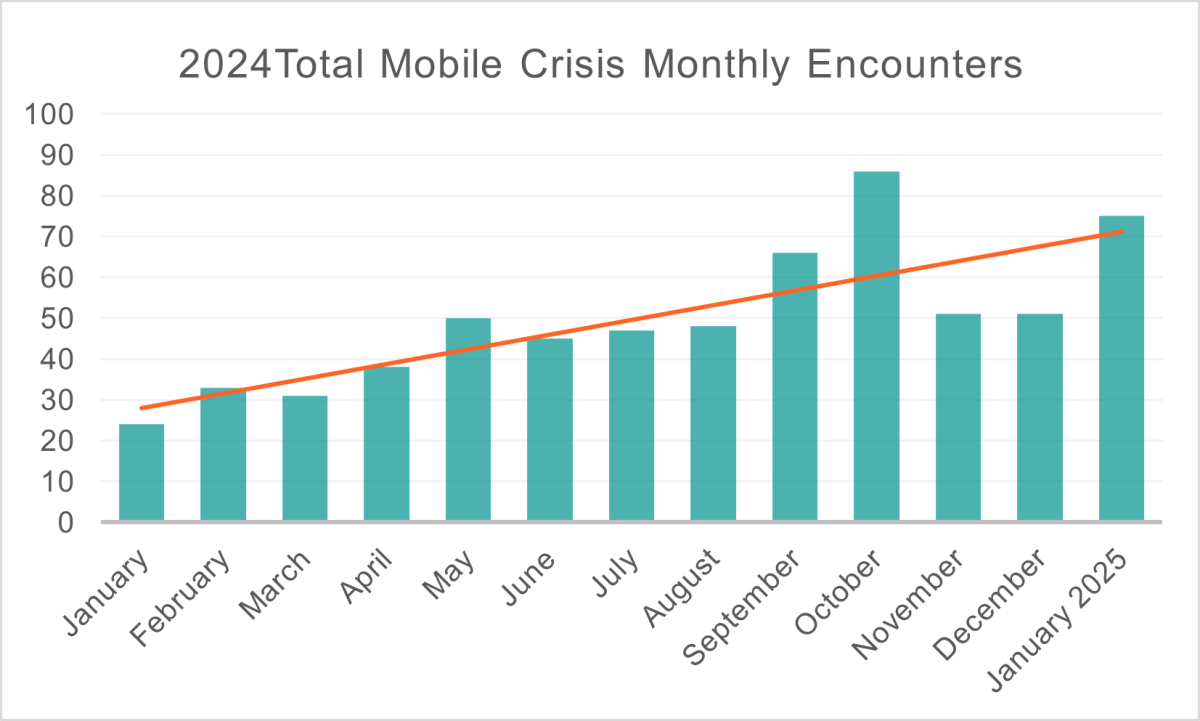
Mobile Crisis – 24/7/365 – 2-person response teams statewide will meet you in the community, at your home or wherever is most convenient to provide de-escalation supports and counseling to people in crisis.
Vermont State Police Embedded Mental Health Crisis Specialist (MHCS) – Mental Health Crisis Specialists respond with Vermont State Police Troopers across the state to assist in mental health-related incidents, diverting individuals from utilizing the hospital emergency departments and reducing the need for police intervention and arrests.
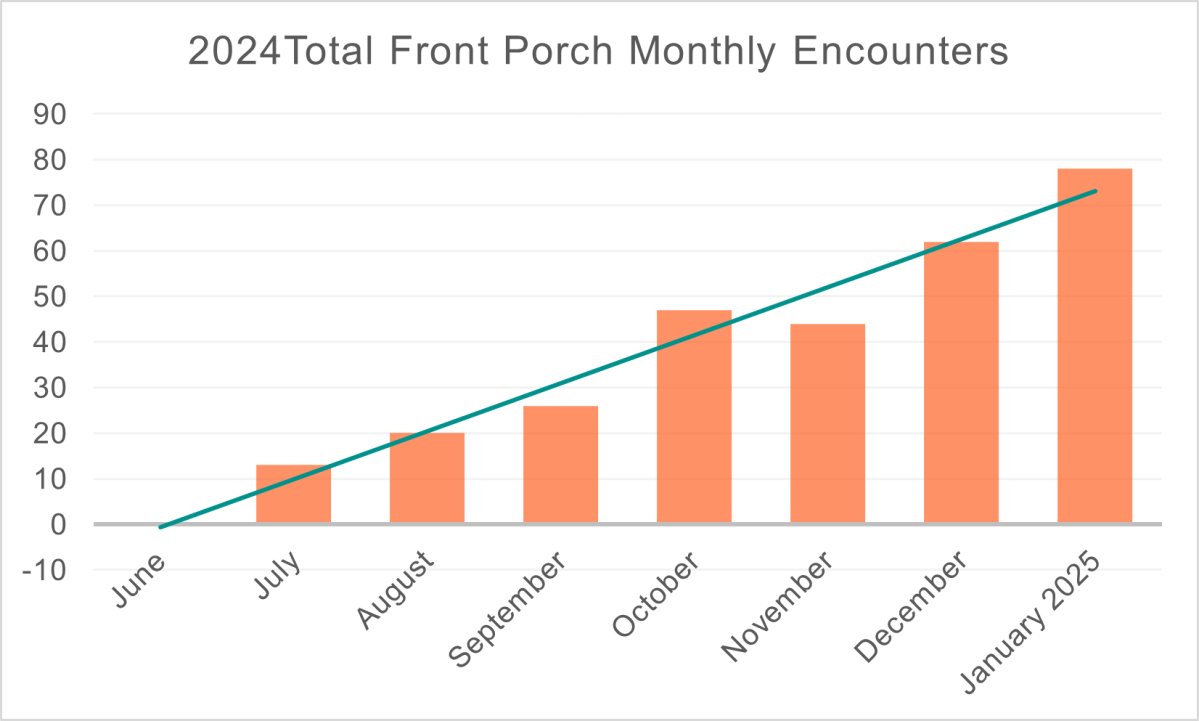
The NKHS Front Porch Mental Health Urgent Care Program (Newport, VT) – 24/7/365 – For adults, children, and families experiencing a mental health crisis needing immediate non-medical care in a community-based, person-centered environment.
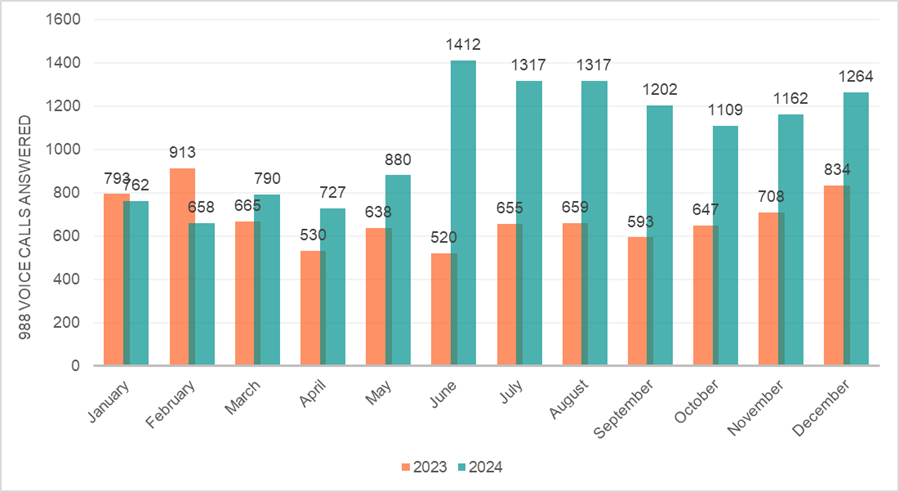
The 988 Suicide & Crisis Lifeline is the foundation of the crisis continuum, offering confidential emotional support through call, chat, or text with trained professionals who can determine when an individual needs an elevated level of response. Having a place to call staffed with trained professionals has reduced the strain on other services and resolves over 97% of calls without needing a higher level of care. In the last year NKHS 988 has:
A 12.8 second time to answer – national average is 46 seconds
Fielded 6,996 Calls in 2024
Increase of 53% utilization to the 988 Call Center from 2023 to 2024
A community approach to public safety
Public safety is most effective when it is a shared responsibility. A coordinated approach that includes law enforcement, emergency medical services, hospitals, mental health professionals, and other community partners is vital to ensure that individuals in crisis receive appropriate care.
The statewide Mobile Crisis Program exemplifies this collaborative effort. This initiative provides 24/7 crisis response, deploying teams of clinicians and peer specialists to de-escalate and stabilize individuals within their communities. By resolving mental health crises in the least restrictive setting, Mobile Crisis helps prevent unnecessary emergency department visits and hospitalizations, preserving resources and improving outcomes for distressed individuals.
“NKHS Mobile Crisis workers come directly to the school where the child spends most of their day. This model of treatment has proven to work, allowing the students to stay in my office where they are familiar with their environment, have a trusted therapeutic relationship already established, and have their crisis assessment completed. With the support of NKHS Mobile Crisis, we can serve the child and family in a safe, familiar environment, with the child’s trusted adults supporting them. Not only does this help the child, but it also helps the caregivers who are often faced with transportation barriers in our rural area”.
Emily Jankowski, MS, LCMHC, NCC, Licensed Clinical Mental Health Counselor, Derby Elementary School
The importance of community collaboration between law enforcement and mental health is exemplified through the partnership with Vermont State Police and Mental Health Crisis Specialists (MHCS) where a MHCS is stationed and co-responds with the police when appropriate. Their presence has already led to nearly 300 crisis interventions in a fiscal year, demonstrating the effectiveness of integrating mental health professionals into public safety frameworks.
“With the introduction of two MHCS to each state police barracks, servicing the communities’ needs has greatly expanded. MHCS Piper and MHCS Blackwell have made themselves available to respond directly with Troopers to crises occurring within the community. Speaking with someone who is not in uniform is often beneficial and aids in keeping a scene calm. Intervening at an early stage when someone is in crisis will always have a positive effect. The program is a net benefit for not only the local community, but the whole state in helping prevent further crises and incidents people may otherwise be prone to experiencing.”
Lt. Andrew Jensen, Station Commander – Derby Barracks, Vermont State Police
A human-centered response to crisis
The NKHS Front Porch Urgent Care program is a prime example of meeting individuals where they are in their mental health journey. We designed this physical location to be homelike and therapeutic, recognizing that our environment greatly influences one’s ability to feel safe, de-escalate, and welcome. It’s the “somewhere to go” in the Crisis Continuum. Individuals who reach out to 988 or Mobile Crisis and need additional support can access the Front Porch instead of utilizing the emergency department. Emergency responders can bring individuals to the Front Porch, where care in a therapeutic environment has a more significant impact on outcomes. By providing 24/7 walk-in access to immediate mental health support, this initiative ensures that individuals do not have to wait for care or utilize less appropriate services, such as the police department.
A path forward
Building meaningful connections requires meeting people where they are and understanding their unique needs, perspectives, and experiences. In-person engagement fosters trust, empathy, and more effective communication — key elements in building strong, lasting relationships.
The Adult Outpatient team takes this to heart as they work to connect underserved community members with substance use treatment. Amber Robbins, NKHS Case Manager, and Coral Sargent, NKHS Peer Support Specialist, connect to individuals and community partners through tabling events, community meetings, and an embedding program with the Newport Police Department for substance-use-related calls. Through these efforts, the Adult Outpatient team is breaking down barriers to treatment, fostering trust, and creating pathways to accessible, meaningful support, laying the foundation for long-term change.
Home and community-based designated mental health organizations, as part of the VCP Network, are at the forefront of supporting individuals in mental health crises. Sustainable financing and support of these programs help alleviate the burden on our public safety officials and ensure individuals in mental health crises get immediate quality support. By expanding crisis response services, strengthening inter-agency partnerships, and advocating for a whole-community approach focusing on reducing stigma, we can create a system where individuals in crisis receive the support they need before situations escalate. The proof of concept is already here — what remains is the commitment to scale these solutions for broader impact.
With the right resources, awareness, and dedication, we can redefine public safety to include mental health care as an essential pillar. The time to act is now, ensuring that no one in crisis is without the help they need.
About Northeast Kingdom Human Services: Our mission at NKHS is to deliver professional and empathetic care to every client. Our devoted team focuses on providing hope, healing and assistance to the Northeast Kingdom because we are all about being human. Through our diverse range of services and support, we positively impact the lives of those who seek our help. We take pride in being frontrunners in rural health and human services throughout the Northeast Kingdom of Vermont. Learn more: www.nkhs.org.
This article is part of a series, collaboratively produced by members of Vermont Care Partners, a statewide network of sixteen non-profit, community-based agencies providing mental health, substance use, and intellectual and developmental disability supports.